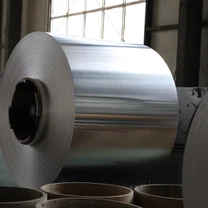
The Primary Difference Between H14 and H24
The main distinction between 3003-H14 and 3003-H24 aluminum sheet lies in the temper and processing route. The H14 temper is achieved solely through strain hardening to a half-hard condition, emphasizing strength gained from cold working. H24, in contrast, undergoes strain hardening followed by partial annealing, also called stabilization, which slightly reduces strength while significantly improving ductility and formability. As a result, H24 is better suited to bending and forming operations, whereas H14 is preferred where higher strength is required and extensive forming is not necessary. Both tempers share the same 3003 alloy composition, offering excellent corrosion resistance and good weldability; the additional annealing step in H24 enhances formability, while H14 prioritizes mechanical strength.
3003-H14: Strength Through Cold Working
3003-H14 is produced by cold rolling the material to a half-hard condition without a final annealing step. The processing emphasizes strength: the sheet has higher mechanical strength with lower ductility and elongation compared with H24. Because of its stiffness, H14 holds its shape well and is a practical choice for applications requiring moderate strength with limited forming, such as tanks, panels, and general sheet metal components where flatness and rigidity matter more than complex bending.
3003-H24: Formability Through Stabilization
3003-H24 is strain hardened and then partially annealed to reach the half-hard condition. The partial annealing, sometimes described as a stabilization or semi-annealing treatment, relieves part of the internal stress created by cold working. The result is a slightly reduced strength but noticeably improved ductility and elongation, which makes the sheet easier to form without cracking. H24 is the standard choice for projects involving extensive bending, drawing, or stamping, such as architectural panels and curtain wall systems where shape accuracy is critical.
Production Process Notes
In mill practice, 3003 H14 plate is often described as a mid-annealing product: the coil is rolled, annealed, and then rerolled to the final gauge, with the finished product receiving controlled annealing and rolling. This semi-annealing technique is common for 3003 plate with stringent flatness and formability criteria. Buyers frequently ask which temper to specify, but the practical difference is straightforward: H14 delivers more strength from cold work with minimal annealing, while H24 delivers more formability from cold work followed by stabilization through partial annealing. In essence, there is no quality issue with either temper; the choice is purely a matter of matching the temper to the fabrication method.
Selection Guide
Choose 3003-H24 when the production process involves heavy forming and bending, such as deep drawing, roll forming, or stamped architectural components where the sheet must reach tight radii without cracking. Choose 3003-H14 when strength is more important and forming demands are limited, such as flat panels, trays, and structural sheet applications where the material will be cut, joined, or lightly formed. When ordering, specify the temper, gauge, and governing standard, for example ASTM B209, and request the mill test certificate to verify the mechanical properties of the delivered lot.
FAQ
Q: What is the difference between 3003-H14 and 3003-H24?
A: H14 is strain hardened only, giving higher strength but lower ductility; H24 is strain hardened and then partially annealed, giving better formability with slightly lower strength.
Q: Which 3003 temper is better for bending and forming?
A: H24, because the partial annealing step improves ductility and elongation, allowing tighter bends and deeper draws without cracking.
Q: Is 3003-H14 stronger than 3003-H24?
A: Yes. H14 has higher mechanical strength from full strain hardening, while H24 trades a small amount of strength for improved formability.
Q: Do H14 and H24 have the same corrosion resistance?
A: Yes. Both use the same 3003 aluminum-manganese composition, so corrosion resistance and weldability are essentially the same.
Q: What are typical applications of 3003-H24 sheet?
A: Architectural panels, curtain wall components, and parts made by bending, drawing, or stamping where shape accuracy is critical.