


Marine grade 5083 aluminum is a high-performance alloy developed specifically for demanding marine environments. As a member of the 5xxx series of Al-Mg anti-corrosion alloys, it exhibits outstanding resistance to seawater and chemical corrosion, making it a preferred choice for shipbuilding and offshore applications.
This non-heat-treatable aluminum-magnesium alloy typically contains 4.0–4.9% Mg, 0.4–1.0% Mn, 0.05–0.25% Cr, and trace amounts of Si, Fe, Ti, Cu, and Zn. Among all non-heat-treatable alloys, 5083 offers the highest strength, maintains excellent post-weld mechanical performance, and demonstrates superior corrosion resistance in seawater.
GNEE supplies marine-certified 5083 aluminum plates in tempers such as H116, H321, and H112, fully compliant with standards including ASTM B209/B928 and AS/NZS 1734. It is widely used for ship and offshore platform hulls, keels, superstructures, and main structural components, as well as for cryogenic, pressure vessel, and armor applications.
GNEE's 5083 marine-grade aluminum meets international classification standards from BV (Bureau Veritas), LR (Lloyd's Register), ABS (American Bureau of Shipping), and CCS (China Classification Society).
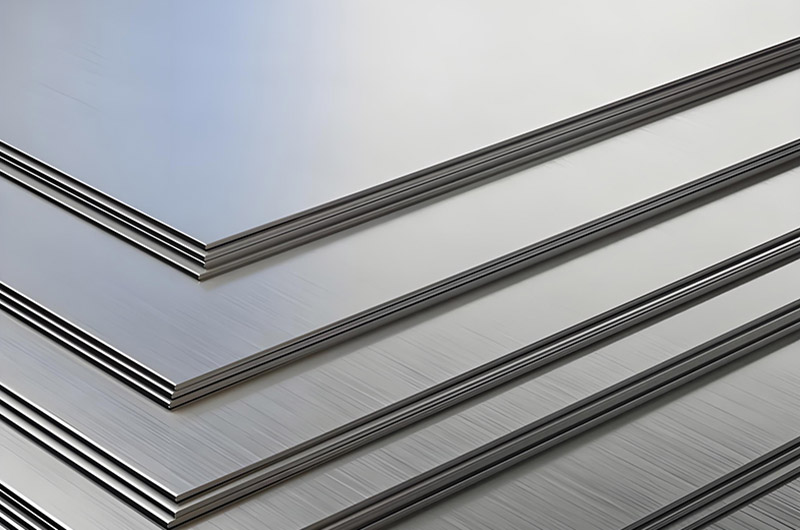
Chemical Composition of 5083 Marine Aluminum
| Element | Composition (%) | Function |
|---|---|---|
| Magnesium (Mg) | 4.0–4.9 | Provides solid solution strengthening and corrosion resistance |
| Manganese (Mn) | 0.4–1.0 | Refines grain structure and improves strength |
| Chromium (Cr) | 0.05–0.25 | Enhances resistance to exfoliation corrosion |
| Silicon (Si) | ≤ 0.4 | – |
| Iron (Fe) | ≤ 0.4 | – |
| Titanium (Ti) | ≤ 0.15 | Aids in grain refinement |
| Copper (Cu) | ≤ 0.1 | – |
| Zinc (Zn) | ≤ 0.25 | – |
Microstructure:
The high magnesium content results in a fine and uniform grain structure after rolling or extrusion. Further cold working in H tempers improves strength, fatigue resistance, and structural stability.
Mechanical Properties of 5083 Marine Aluminum
| Property | Typical Value | Condition |
|---|---|---|
| Ultimate Tensile Strength (UTS) | ~317 MPa (46 ksi) | H321 |
| Yield Strength (0.2%) | ~228 MPa (33 ksi) | H321 |
| Elongation | 10–16% | H321 |
Temperature Characteristics:
Maximum Service Temperature: 65 °C
Cryogenic Performance: At -195 °C, UTS increases by ~40%, yield strength by ~10%, while maintaining excellent fracture toughness-ideal for cryogenic tanks and low-temperature applications.
Formability and Fatigue Resistance:
5083 alloy offers excellent ductility and fatigue strength, enabling complex forming and reliable performance under cyclic marine loading.
Corrosion Resistance
Seawater Resistance: The Al-Mg matrix forms a dense oxide film that provides outstanding protection against pitting and general corrosion-superior to 5052 and comparable to 5086.
Intergranular Corrosion: Proper temper control (H116, H321) and the presence of Cr and Mn minimize the risk of intergranular attack.
Fabrication and Weldability
Welding: Best performed using MIG or TIG methods. As a non-heat-treatable alloy, 5083 maintains its mechanical properties after welding and is highly resistant to hot cracking. Recommended filler wires: 5183 or 5356.
Forming: Excellent cold workability in O and H tempers allows shaping of complex marine components.
Temper Designations and Applications
| Temper | Description | Typical Applications |
|---|---|---|
| 5083 H116 | Stabilized and tested for exfoliation corrosion per marine standards | Submerged structures, hulls, keels |
| 5083 H321 | Strain-hardened and stabilized to prevent sensitization | Hull plating, ship frames |
| 5083 O | Fully annealed, excellent ductility | Deck fittings, brackets, formed components |
| 5083 H111 | Lightly strain-hardened, good balance of strength and formability | Deck parts, decorative or structural elements |
| 5083 H112 | Hot-rolled, suitable for structural and welded applications | Bulkheads, frames, reinforcements |
Standards and Specifications
ASTM B209 / ASME SB209 – Aluminum and Aluminum-Alloy Sheet and Plate
ASTM B928 / AS/NZS 1734 – Marine-grade aluminum plates
AMS 4057 / AMS 4058 – Aerospace-grade specifications
DNV, BV, LR, ABS, CCS – International marine certifications
Applications in Shipbuilding and Marine Engineering
| Application Area | Description |
|---|---|
| Shipbuilding | Used in hulls, decks, bulkheads, and superstructures for lightweight, corrosion-resistant designs. |
| Marine Infrastructure | Suitable for gangways, docks, offshore platforms, and port structures. |
| Fuel & Chemical Tanks | Ideal for storage of freshwater, fuel, or chemicals due to its non-reactive nature. |
| Cryogenic Containers | Excellent performance at liquid nitrogen temperatures for storage tanks and pipelines. |
| Pressure Vessels | Used in non-magnetic, corrosion-resistant gas and chemical containers. |
| Vehicle Armor & Transportation | Lightweight ballistic panels, fuel tanks, and aircraft components. |
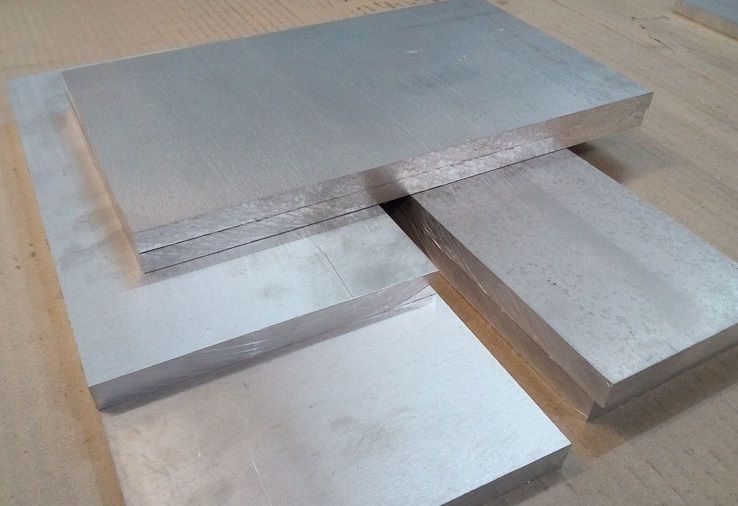
Advantages of 5083 Aluminum Compared to Other Alloys
5083 vs 5052: Higher magnesium content gives 5083 greater strength and seawater resistance, while 5052 is easier to form.
5083 vs 6061: 5083 offers superior corrosion resistance; 6061 is better for machining and low-stress uses.
Cold Work Strengthening: Unlike heat-treatable alloys such as 6061, 5083 gains strength through strain hardening and maintains it after welding.
Key Considerations
Welding Compatibility: Excellent with standard TIG/MIG processes.
Temperature Limit: Avoid prolonged use above 65 °C to prevent property degradation.
GNEE, a trusted China-based supplier, provides high-quality marine-grade 5083 aluminum plates and sheets that meet international standards. With superior strength, corrosion resistance, and weldability, GNEE 5083 aluminum is the preferred material for shipbuilding, offshore engineering, and cryogenic applications-ensuring durability and reliability in the harshest marine environments.


