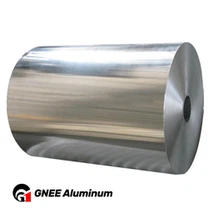
What Is 3003 Aluminum
3003 is a non-heat-treatable alloy from the aluminum-manganese (Al-Mn) family. Its primary alloying element is manganese at approximately 1.0-1.5%, which gives it a moderate strength increase over pure 1000-series aluminum while retaining excellent workability. It is about 20% stronger than 1100 pure aluminum and is often described as the workhorse of the general fabrication industry. Typical uses include roofing and siding, storage tanks, heat exchangers, kitchenware, and general sheet-metal work.
International Equivalent Grades
Different countries register the same alloy under different designations, but the material is essentially identical. The main equivalents of 3003 are: AA 3003 (Aluminum Association, USA), UNS A93003 (Unified Numbering System), EN AW-3003 (European Norm), AlMn1Cu (ISO), A3003 (JIS, Japan), and 3003 or LF21 (GB, China). When a drawing specifies EN AW-3003, AA3003 can be sourced as a direct equivalent, and the same applies in the other direction. For contractual compliance, buyers should confirm which standard system the project requires, because a European contract may mandate EN designation even when the chemistry is identical.
Equivalent versus Alternative
An equivalent shares nearly identical chemical composition and properties; an alternative offers similar performance with different alloying elements. The closest commercially available alternative to 3003 is 3103, which has slightly higher manganese content and often tighter composition controls. 3004 adds about 1% magnesium, making it significantly stronger for applications such as beverage can bodies and pressure vessels, with slightly reduced formability. 5052 is an aluminum-magnesium alloy that is much stronger and more corrosion resistant in saltwater, making it the right upgrade for marine and chemical applications at a higher cost. 1100 is softer with higher ductility and conductivity, suited to extreme deep drawing and electrical components.
How to Choose the Right Grade
Follow a structured decision process. First, check the technical drawings and mandatory standards: if the contract requires EN compliance, source EN AW-3003. Second, evaluate strength requirements: if the part will carry significant stress, consider an upgrade to 3004 or 5052. Third, analyze forming complexity: simple bends suit 3003, while extremely deep draws may need the softer 1100. Finally, assess the service environment: for saltwater or harsh chemical exposure, 5052 offers a longer service life than 3003.
Procurement Considerations
When ordering 3003 or its equivalents, specify the alloy designation, temper (O, H14, H24, and others), thickness, width, length, and the governing standard such as ASTM B209, EN 485, or GB/T 3880. Request a mill test certificate to verify composition and mechanical properties. Precision cutting, slitting, and surface treatment services allow material to be delivered ready for production. Because equivalent grades are chemically identical, supply flexibility increases without compromising product quality.
FAQ
Q: Is EN AW-3003 the same as 3003?
A: Yes, for practical purposes. EN AW-3003 is the European Norm designation, while 3003 is the Aluminum Association designation; the chemical composition and mechanical properties are virtually identical.
Q: What is the UNS number for 3003 aluminum?
A: A93003 is the Unified Numbering System designation for 3003 aluminum.
Q: Can 3003 be replaced by 5052?
A: Yes, but it is an upgrade, not a direct equivalent: 5052 is significantly stronger, more corrosion resistant, and more expensive. Only substitute if the design requires those enhanced properties.
Q: What is the closest alternative to 3003?
A: 3103 is usually considered the closest commercial alternative, with very similar composition and comparable fabrication performance.
Q: Is 3003 stronger than 1100?
A: Yes, by roughly 20%. 3003 gains moderate strength from about 1.0-1.5% manganese, while 1100 is commercially pure and softer with higher conductivity.
Q: Why would a project specify EN AW-3003 instead of AA3003?
A: Contractual compliance. If the contract requires materials to conform to EN standards, EN AW-3003 must be sourced even though the chemistry is identical to AA3003.