What Is 7075 Aircraft Aluminum?
Aircraft aluminum is characterized by large-scale integration, lightweight design, reduced thickness, high dimensional accuracy, tight geometric tolerances, and excellent material uniformity. Depending on service conditions and aircraft components, aerospace aluminum alloys are generally classified into high-strength aluminum alloys, heat-resistant aluminum alloys, and corrosion-resistant aluminum alloys.
High-strength aluminum alloys are the most widely used in aviation and are mainly applied in aircraft fuselage structures, engine compartments, seating systems, and flight control components. 7075 aluminum plate, which belongs to the Al-Zn-Mg-Cu super-high-strength aluminum alloy series, is a representative material in this category.
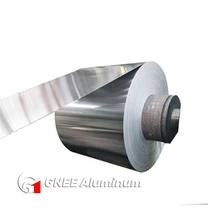
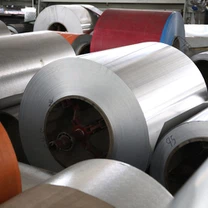
7075 aluminum sheet is a cold-worked, heat-treatable forging alloy with extremely high strength and hardness, far superior to mild steel. It offers excellent mechanical performance and good anodizing response, making it a typical and high-end aerospace aluminum alloy widely used in aviation and defense industries.
Specifications of 7075 Aluminum Plate
Chemical Composition (Typical)
7075 aluminum alloy contains controlled amounts of silicon, iron, copper, manganese, magnesium, chromium, zinc, and titanium, conforming to GB, AMS, and EN standards. Its high zinc and magnesium content is the key contributor to its outstanding strength after heat treatment.
Size Range
7075 Thick Aluminum Plate
Tempers: T651 / T7651 / T7351
Thickness: 4–260 mm
Width: 1200–3800 mm
7075 Thin Aluminum Plate/Sheet
Temper: T6
Thickness: 0.5–4.0 mm
Width: 1000–2600 mm
Mechanical Properties
7075 aluminum plates and sheets exhibit excellent mechanical strength across various tempers:
7075-T651 thick plate shows tensile strength up to approximately 590 MPa and yield strength above 500 MPa, with stable elongation.
7075-T7651 and T7351 plates offer slightly reduced strength but significantly enhanced resistance to stress corrosion cracking.
7075-T6 thin sheet maintains high tensile and yield strength while providing good elongation, meeting standards such as GB/T, EN, and ASTM.
Properties of 7075 Aluminum Alloy
Due to its high zinc content, 7075 aluminum alloy delivers strength levels comparable to steel, along with outstanding fatigue resistance. It is easy to machine, which has made it a preferred material for military and aerospace aircraft structures.
7075-T6 aluminum typically contains approximately 1.6% copper, 2.5% magnesium, and 5.6% zinc. It is widely used to reinforce aircraft structures. While its copper content limits weldability, it offers excellent machinability and is fully heat-treatable.
After solution heat treatment, the alloy demonstrates good plasticity, and the strengthening effect of heat treatment is particularly pronounced. It maintains high strength below 150°C and performs exceptionally well at low temperatures.
Although 7075 aluminum alloy has limited welding performance and a tendency toward stress corrosion cracking, two-stage aging treatments can significantly improve its resistance to SCC. Compared with similar alloys such as 7A04, 7075 exhibits better stress corrosion resistance.
Among all tempers, 7075-T651 aluminum plate is widely regarded as one of the best-performing aluminum products, combining extremely high strength, excellent mechanical properties, and good anodizing behavior. It is a benchmark material for aerospace and military applications.