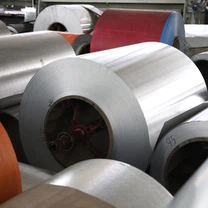
6061 aluminium tread floor plate is a heat-treated alloy sheet with a raised anti-slip pattern rolled into one face. It is sold as diamond plate, chequer plate or floor plate. Because the base alloy is 6061 in the T6 temper rather than a 3xxx alloy, the sheet works as both the walking surface and the structural panel, which removes the need for a separate sub-floor in many platform and vehicle designs.
Why 6061-T6 Is Chosen for Floor Plate
6061 is a heat-treatable aluminium-magnesium-silicon alloy. Solution heat treatment followed by artificial ageing produces the T6 temper, which gives roughly twice the tensile strength of 3003 tread plate while keeping good corrosion resistance and excellent weldability. Mechanical property minima for sheet and plate are specified in ASTM B209, and the rolled tread product itself is covered by ASTM B632.
Composition to ASTM B209
| Element | Content, % |
|---|---|
| Silicon | 0.40 - 0.8 |
| Iron | 0.70 max |
| Copper | 0.15 - 0.40 |
| Manganese | 0.15 max |
| Magnesium | 0.8 - 1.2 |
| Chromium | 0.04 - 0.35 |
| Zinc | 0.25 max |
| Titanium | 0.15 max |
| Aluminium | Remainder |
Magnesium and silicon form the strengthening precipitate during ageing. Chromium controls grain structure and improves resistance to stress corrosion cracking in the T6 temper. The copper level is modest compared with 2xxx or 7xxx alloys, which is why 6061 holds up in wet and marine environments.
Mechanical Data for 6061-T6 Tread Plate
| Property | Typical value |
|---|---|
| Density | 2.70 g/cm3 |
| Tensile strength | about 310 MPa |
| 0.2 % yield strength | about 276 MPa |
| Elongation | about 8 - 12 % |
| Modulus of elasticity | about 69 GPa |
| Hardness | about 95 HB |
| Thickness range | 1.6 - 6.35 mm (0.063 - 0.25 in) |
| Pattern height | approximately 0.5 - 1.0 mm above the base sheet, depending on thickness and pattern |
Values are typical for the T6 temper; the certified minima for a given thickness come from ASTM B209 and ASTM B632, with tension testing to ASTM E8/E8M. One fabrication point matters: welding 6061-T6 softens the heat affected zone, and the as-welded strength in that zone is well below the parent T6 value. Floor plate can still be welded, but the joint should be designed with the reduced allowable in mind.
Patterns and Surface Options
Five bar is the usual pattern for 6061 floor plate: five raised bars per cluster, two pairs set at an angle with one bar across them, giving the strongest grip and the highest load-bearing pattern. Three bar offers a balance of grip and appearance for architectural use, while the flatter diamond pattern is chosen where the plate will also be seen. Surface options include mill finish for industrial work, bright finish, anodising to ISO 7599 for hard wearing surfaces, and baked paint in black, grey, white or colour where a finished appearance is required. On coated material, cut edges are touched up to keep the coating system continuous.
Applications by Sector
| Application | Why 6061-T6 suits it |
|---|---|
| Truck beds, trailer floors and tipper bodies | Carries repeated wheel and freight loading without permanent set, and cuts vehicle weight compared with steel |
| Platforms and stair treads, indoor and outdoor | Pattern provides grip in wet and greasy conditions; strength allows spans with light support framing |
| Ship and yacht decks, gangways | Resists salt water and provides traction when wet |
| Vehicle ramps, step rails and dock boards | High strength-to-weight ratio keeps the ramp light enough to handle |
| Machine guards and equipment bases | Structural strength combined with a non-slip walking surface |
Frequently Asked Questions
Q: What is 6061 aluminium tread floor plate?
A: A 6061-T6 alloy sheet with a rolled anti-slip pattern on one face, used as a structural walking surface on vehicles, platforms, ramps and decks.
Q: Is 6061 tread plate stronger than 3003 tread plate?
A: Yes. 6061-T6 is typically about 310 MPa tensile against about 150 MPa for 3003-H22, so 6061 is specified where the plate must carry load rather than only provide grip.
Q: Which standards apply?
A: ASTM B632 for rolled aluminium tread plate and ASTM B209 for the base sheet and composition, with tension testing to ASTM E8/E8M.
Q: Can 6061-T6 floor plate be welded?
A: Yes, using 4043 or 5356 filler. The heat affected zone loses strength compared with the parent T6 temper, so welded joints are designed to the lower allowable.
Q: How does it perform outdoors and in coastal air?
A: Well. The natural oxide film protects the surface, and anodising or a painted finish is used where the plate sees heavy traffic or salt spray. Fasteners should be isolated to avoid galvanic attack.
Q: Is the quoted thickness measured through the pattern?
A: No. Thickness is the nominal base sheet thickness; the raised pattern adds roughly 0.5 to 1.0 mm on top of that figure.