In marine and chemical processing environments, material failure is not just costly-it can be catastrophic. Choosing the right aluminum alloy tubing is critical for ensuring long-term durability, safety, and cost efficiency.
Among the 5xxx series alloys, 5086 aluminum tubing stands out as a premium solution for harsh environments, especially when compared to standard options like 5052 or even structural alloys like 6061.
5086 Aluminum Tubing Composition
The exceptional corrosion resistance of 5086 aluminum tubing is primarily attributed to its higher magnesium (Mg) content, typically ranging from 3.5% to 4.5%.
Key Alloying Elements in 5086 Aluminum Tubing:
Magnesium (Mg): Enhances strength through solid solution strengthening while significantly improving resistance to seawater corrosion.
Manganese (Mn): Improves grain structure and contributes to resistance against stress corrosion cracking.
Chromium (Cr): Helps stabilize the microstructure and reduces susceptibility to intergranular corrosion.
Chemical Composition of EN AW-5086 Aluminum Seamless Tube (Weight %)
| Element | Composition (%) |
|---|---|
| Magnesium (Mg) | 3.50 – 4.50 |
| Manganese (Mn) | 0.20 – 0.70 |
| Silicon (Si) | ≤ 0.40 |
| Iron (Fe) | ≤ 0.50 |
| Chromium (Cr) | 0.05 – 0.25 |
| Zinc (Zn) | ≤ 0.25 |
| Titanium (Ti) | ≤ 0.15 |
| Copper (Cu) | ≤ 0.10 |
| Aluminum (Al) | Remainder |
Why Higher Mg Improves Corrosion Resistance
Magnesium forms a stable oxide layer on the aluminum surface, acting as a protective barrier against aggressive ions such as chlorides (Cl⁻), which are abundant in marine environments. This oxide layer is self-healing, meaning that even if damaged, it can reform quickly, maintaining protection.
Compared to lower-Mg alloys like 5052, 5086 aluminum tubing of marine grade exhibits:
- Better resistance to pitting corrosion
- Lower susceptibility to intergranular corrosion (IGC)
- Superior performance in continuous salt spray exposure
5086 Aluminum Tubing vs 6061 Aluminum Tubing: Corrosion Test Comparison
When selecting aluminum tubing for corrosive environments, engineers often compare 5086 vs. 6061 aluminum tubing. While 6061 is widely used for structural applications, it does not perform as well under prolonged exposure to marine or acidic conditions.
Simulated Seawater Exposure Test (ASTM B117 Salt Spray)
| Property | 5086 Aluminum Tubing | 6061 Aluminum Tubing |
|---|---|---|
| Corrosion Rate | Very Low | Moderate |
| Pitting Resistance | Excellent | Fair |
| Intergranular Corrosion | Minimal Risk | Higher Risk |
| Surface Degradation | Slight discoloration | Noticeable pitting and scaling |
Key Takeaways
5086 aluminum tubing, marine grade, retains structural integrity even after long-term exposure.
6061 aluminum tubing may require additional coatings or anodizing to achieve comparable durability.
In chloride-rich environments, 5086 significantly outperforms 6061 in lifespan and maintenance cost.
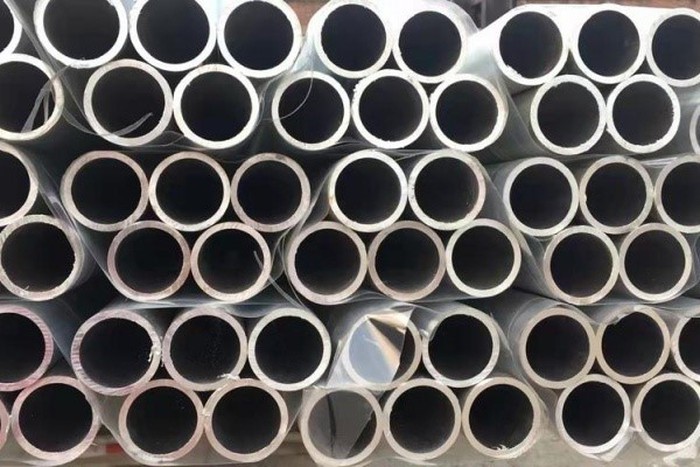
5086 Aluminum Tubing for Marine Applications
Shipbuilding and Offshore Structures
5086 is widely used in:
- Ship hulls and deckhouses
- Offshore drilling platforms
- Marine walkways and railings
Its high strength-to-weight ratio combined with corrosion resistance ensures long service life even under constant exposure to saltwater spray and humidity.
Pressure Vessels and Cryogenic Tanks
Due to its excellent weldability and toughness at low temperatures, 5086 aluminum tubing is ideal for:
- Pressure vessels in chemical plants
- Storage tanks for liquefied gases
- Heat exchangers in corrosive environments
Chemical Processing Systems
In environments involving mild acids or industrial chemicals, 5086 tubing:
- Resists chemical attack
- Maintains mechanical properties over time
- Reduces downtime due to maintenance or replacement
5086 vs 5052 Aluminum Tubing
Although both alloys belong to the 5xxx series, 5086 aluminum tubing offers significant advantages over 5052 in demanding environments.
Performance Comparison
| Feature | 5086 Aluminum Tubing | 5052 Aluminum Tubing |
|---|---|---|
| Mg Content | Higher (3.5–4.5%) | Lower (2.2–2.8%) |
| Strength | Higher | Moderate |
| Corrosion Resistance | Superior | Good |
| Marine Suitability | Excellent | Suitable for mild conditions |
Practical Insight
For applications involving continuous immersion or high chloride exposure, 5052 may degrade faster. In contrast, 5086 aluminum tubing marine grade, maintains performance over extended periods, making it the preferred choice for critical infrastructure.
Corrosion Resistance of 5086 Alloy
-
Intergranular Corrosion Resistance
A major concern in aluminum alloys is intergranular corrosion (IGC), where corrosion propagates along grain boundaries. This is often caused by precipitation of Mg-rich phases.
5086 is specially formulated to:
- Minimize harmful precipitates
- Maintain uniform grain boundary chemistry
- Resist sensitization even after welding
-
Stress Corrosion Cracking (SCC)
Unlike some high-strength aluminum alloys, 5086 shows:
Excellent resistance to SCC
Stable performance under tensile stress in corrosive environments
This makes it suitable for load-bearing marine structures.
Fabrication Advantages of 5086 Aluminum Tubing
Beyond corrosion resistance, 5086 offers several manufacturing benefits:
- Excellent weldability (MIG/TIG)
- Good formability for complex tubing shapes
- No need for post-weld heat treatment
- Consistent mechanical properties across sections
These characteristics reduce fabrication costs and improve production efficiency.

Why Choose 5086 Aluminum Tubing for Harsh Environments?
In summary, 5086 aluminum tubing offers :
- Outstanding resistance to seawater and industrial chemicals
- Superior strength compared to other 5xxx alloys
- Long-term durability with minimal maintenance
- Proven performance in marine and chemical industries
For engineers and procurement managers, it represents a low-risk, high-performance material choice.
Get a Quote for 5086 Aluminum Tubing Marine Grade
Looking for a reliable supplier of 5086 aluminum tubing marine grade?
At Gnee Aluminum, we provide:
Custom sizes and specifications
Strict quality control (ASTM, EN standards)
Fast global delivery
Technical support from industry experts
Contact us today to request a quote or technical datasheet.
Our team is ready to help you select the right aluminum solution for your project.