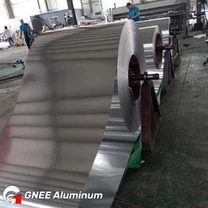
What Is 6061 Aluminum Plate
6061 aluminum plate is a magnesium-silicon alloy from the 6000 series, strengthened mainly by the formation of magnesium silicide (Mg2Si). It offers one of the best balances of strength, corrosion resistance, machinability and fabrication flexibility of any common aluminum alloy, which is why it is a core material for structural components, transportation equipment and general engineering.
The alloy belongs to the heat-treatable family: its strength can be increased substantially by controlled heating and cooling cycles, of which the T6 temper is the most widely specified.
6061 Aluminum Plate Chemical Composition
The controlled alloying elements in 6061 create a material stronger than pure aluminum while remaining easy to machine, weld and anodize. Typical composition ranges are aluminum as balance, magnesium 0.80 to 1.20 percent, silicon 0.40 to 0.80 percent, copper 0.15 to 0.40 percent, chromium 0.04 to 0.35 percent, iron up to 0.70 percent, zinc up to 0.25 percent and titanium up to 0.15 percent.
This composition provides a reliable combination of mechanical strength, corrosion resistance and processing stability, with property limits verified against standards such as ASTM B209.
What Does 6061-T6 Mean: The Heat Treatment Process
The T6 designation describes a specific heat-treatment route with three stages. First, solution heat treatment: the plate is heated to approximately 530 degrees Celsius so that magnesium and silicon dissolve uniformly in the aluminum matrix. Second, quenching: rapid cooling, usually in water, locks the alloying elements in place. Third, artificial aging: the plate is reheated to 160 to 180 degrees Celsius for several hours, forming fine Mg2Si precipitates that significantly increase strength and hardness.
This controlled process transforms standard 6061 into high-performance 6061-T6 plate, maximizing strength and durability while preserving good corrosion resistance.
Mechanical Properties of 6061-T6 Aluminum Plate
Thanks to the T6 temper, 6061 plate achieves an excellent strength-to-weight ratio while remaining easier to fabricate than many high-strength alloys. Typical values are a tensile strength of 290 to 320 MPa, yield strength of at least 240 MPa, elongation of 8 to 12 percent, density of 2.70 g per cubic centimeter, and Brinell hardness of about 95 HB.
These properties make 6061-T6 plate suitable for load-bearing structures, precision components and long-term service under repeated stress.
Corrosion Resistance of 6061 Aluminum Plate
6061 aluminum plate resists corrosion well because of its stable oxide layer, enriched by magnesium and silicon. It offers strong resistance to atmospheric and water exposure, reliable performance in humid, industrial and marine environments, and better resistance to stress corrosion cracking than 7xxx alloys.
In salt-spray and marine exposure, 6061-T6 plate maintains structural stability with minimal surface oxidation, making it ideal for outdoor and coastal applications. Surface treatments such as anodizing, powder coating and hard-coat finishing can extend service life further.
Machinability, Formability and Weldability
6061-T6 plate machines cleanly with carbide tools, producing smooth surfaces and consistent chip control, and it supports tight tolerances and complex geometries in CNC machining. Although harder than annealed 6061-O, the T6 plate can still be formed with appropriate bending radii, and localized annealing may be used for tight bends.
The alloy welds well using TIG and MIG processes. The heat-affected zone reduces local strength, so post-weld aging or design compensation is used to ensure structural reliability.
Applications of 6061 Aluminum Plate
6061-T6 plate is widely used in structural frames and beams, CNC-machined components, automotive and transportation parts, aerospace fixtures and brackets, marine structures and hardware, and industrial equipment and tooling. Its balance of strength, corrosion resistance and fabrication flexibility makes it a preferred alloy across many industries.
Plate is commonly supplied in thicknesses from 6 to 150 mm, with widths up to 2600 mm and lengths up to 12000 mm, along with precision-cut tooling plate and custom sizes.
FAQ
Q: What does T6 mean in 6061 aluminum?
A: T6 means the alloy is solution heat treated, quenched and artificially aged, a process that significantly increases strength and hardness compared with annealed or naturally aged tempers.
Q: What is the tensile strength of 6061-T6 plate?
A: Typical tensile strength is 290 to 320 MPa, with a minimum yield strength of about 240 MPa, depending on thickness and governing standard.
Q: Is 6061-T6 corrosion resistant in marine environments?
A: Yes, its stable oxide layer provides good resistance to atmospheric and saltwater exposure, and it is less prone to stress corrosion cracking than 7xxx alloys.
Q: Can 6061-T6 aluminum plate be welded?
A: Yes, it welds well with TIG and MIG; the heat-affected zone loses some strength, so post-weld treatment or design allowance is recommended.
Q: What thicknesses are available for 6061-T6 plate?
A: Plate is typically supplied from 6 to 150 mm thick, with widths up to 2600 mm and lengths up to 12000 mm, plus custom and precision-machined options.