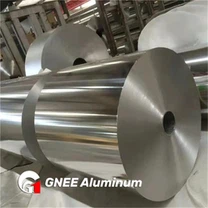
The 6000 series aluminum alloys are widely used and are primarily composed of magnesium and silicon. As a group, they are commonly classified as "architectural" or "structural" aluminum materials. Among these alloys, 6061 and 6063 are particularly notable due to their broad range of applications.
Within the aerospace sector, 6xxx series alloys such as 6061, 6063, 6013, and 6082 are used for aircraft components including protective panels, skins, and flange parts. Notably, 6063 aluminum is frequently utilized in the development of aircraft structural components such as fuselage and wing elements.

Mechanical Properties of 6061 vs. 6063 Aluminum Alloys
Below is a comparison between 6061 T6 and 6063 T6 aluminum alloys:
| Property | 6061 T6 Aluminum Alloy | 6063 T6 Aluminum Alloy |
|---|---|---|
| Mechanical Properties | Excellent workability and weldability | Softer alloy, ideal for forming complex extrusion shapes |
| Corrosion Resistance | Moderate corrosion resistance; surface treatment may be required for additional protection | Superior corrosion resistance, commonly used for exterior architectural structures |
| Heat Treatment | Heat-treatable; can be strengthened significantly for structural use | Less frequently heat-treated; primarily strengthened through extrusion |
| Surface Treatment | Suitable for anodizing to improve corrosion resistance and appearance | Takes anodizing exceptionally well, offering superior gloss and wear resistance |
| Applications | Aerospace structures, automotive components, mechanical frames | Architectural profiles, window frames, door frames, and decorative sections |
This comparison highlights the key characteristics and application areas of 6061 T6 and 6063 T6, supporting informed material selection.
What Are the Properties of 6063 T6 Aluminum?
Formability: Exceptional extrusion formability, ideal for intricate profiles and thin-walled components.
Strength: Tensile strength around 240 MPa and yield strength about 215 MPa, offering moderate performance.
Surface Treatment: Smooth surface that anodizes easily, suitable for decorative uses.
Corrosion Resistance: Strong resistance to atmospheric and outdoor environments.
Applications: Used in aerospace applications, though less frequently than 6061, and widely in architectural systems.
What Are the Key Properties of 6061 T6 Aluminum?
High Strength: Tensile strength reaches 310 MPa, with a yield strength near 276 MPa, higher than 6063 T6.
Machinability: Excellent machining characteristics for precision components.
Weldability: Good welding performance, suitable for welded structural assemblies.
Corrosion Resistance: Reliable corrosion resistance across multiple environments.
Applications: Widely applied in aerospace for major structural components such as fuselage frames, wings, and landing gear, due to its strength and machinability.
What Is the Difference Between 6061 T6 and 6063 T6 Aluminum?
Strength: 6061 T6 is noticeably stronger, making it better suited for load-bearing applications.
Formability: 6063 T6 offers superior formability for producing complex extrusion profiles.
Applications: 6063 T6 is preferred for architectural and decorative uses, whereas 6061 T6 is more common in aerospace, automotive, and mechanical structures.
What Is the Difference Between Aluminum 6061 and 6061 T6?
Heat-Treatment Condition: "6061" refers to the alloy in its base form, while 6061 T6 has undergone solution heat treatment and artificial aging, significantly improving its performance.
Properties: 6061 T6 provides much higher strength and hardness compared to non-heat-treated 6061.
Applications: The untreated 6061 alloy is used in lower-strength applications, whereas 6061 T6-commonly supplied by GNEE-is selected for aerospace, automotive, and high-performance industrial components.