


What is a 3003 Aluminum Plate?
3003 aluminum is an alloy from the aluminum-manganese family, commonly used in sheet form for a wide range of applications. The "3003" designation refers to a specific alloy composition where manganese is the primary alloying element.
3003 aluminum is typically rolled and extruded, but not forged, and is approximately 10% stronger than 1100 aluminum. It is important to note that 3003 aluminum is not used for casting.
Properties of 3003 Aluminum Plate
3003 aluminum offers good formability, weldability, corrosion resistance, and moderate strength. It also has:
Solderability: It can be easily joined using various soldering techniques.
Good Formability: The material is resistant to cracking or weakening when bent or formed, making it suitable for various structures and components.
3003 Aluminum Sheet
3003 is a non-heat-treatable alloy but can be cold-worked to improve mechanical properties. Its plasticity varies in different states:
Annealed State: High plasticity.
Semi-Cold Work Hardening: Still good plasticity.
Cold Work Hardening: Reduced plasticity.
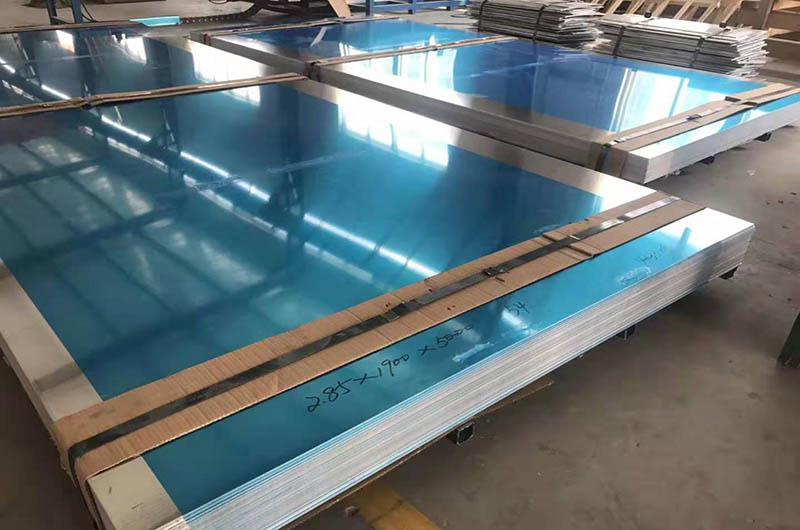
In cold deformation, 3003 aluminum may exhibit spalling corrosion, which becomes more severe with increased deformation.
The properties and dimensions of the 3003 aluminum plate depend on manufacturing processes, temperature, and thickness. Different tempers like H14, H16, or H18 provide varying levels of strength, hardness, and machinability to meet specific application needs.
3003 Aluminum Temper Types
H22: Provides good strength, durability, easy machining, high corrosion resistance, and lightweight. Commonly used in 3003-H22 Bright Aluminum Tread Plate.
H24: Meets specific dimensional accuracy and mechanical properties. Suitable for general fabrication needs.
H14: Known for high strength, durability, and corrosion resistance, ideal for outdoor or harsh environments.
O (Annealed): Low hardness and easy to stamp, spin, or stretch.
Mechanical Property Limits of 3003 Aluminum
| Temper | Thickness Range (inches) | Tensile Strength (KSI) | Yield Strength (KSI) | Elongation (%) |
|---|---|---|---|---|
| H12 | 0.017 - 0.249 | 17 - 23 | 12 | 3-8 |
| H14 | 0.009 - 0.249 | 20 - 26 | 17 | 1-7 |
| H16 | 0.006 - 0.162 | 24-30 | 21 | 1-4 |
| H18 | 0.006 - 0.128 | 27 | 24 | 1-4 |
| O | 0.006 - 0.249 | 14 - 19 | 5 | 5-25 |
Chemical Composition of 3003 Aluminum
Si (Silicon): 0.6% max
Fe (Iron): 0.7% max
Cu (Copper): 0.05 - 0.20%
Mn (Manganese): 1.0 - 1.5%
Other Elements: Each ≤ 0.05%, Total ≤ 0.15%
Aluminum: Remainder
3003 Aluminum Plate Specifications
Temper: H22, H24, H18, H19, O
Width: 1000 mm to 2500 mm (39.37 in. to 98.43 in.)
Length: 2000 mm to 6000 mm (78.74 in. to 236.22 in.)
Thickness: 0.2 mm to 6 mm (0.0079 in. to 0.2362 in.)
Standards: ISO 6361, ASTM B209, B210, B211, B221, B483, B491, B547
Surface Treatments: Polished, Anodized, Painted, or Coated
Common Thicknesses of 3003 Aluminum Plates
0.020" (0.508 mm)
0.025" (0.635 mm)
0.050" (1.27 mm)
0.125" (3.175 mm)
Mechanical Behavior of 3003 Aluminum Plate
For the O (annealed) state:
Tensile Strength: 125 MPa
Yield Strength: 115 MPa
Elongation: 20%
Chemical Properties of 3003 Aluminum
Corrosion Resistance: Excellent, especially in mild to moderately aggressive environments. It resists corrosion from moisture, seawater, food, organic acids, and neutral inorganic salt solutions.
Oxidation: Forms a protective oxide layer when exposed to air, enhancing its corrosion resistance.
Reactivity: Chemically stable, though it reacts with strong acids, releasing hydrogen gas.
Melting Point: 660.3°C (1220.5°F)
Electrical Conductivity: Good conductor of electricity, making it suitable for electrical applications.
Weldability: Excellent weldability, compatible with TIG and MIG welding.
Machinability: Good machinability, though harder when work-hardened.
Applications of 3003 Aluminum Plate
Roofing and Siding: Provides corrosion-resistant protection for buildings.
Food Packaging: Used for food and beverage cans.
Heat Exchangers: Employed in air conditioning, refrigeration, and automotive cooling systems.
Chemical Equipment: Suitable for tanks, pipes, and fittings in chemical processing.
Cookware: Used for pots, pans, and baking sheets due to excellent heat distribution.
General Sheet Metal Work: Ideal for automotive, construction, and signage industries.
HVAC Systems: Used in ductwork, air handlers, and heat exchanger components.
Comparison: 3003 vs. 5052 Aluminum
Both 3003 and 5052 are widely used aluminum alloys but have distinct properties:
Strength: 5052 is stronger, with better tensile and yield strength, making it more suitable for structural applications.
Corrosion Resistance: 5052 is more resistant to saltwater corrosion, making it the better choice for marine environments.
Formability: 3003 is generally more formable than 5052, making it better for complex shaping or bending in applications like food packaging and heat exchangers.
Weldability: Both alloys have excellent weldability, suitable for MIG and TIG welding.
3003 Aluminum Heat Treatment Process
3003 aluminum is non-heat-treatable, but it can undergo heat treatment for stress relief or to improve formability:
Annealing: Heating to 390°C to 430°C (734°F to 806°F) for stress relief and formability.
Rapid Annealing: Heating to 350°C to 370°C (662°F to 698°F) for quick stress relief.
These heat treatments enhance formability but do not significantly alter mechanical strength.
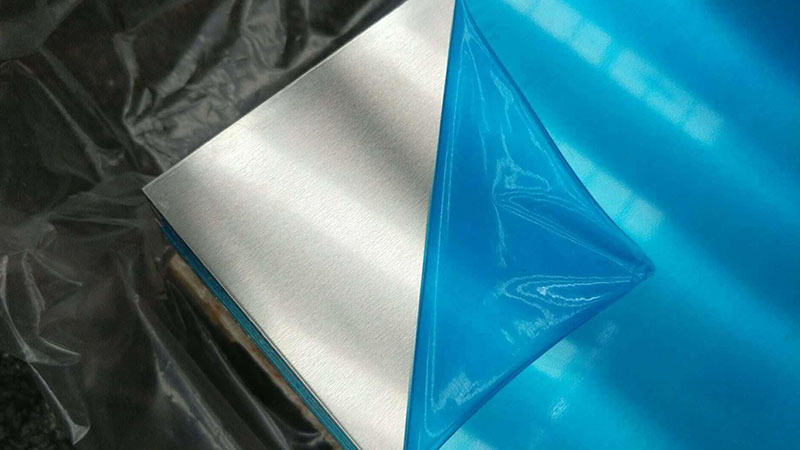
Conclusion
3003 aluminum is versatile, easy to fabricate, and offers excellent corrosion resistance, making it ideal for various applications, from construction to packaging. Its moderate strength, combined with good formability and weldability, makes it a popular choice for sheet metal fabrication.


