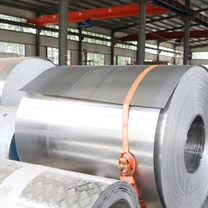
What is thick aluminum foil?
Thick aluminum foil is thicker than regular aluminum foil. Some thick aluminum foils or household extra-heavy-duty aluminum foils are available in thicknesses up to 0.94 mils.
It is made of aluminum and is coated with a thin layer of aluminum oxide to prevent corrosion.
Regular aluminum foil, also known as standard household aluminum foil or standard aluminum foil, is typically about 0.63 mils thick.
Aluminum foil is a thin sheet of metal 0.002-0.003 inches thick, commonly used as a protective barrier in items such as oven-safe dishware and microwave food wraps, foil pans, foil trays, foil containers, foil bags, foil seals, etc.
Thick aluminum foil is typically made from one of three different types of aluminum: high-purity aluminum (99.9%), ultra-high-purity aluminum (99.99%), or an alloy of the two (90% high-purity aluminum and 10% ultra-pure aluminum). high purity).

Heavy duty aluminum foil
Heavy-duty aluminum foil for household use is typically 0.024 mm (0.94 mil), while commercial heavy-duty aluminum foil is 0.08 mm.
How many atoms thick is aluminum foil?
By dividing this by the surface area, we find the thickness of the aluminum foil in centimeters. (This value is 2.86 *10^-3 centimeters.) This value converts to 2.86*10^5 angstroms. Each aluminum atom is about 1.48 Angstroms, so we can divide that.
How to know the thickness of aluminum foil?
You get the mass divided by the density to get the total volume. Divide its volume by the area of the foil you purchased to get its thickness. The larger the mass you weigh, the more accurate your thickness estimate will be. The density of pure aluminum at room temperature is 2.70 g/cm3.

What is the difference between tin foil and aluminum foil?
People often refer to aluminum foil as tin foil, and tin foil has been replaced by aluminum foil.
Tin foil is harder than aluminum foil. It tends to impart a slight tin smell to wrapped food, which is the main reason it has been largely replaced by aluminum and other materials for packaging food.
Thin aluminum foil formats as low as 6μm (0.24 mil) are also commonly used. Standard household foils are typically 0.016 mm (0.63 mils) thick and heavy-duty household foils are typically 0.024 mm (0.94 mils) thick.
Aluminum foil has unique mechanical properties, it can be formed, strong, and can be "dead-folded", which is advantageous when packaging food in aluminum foil;