Two Different Products Sold Under One Name
Aluminum square tube has become one of the most widely used ceiling and cladding components of the past decade. The open, square-section profile leaves sightlines clear, allows air to pass, and reads as a clean, orderly grid that suits contemporary interior design. It is quick to hang and easy to remove for access to services above, which is why it has moved from a niche decorative item to a mainstream specification in commercial ceilings. What is often overlooked is that the market offers two fundamentally different products under the same name: tube roll-formed from aluminum plate or coil, and tube extruded from a profile die. They look similar in a photograph and behave very differently on site.
Roll-Formed Aluminum Square Tube
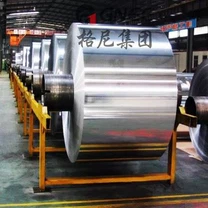
Roll-formed tube starts as aluminum sheet or coil that is progressively formed through a series of rolls and closed into a square or rectangular section, with the seam either locked or welded. Because the section is built from flat product, almost any alloy available in sheet can be used, and the tube is not restricted by a die: the specification range is effectively the range of aluminum plate thicknesses the supplier stocks. Tube can be produced with almost no tooling investment beyond the roll set, so cost per metre is low and the product suits large-volume, price-sensitive work.
Material: AA 1100, 3003, 3105 or 5005 sheet and coil, usually in H14, H22 or H24 temper
Forming: continuous roll forming or cold bending, seam locked or welded and dressed
Thickness range: wide, from very light decorative sections up to heavy architectural gauges
Installation: the standard system is a dedicated carrier rail with clip-on or spring-loaded fixings, similar in principle to strip or baffle ceilings
Weather option: a wind-lock clip can be added to the carrier so the sections stay engaged under pressure
Roll-formed tube is normally the economical choice for interior ceilings, bulkheads, canopy soffits and decorative screens.
Extruded Aluminum Square Tube
Extruded tube is pressed from a heated aluminum billet through a square or rectangular die. The material flows continuously through the die, which produces a seamless section with wall thickness, corner radius and internal geometry held tightly along the whole length. Hardness and straightness are markedly better than those of a roll-formed section, and the wall can be designed with ribs, screw ports and carrier slots that a folded section cannot reproduce.
The trade-off is rigidity of format. Each cross-section needs its own die, so the range of sizes is defined by the dies a supplier holds, and the wall thickness cannot be reduced below the point where the metal will not fill the die. In practice, extruded square tube for architectural work is not specified below about 0.6 mm wall, and larger cross-sections generally call for 0.8 mm or more so that the extrusion and the finishing process can hold tolerance. Extruded sections cost more per tonne than roll-formed tube, so they are used where straightness, strength or wind resistance justifies the premium.
Side-by-Side Comparison
| Property | Roll-formed tube (from plate/coil) | Extruded profile tube |
|---|---|---|
| Raw material | Aluminum sheet and coil, 1100 / 3003 / 3105 / 5005 | Extrusion billet, typically 6063 or 6061 |
| Forming route | Continuous roll forming or cold bending, seam locked or welded | Hot extrusion through a square or rectangular die |
| Dimensional freedom | Any size within the available sheet thickness range, no die constraint | Limited to the dies held; wall thickness has a minimum |
| Minimum wall | Set by forming and handling, not by die fill | About 0.6 mm for standard sections, 0.8 mm and above for large sizes |
| Hardness and straightness | Adequate for interior work; straightness depends on roll setup | Higher hardness and straightness than other formed sections |
| Installation system | Carrier rail with spring clips, comparable to strip ceiling systems; wind-lock clips available | Upper main frame with screws and dedicated connectors; load taken by the frame |
| Wind resistance | Moderate; suitable for protected interiors | High; used for exterior soffits and facades |
| Curved sections | Bending is limited by the seam and the wall | Special sections can be stretched and bent into arcs for design features |
| Carrier spacing | Fixed by the clip system | Can be adjusted freely within the design span |
| Cost position | Lower material and tooling cost, suited to volume decorative work | Higher cost per unit, reserved for demanding performance and premium projects |
Installation, Specification and Ordering Notes
The two products are installed differently and the fixings are not interchangeable. Roll-formed sections are pressed into a carrier rail and held by spring clips, with wind-lock clips added on exposed soffits. The rail spacing and clip type control the visual rhythm, so they are chosen before the tube is ordered. Extruded sections hang from an upper main frame and are locked with screws and dedicated connector pieces, which makes the assembly stiffer and lets the designer set the carrier spacing to suit the span rather than the clip.
Allow for thermal movement on exterior runs and at long interior lengths; provide expansion gaps at the perimeter.
Fix the module and the joint pattern before ordering, because section length and spacing are cut to suit it.
Choose the finish at the same time as the alloy: anodizing reads differently on 1100 than on 6063.
For exterior service, specify the alloy, temper, coating system and fixing material together; mixed metals at a fixing point will drive galvanic corrosion.
Sheet-based tube is ordered against ASTM B209 or the equivalent EN 485-2 and GB/T 3880.2, while extruded tube is ordered against ASTM B221, EN 755-2 or GB/T 6892, with architectural finishing covered by GB/T 5237 for anodized and organic coatings. Anodized layers for interior work are commonly specified at 10 to 15 micrometres and thicker for exterior exposure, while powder coatings are usually 40 to 120 micrometres depending on the environment. The order should state alloy and temper, section size, wall thickness, length and tolerance, straightness, finish and colour, and the connector system that will be used.
Frequently Asked Questions
Q: Which type of aluminum square tube should be used for an interior ceiling?
Roll-formed tube from aluminum plate is normally sufficient and is the more economical option, provided the carrier and clip system matches the module. Extruded tube is selected when straightness, span or a visible joint-free appearance is critical.
Q: Why is there a minimum wall thickness for extruded square tube?
Below roughly 0.6 mm the metal cannot fill the die reliably and the extrusion loses straightness and dimensional control. Larger cross-sections generally require 0.8 mm or more to hold the same tolerances.
Q: Can extruded square tube be curved?
Yes. Special sections can be stretched and bent into arcs, which opens up curved ceiling and facade designs that folded sections cannot deliver. The bend radius depends on the wall thickness, so it is confirmed with the extruder before design freeze.
Q: Which one is better outdoors?
Extruded tube, because its tight wall and higher section stiffness resist wind load and its linear tolerance keeps long runs visually straight. The fixing frame and the coating system matter as much as the section itself.
Q: Are roll-formed and extruded square tubes interchangeable on site?
No. The connectors are different, the clip systems are different and the load path is different. Substituting one for the other after the carrier or frame has been installed will not work.
Q: Does the alloy choice affect anodized colour?
Yes. Anodizing responds to alloy and temper, so 1100 sheet, 3003 sheet and 6063 extrusion can finish slightly differently in the same bath. Where colour consistency across a project matters, specify the alloy and finish for all components together.