The global energy environment is undergoing a fundamental shift, driven by rising demand for greener fuels and greater energy security.
Liquefied natural gas (LNG) is at the vanguard of this transition, providing a flexible and efficient energy source.
However, storing and transporting LNG, which requires keeping natural gas at an ultracold temperature of around -162°C (-260°F), presents significant engineering hurdles.
The success and safety of these cryogenic activities are heavily reliant on the selection of materials that can work consistently under such severe settings.
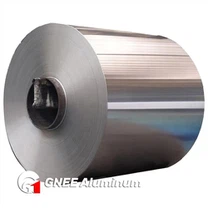
In this difficult environment, 5083 aluminum sheet for LNG tanks has emerged as the clear material of choice, thanks to its remarkable cryogenic performance and structural integrity.

Understanding 5083 Aluminum Alloy: A Metallurgical Foundation
5083 aluminum is a famous member of the 5xxx series (Al-Mg alloys), known for its high strength and corrosion resistance, particularly in maritime conditions.
Its particular alloying constituents are painstakingly adjusted to ensure optimal performance at both ambient and cryogenic temperatures.
| Item | Specification |
|---|---|
| Product | 5083 Aluminum Sheet |
| Alloy | 5083 |
| Temper | O, H111, H112, H116, H321, H32, H34, H38, T6 |
| Thickness | 0.5 – 500mm |
| Width | 20 – 2650mm |
| Length | 500 – 16000mm |
| Standard | ASTM B209, EN 573-3, EN 485-2, GB/T 3880 |
| Surface | Mill finish, anodized, coated, polished |
| Features | Excellent corrosion resistance, high strength, good weldability, fatigue resistance |
| Application | Marine plates, shipbuilding, LNG tanks, pressure vessels, transportation, armor plates, architecture |
Composition Breakdown:
Magnesium (mg): Magnesium is typically the predominant strengthening agent, ranging from 4.0% to 4.9%. It produces a solid solution within the aluminum matrix, considerably boosting tensile and yield strength.
Manganese (Mn): Manganese, which ranges from 0.4% to 1.0%, boosts strength and ductility. It also aids in grain structure regulation and increases resistance to intergranular corrosion.
Chromium (Cr): A modest addition of chromium, usually 0.05% to 0.25%, refines the grain structure and increases stress corrosion cracking resistance.
Titanium (Ti): Often present in trace levels (0.15% maximum), titanium aids in grain refinement after solidification, enhancing mechanical characteristics and weld strength.
Unlike heat-treatable alloys (such as the 6xxx or 7xxx series), 5083 aluminum alloy is not heat-treatable.
Manufacturers acquire its mechanical qualities largely through strain hardening (cold working), which is followed by annealing or stabilization. Common temperatures for LNG tank usage are
5083 O (Annealed): Provides high ductility and formability, making it appropriate for the initial formation of complicated shapes.
5083 H111: A gently strain-hardened temper that strikes an excellent balance between strength and ductility.
5083 H321: A strain-hardened and stabilized temper that provides increased resistance to stress corrosion cracking, making it ideal for welded constructions subjected to sustained stress.