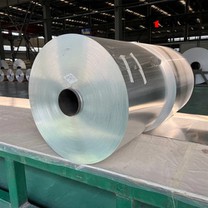
The 6061 T651 aluminum alloy-often referred to as "duralumin"-is widely recognized in the manufacturing industry for its excellent mechanical strength and its precipitation-hardened supply condition. This alloy features a well-balanced chemical composition, containing controlled levels of Mg, Cr, Cu, Si, Zn, Fe, Mn, and Ti, all of which contribute to its remarkable performance characteristics.
Available in both rolled and extruded forms, 6061 T651 undergoes heat treatments that promote precipitation hardening, resulting in impressive mechanical properties. It provides a minimum tensile strength of 290 N/mm², a minimum yield strength of 241 N/mm², and a hardness of 95 HBN, making it suitable for applications requiring high strength with low weight. GNEE supplies this alloy for a wide range of industrial uses.
Properties of 6061 T651 Aluminum
Regarding its physical properties, 6061 T651 offers a thermal expansion coefficient of 24.0 × 10⁻⁶/°C within the 0–100°C range. Additionally, from 0 to 200°C, it delivers thermal conductivity of 1,180 BTU·in/ft²·h·°F.
Distinctive features of 6061 T651 include moderate machinability, good weldability, and compatibility with surface finishing processes such as anodizing, chrome plating, and nickel plating. While it provides better corrosion resistance than alloys in the 7000 series, its versatility makes it a preferred option for structural components used in fixtures, gauges, and mechanical parts. It is also applied in polymer molding processes-such as thermoforming, vulcanizing, and polyurethane molding-and, to a lesser extent, in the production of medical equipment components.
6061-T651 aluminum is a strong and versatile alloy valued for its high corrosion resistance, excellent weldability, and outstanding machinability. It provides high strength (Yield ~40 ksi / 276 MPa, Ultimate ~45 ksi / 310 MPa) along with superior dimensional stability and reduced internal stresses compared to the T6 temper, making it well suited for precision aerospace components, structural frameworks, marine parts, and heat dissipation applications such as heat sinks. The alloy has a density of approximately 2.7 g/cc, a Brinell hardness around 95, and supports a wide range of finishing processes. GNEE supplies 6061-T651 aluminum for demanding industrial and engineering applications.

Mechanical Properties (Typical)
Ultimate Tensile Strength: 45,000 psi (310 MPa)
Yield Tensile Strength: 40,000 psi (276 MPa)
Shear Strength: 30,000 psi (207 MPa)
Fatigue Strength: 14,000 psi (96.5 MPa)
Elongation: 12% (1/16" thick) to 17% (1/2" thick)
Brinell Hardness: 95 HB
Modulus of Elasticity: 10,000 ksi (68.9 GPa)
Poisson's Ratio: 0.33
Physical & Thermal Properties (Typical)
Density: 0.0975 lb/in³ (2.7 g/cc)
Thermal Conductivity: 1160 BTU-in/hr-ft²-°F (167 W/m·K)
Specific Heat Capacity: 0.214 BTU/lb-°F (0.896 J/g·°C)
Melting Point: 1080–1205°F (582–652°C)
Linear Thermal Expansion: ~23.6 µin/in-°F (42.6 µm/m·°C) (20–100°C)
Chemical Composition (Weight %)
Aluminum: Balance (95.8–98.6%)
Silicon (Si): 0.4–0.8%
Magnesium (Mg): 0.8–1.2%
Copper (Cu): 0.15–0.4%
Iron (Fe): Max 0.7%
Chromium (Cr): 0.04–0.35%
Zinc (Zn): Max 0.25%
Manganese (Mn): Max 0.15%
Titanium (Ti): Max 0.15%
Key Characteristics
T651 vs. T6: T651 undergoes stress relief after quenching, providing better dimensional stability and machinability with slightly lower strength than T6.
Weldability: Excellent
Corrosion Resistance: High
Machinability: Excellent, superior to T6
Finishing: Suitable for anodizing, plating, and painting