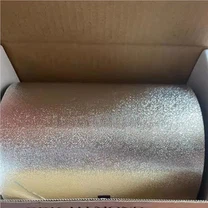
Pharmaceutical Aluminium Foil and What Makes It Different
Pharmaceutical aluminium foil is one of the most mature foil applications in daily use. Its main duties are blister packaging for capsules and tablets and bag packaging for powder granules and liquids. Because the foil comes into direct contact with medicines that are taken orally, regulatory requirements on both appearance and performance are far stricter than for general packaging foil.
The demands fall into two groups. Appearance requirements cover the visible surface of the foil strip: no oil stains, no sparkles, no black lines, no pinholes, no yellow spots and no ruffles. Performance requirements cover barrier behaviour, chemical resistance, chemical stability and hygiene, because the foil is the only barrier standing between the product and the atmosphere. Good moisture resistance and a reliable barrier against vapour and gas keep the active ingredient stable through shelf life.
Alloy Choice and Thickness Range
| Alloy | Typical thickness | Typical position in the pack |
|---|---|---|
| 8011 aluminium foil | Generally below 0.05 mm | Lidding and blister applications where thin, formable foil is required |
| 8021 aluminium foil | 0.05 mm and above | Applications needing a heavier gauge for strength, rigidity and forming depth |
Two alloys therefore cover most of the market: the thinner 8011 grade and the heavier 8021 grade. Selecting between them is a question of the forming depth and mechanical strength the pack requires, not of barrier performance alone, because both are chosen for moisture resistance, chemical resistance and hygiene in direct contact with the product.
The Production Route Step by Step
The main process flow is fixed and each step has its own quality gate:
Billet inspection - the incoming cast billet is checked before any rolling begins.
Billet rolling - the first reduction stage that establishes the metallurgical condition.
Split rolling - the strip is doubled and rolled further to reduce thickness efficiently.
Coil rolling - continued reduction to the final gauge under controlled lubrication.
Rolled finished product - the coil is inspected as rolled foil.
Slitting - the coil is cut to the widths the packing line needs.
Furnace annealing - heat treatment to soften the foil and remove rolling lubricant.
Finished product packaging - the annealed coil is packed for shipment.
Control of surface and performance is concentrated at four points along this route, and each one addresses a different class of defect.
Control Point One: Billet Quality and Defect Avoidance
Quality has to be controlled from the source. Blanks must be strictly inspected before rolling, because inclusions, segregation or surface defects in the billet cannot be rolled out later - they appear as black lines, oxide streaks or pinholes in the finished foil. Starting with a verified billet is the cheapest way to protect the appearance of the strip.
Control Point Two: Rolling, Slitting and Annealing Controls
During rolling, surface quality is managed through several linked variables: the rolls are kept clean and their roughness is controlled, a suitable rolling oil is selected, the viscosity of the rolling oil is reduced where required, and the operating speed of the machine is regulated. Together these settings determine whether the foil leaves the mill with an even, oil-free surface or with marks, stains and streaks.
During slitting, the trimmed edges of the aluminium coil must be neat and completely free from quality problems such as ruffles, because an uneven edge propagates into the blister forming line and disrupts feeding.
During annealing, both the annealing time and the annealing temperature are set according to the performance requirements of the medicinal foil. The objective is dual: reach the required softness and temper for forming, and achieve clean degreasing of the strip. An annealing cycle that is too short leaves residual lubricant; one that is too long or too hot can affect the mechanical condition of the foil.
Inspection after these stages concentrates on the appearance list - oil stains, sparkles, black lines, pinholes, yellow spots and ruffles - and on the barrier properties that follow from them, since a single pinhole or an oil-marked area compromises the protection of the medicine.
Frequently Asked Questions
Q: What is pharmaceutical aluminium foil used for?
Its main uses are blister packaging for capsules and tablets and bag packaging for powder granules and liquids, where the foil protects the product in direct contact with it.
Q: Which alloys are common for medicinal foil?
8011 aluminium foil and 8021 aluminium foil are the two common grades; 8011 is generally thinner than 0.05 mm and 8021 is 0.05 mm and above.
Q: What defects must the surface be free from?
No oil stains, no sparkles, no black lines, no pinholes, no yellow spots and no ruffles, because each of them can reduce barrier performance in the finished pack.
Q: How is billet quality linked to final surface quality?
Quality must be controlled from the source: billet defects such as inclusions cannot be removed by later rolling, so strict blank inspection is the first defence against black lines and pinholes.
Q: What is controlled during the rolling stage?
Roll cleanliness and roughness, the selection of rolling oil, a reduction in rolling oil viscosity where needed, and the operating speed of the machine.
Q: Why is the annealing stage critical?
Annealing time and temperature are set to meet the performance requirements of the foil, delivering both the correct temper for forming and clean degreasing of the surface.
Q: Why is edge quality important after slitting?
Slitting must leave the coil edges neat and free from ruffles, since edge defects interfere with downstream forming and packing operations.