Why Pretreatment Decides the Final Quality of 1100 Aluminium Parts
1100 aluminium plate belongs to the 1xxx commercially pure aluminium series and is widely used in automotive, construction and general engineering work. The metal is chemically unstable in air: a natural oxide film forms within minutes and is difficult to identify with the naked eye. That film, plus the contamination left behind by each forming step, is what the pretreatment line has to remove in a controlled way. Improving the quality of the aluminium product starts here, because no coating, adhesive or anodised layer can outperform the surface it is applied to.
The critical rule is that pretreatment cannot follow one fixed recipe. Workpieces reach the line in very different conditions depending on how they were made - casting, rolling, direct shearing, mechanical finishing, heat treatment or welding after forming. Each route leaves a different surface state, a different type and depth of soil, and a different oxide structure.
Surface Condition Varies with the Forming Route
Cast or as-formed surfaces carry a thick oxide layer produced during solidification, and unmachined areas may still hold a sand layer from the mould.
Rolled and sheared plate carries rolling oils, fine metal debris and a thinner but tightly bonded oxide.
Mechanically finished parts show machining marks, coolant residues and localised burnishing that can seal oil into the surface.
Heat-treated parts develop a heavier, more structured oxide and may carry quenching residues.
Welded assemblies present heat-tinted zones, spatter and a chemically different surface over the weld bead and heat-affected zone.
Because of this spread, the pretreatment sequence - degreasing, oxide removal, desmutting, rinsing and drying - has to be selected from the actual condition of the workpiece surface rather than copied from a general specification.
Treating As-Cast and Unmachined Surfaces
Not all surfaces of a solid casting are machined. The untreated surface retains the excessively thick oxide layer formed during casting, and some areas still carry a sand layer. In these cases the original oxide film should be removed first - by machining, sandblasting, or alkali cleaning followed by a suitable post-treatment - before the part enters the rest of the pretreatment sequence.
Skipping this step causes two distinct problems. First, an oxide layer that survives into the later stages can be loosened rather than removed and then re-deposited on other surfaces. Second, aggressive removal of the original oxide on unmachined faces can shift the tolerance dimensions of adjacent machined positions, so the part no longer fits its assembly. Deciding which surfaces are cleaned mechanically and which are treated chemically is therefore a dimensional question as much as a surface question.
Precautions for Precision and Fine Workpieces
Fine workpieces behave differently. The natural oxide film on their surface forms first and is comparatively easy to remove, so oxide removal is rarely the limiting step. Oil is. Oily workpieces - especially the walls and surroundings of drilled holes - must be cleaned with high-quality solvents before any alkaline treatment.
If an oily part is placed directly into an alkali bath, two things go wrong: the oil is difficult to remove completely, and it breaks up into fine droplets that redeposit elsewhere on the workpiece. At the same time, a thin precision part cannot withstand prolonged strong-alkali corrosion. The etch attack roughens the surface, changes the roughness that the finished part depends on and consumes material from the tolerance envelope, which can turn a finished component into scrap. The practical sequence is therefore a solvent or emulsion degrease first, followed by a short, closely monitored alkaline step, then thorough rinsing.
Process Sequence and Dimensional Control
Identify the forming route of every batch before selecting the sequence; do not assume a single line setting covers castings, rolled plate and machined parts.
Degrease before deoxidising, with particular attention to holes, recesses and blind pockets where oil collects.
When unmachined casting surfaces are present, remove the original oxide mechanically or by alkali cleaning with post-treatment before the rest of the line.
Keep alkaline contact short and controlled on thin or precision parts to protect surface roughness and tolerances.
Rinse between every stage so that oil, etchant and desmutting residues do not carry over into the next bath.
Verify the surface after drying: a uniform, water-wettable, oil-free finish indicates that the pretreatment matches the actual workpiece condition.
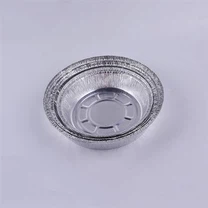
1100 plate itself supports this approach well. As a pure aluminium grade it offers low strength combined with good ductility, formability, weldability and corrosion resistance, which is why it is used for utensils, heat sinks, bottle caps, printing boards, building materials and heat exchanger components, and why it is also chosen for deep stamping products. From cookware to industrial equipment, the property that carries the part through forming is the same property that makes the surface sensitive to over-etching - softness combined with high chemical reactivity.
Frequently Asked Questions
Q: Why must oily 1100 aluminium parts be degreased before alkaline cleaning?
Because alkali alone struggles to lift the oil, breaks it into droplets that redeposit on the surface, and simultaneously attacks the metal, damaging roughness and tolerances on thin or precision parts.
Q: How should unmachined casting surfaces be handled?
Remove the thick casting oxide first by machining, sandblasting or alkali cleaning with post-treatment, so the original oxide film does not survive into later stages or shift the tolerance dimensions of machined positions.
Q: Can one pretreatment recipe be used for every batch?
No. Cast, rolled, sheared, machined, heat-treated and welded workpieces each leave a different surface state, so the sequence must be selected from the actual condition of the workpiece surface.
Q: What is the risk of long alkaline immersion for fine workpieces?
Prolonged strong-alkali corrosion roughens the surface and removes material from the tolerance envelope, which can make the finished part unusable.
Q: Which applications suit 1100 aluminium plate?
Utensils, heat sinks, bottle caps, printing boards, building materials and heat exchanger components, plus deep stamping products, thanks to good ductility, formability, weldability and corrosion resistance at low strength.
Q: How do you confirm that pretreatment was successful?
The dried surface should be uniform, free from oil and residues, and fully water-wettable, with the dimension and roughness of machined features unchanged from the incoming condition.