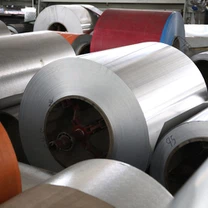
What Are 5083 and 5383 Aluminum Square Bars?
5083 and 5383 are aluminum alloys from the 5xxx (Al-Mg) series, produced in square bar form for structural and engineering applications. Both alloys are strengthened by cold work rather than heat treatment, and both are known for excellent corrosion resistance, especially in marine environments, together with good weldability. 5383 was developed as an upgraded version of 5083: it shares the same basic Al-Mg system but adds a small zirconium addition, which raises strength and hardness while maintaining the corrosion behavior of the 5xxx family. Square bars in these alloys are used in shipbuilding, vehicle construction, offshore structures, and low-temperature equipment where a combination of moderate-to-high strength, toughness, and corrosion resistance is required.
Composition Comparison
The main alloying elements of 5083 are magnesium at about 4.0-4.9 percent and manganese at about 0.40-1.0 percent, with small amounts of chromium for grain control and the balance aluminum. The published composition of 5383 is similar, with magnesium at about 4.0-4.9 percent and manganese at about 0.40-1.0 percent, plus a small zirconium addition, with the balance aluminum. The zirconium in 5383 contributes to a finer, more stable grain structure and higher strength. Both alloys keep silicon and iron at low impurity levels, and the registered limits are defined by the Aluminum Association designation system.
Mechanical Properties
Typical mechanical values published for 5083 square bar include a tensile strength of at least 270 MPa, yield strength of at least 110 MPa, and elongation of at least 20 percent. Typical values for 5383 square bar include a tensile strength of at least 275 MPa, yield strength of at least 125 MPa, and elongation of at least 16 percent. In the H116 marine temper, 5383 can reach a tensile strength of about 305 MPa and a yield strength of about 215 MPa, and its hardness is roughly 10 percent higher than 5083 in comparable conditions. The density of both alloys is approximately 2.7 g/cm3, significantly lower than steel, which is why these bars are favored in shipbuilding and vehicle manufacturing to reduce structural weight and improve fuel efficiency. Guaranteed minimum values for an order should always be confirmed against the governing standard, such as EN 485, EN 755, or the applicable ASTM product standard, and against the material test certificate.
Corrosion Resistance and Low-Temperature Performance
5083 exhibits excellent corrosion resistance to atmospheric exposure, fresh water, seawater, alcohol, gasoline, organic acids, and concentrated nitric acid, which makes it especially suitable for marine service. Its tensile strength, yield strength, and elongation all improve as temperature decreases, giving it good low-temperature toughness for cryogenic and cold-climate applications. 5383 maintains these characteristics and is generally considered to offer improved corrosion resistance in saltwater environments, which is why it is often specified for higher-performance marine structures. Both alloys should be protected against sustained high-temperature service, since Al-Mg alloys with elevated magnesium content can sensitize over long exposure, and any design for hot service should be checked against recognized guidance.
Applications and Selection Guidance
5083 square bar is used in ship hulls and superstructures, vehicle frames and platforms, pressure vessels, storage tanks, and general marine structures where proven performance and economy matter. 5383 square bar is specified where higher strength is required without giving up corrosion resistance, for example in high-speed craft structures, offshore components, and low-temperature pressure equipment. When choosing between the two, consider the strength requirement of the design, the forming and welding methods, the service environment, and the availability of the temper. Welding of both alloys is straightforward with appropriate 5xxx filler metal, and welded structures retain good strength because the alloys are not heat-treatable. Order by alloy, temper, section size, length, and governing standard, and request the material test certificate to verify the delivered properties.
FAQ
Q: What is the main difference between 5083 and 5383?
A: 5383 is an upgraded version of 5083 with a small zirconium addition, which gives it higher strength and hardness while maintaining the corrosion resistance and weldability of the Al-Mg family.
Q: Which alloy is stronger, 5083 or 5383?
A: 5383 has higher typical tensile and yield strength. In the H116 temper it reaches roughly 305 MPa tensile and 215 MPa yield, compared with typical 5083 values of at least 270 MPa tensile and 110 MPa yield.
Q: Are 5083 and 5383 suitable for seawater service?
A: Yes. Both alloys offer excellent corrosion resistance in saltwater environments, and 5383 is generally regarded as the more corrosion-resistant of the two.
Q: Can these alloys be welded?
A: Yes. Both weld well with 5xxx filler metal using standard MIG or TIG processes, and because they are not heat-treatable they do not require post-weld aging.
Q: Do 5083 and 5383 perform well at low temperature?
A: Yes. Both alloys maintain or improve their mechanical properties as temperature decreases, which makes them suitable for low-temperature vessels and storage tanks.
Q: What information is needed when ordering square bars?
A: Specify the alloy, temper, square section dimensions, length, quantity, and governing standard, and request the material test certificate with chemical composition and mechanical test results.