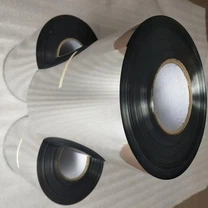
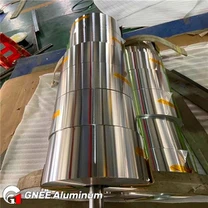
Overview of 6061 Aluminum
6061 aluminum is one of the most commonly used heat-treatable aluminum alloys. It plays a crucial role in demanding applications thanks to its balanced combination of strength, machinability, weldability, and excellent resistance to corrosion. As a heat-treatable alloy, it offers a strong strength-to-weight ratio-stronger than pure aluminum yet much lighter than steel and copper-making it ideal where both strength and low weight are essential.
GNEE supplies 6061 aluminum in 16 sub-specification types, available in multiple standard or customized shapes and forms.
Key Advantages of 6061 Aluminum
• High Strength-to-Weight Ratio
6061 aluminum provides significantly higher strength than pure aluminum while still being far lighter than steel and copper.
• Excellent Thermal and Electrical Conductivity
Its strong thermal conductivity makes it suitable for heat sinks and other heat-transfer applications. Additionally, its good electrical conductivity supports various electrical and electronic uses.
• Strong Corrosion Resistance
6061 aluminum withstands corrosion from concentrated nitric acid, ammonia, and ammonium hydroxide, ensuring durability even in harsh working environments.
Chemical Composition of 6061 Aluminum
| Element | Limiting Chemical Composition (%) |
|---|---|
| Aluminum | 97.9% |
| Magnesium | 1.0% |
| Silicon | 0.6% |
| Copper | 0.28% |
| Chromium | 0.20% |
| Iron | 0.20%–0.80% |
| Other Elements | 0.15% |
Fabrication and Machining Guidelines
6061 aluminum is easy to fabricate and machine. Using sharp cutting tools and proper lubrication ensures smooth, accurate cuts while minimizing burr formation. Avoid excessive heat during processing, as overheating can soften the material and negatively affect its workability.
6061 aluminum is also one of the most recyclable materials worldwide, capable of being recycled repeatedly without any loss in quality.
Weldability and Surface Finishing
6061 aluminum offers excellent weldability with TIG, MIG, and arc welding. Selecting a compatible filler metal-commonly 5356-helps achieve strong, reliable welds. The alloy also supports multiple finishing processes such as anodizing, painting, and powder coating, allowing both functional and aesthetic customization.
Mechanical Properties of 6061-T6 Aluminum
| Mechanical Properties (T6) | Imperial | Metric |
|---|---|---|
| Ultimate Tensile Strength | 45,000 psi | 310 MPa |
| Tensile Yield Strength | 40,000 psi | 276 MPa |
| Elongation at Break | 12% | 12% |
| Young's Modulus | 10,000 ksi | 69 GPa |
Physical Properties
Density: 2.7 g/cm³
Melting Point: 585°C (1,085°F)
Thermal Conductivity: 152 W/(m·K)
Thermal Expansion Coefficient: 2.32 × 10⁻⁵ K⁻¹
Specific Heat Capacity: 897 J/(kg·K)
Hardness (Rockwell B): 60
Hardness (Vickers): 107
Heat Treatment Process for 6061 Aluminum
To achieve desired mechanical properties, proper heat treatment is essential:
Clean the material thoroughly to remove any grease or oil contamination.
Use a calibrated furnace to heat the alloy to the solution heat-treatment temperature:
985°F (530°C)
Maintain uniform heating to prevent distortion by rotating the part or using distributed heat sources.
Hold at temperature for approximately 1 hour per inch of thickness.
Quench rapidly in water to lock in dissolved alloy elements and avoid reprecipitation that weakens the alloy. Use proper support fixtures to prevent part distortion.
Age the material after quenching:
Temperature: 350°F (177°C)
Time: 8 hours
Allow the part to cool to room temperature.
Consult a qualified heat-treating specialist if unsure about any stage of the process.

Applications and Common Uses of 6061 Aluminum
Aerospace
Aircraft wings, fuselage structures
Helicopter rotors
Landing gear components
Engine parts
Automotive
Engine blocks and heads
Transmission housings
Brake calipers, suspension parts
Wheels and rims
Construction
Building facades and roofs
Structural beams and supports
Bridges, towers, and pylons
Marine
Ship hulls and decks
Boat frames and superstructures
Docks, piers, and yacht components
Electronics
Heat sinks
Heat exchangers
Enclosures, circuit boards, battery housings
Furniture
Frames for chairs, tables, beds, desks
Outdoor structures
Fasteners
Rivets, screws, washers, nuts, bolts
Additional uses include bicycle and motorcycle frames, scuba tanks, camera lenses, fishing gear, archery equipment, medical devices, and various sporting goods.
For high-precision components and dependable performance, GNEE provides reliable 6061 aluminum solutions tailored to diverse industrial needs.