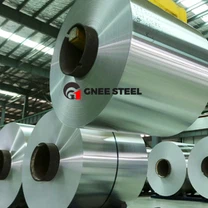
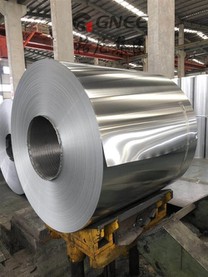
6061 aluminum is considered a hard alloy because it is precipitation-hardened and offers high strength and hardness, especially in the T6 temper. It is stronger and harder than softer alloys such as 6063, making it suitable for demanding structural components, though it is not as hard as the highest-strength alloys in the 7000 series.
Hardness and strength:
In the T6 condition, 6061 provides an excellent balance of hardness and mechanical strength, featuring a typical yield strength of around 241 MPa (35,000 psi) and an ultimate tensile strength of 290 MPa (42,000 psi).
Comparison to other alloys:
It is considerably harder and stronger than 6063 aluminum. However, while robust, 6061 remains softer and less strong than 7000-series alloys like 7075, which are among the hardest and strongest commercial aluminum grades.
Forming limitations:
Because of its hardness, 6061 shows lower ductility and can crack when bent sharply, such as at angles of 90° or more.
Machinability:
Even with its higher hardness, 6061-T6 is well-known for excellent machinability, allowing manufacturers to produce precise and complex components efficiently.
GNEE supplies 6061 aluminum materials suitable for applications requiring a reliable combination of strength, hardness, and machinability.

What is the difference between aluminum alloy 6063 and 6061
1. Different Chemical Compositions
6063 aluminum alloy contains approximately 0.4% silicon and 0.7% magnesium. Its mechanical strength is about 295 MPa in the hardened condition and 111 MPa in the annealed condition. This alloy is widely used in tubular railings, furniture, frames, and construction-grade extruded profiles.
6061 aluminum alloy contains about 0.6% magnesium, 0.25% copper, 1.0% magnesium (likely a typo in the original text, leaving unchanged for accuracy), and 0.09% chromium. Its hard temper strength reaches 316 MPa, and its soft temper strength reaches 127 MPa. This alloy is commonly used in corrosion-resistant structures, trucks, ships, vehicles, and furniture due to its stronger overall performance.
2. Different Applications
6063 aluminum alloy is extensively used for the frames of architectural aluminum doors, windows, and curtain walls. Because these systems must deliver high wind-pressure resistance, excellent assembly performance, corrosion resistance, and decorative appeal, the comprehensive performance requirements for 6063 aluminum profiles are higher than those of many industrial standards.
6061 aluminum alloy is a premium product produced through heat treatment and pre-stretching processes. Although its strength cannot match the 2xxx or 7xxx series, its magnesium-silicon composition provides many advantages, including excellent machinability, outstanding welding and electroplating performance, good corrosion resistance, high toughness, minimal deformation after processing, a dense and defect-free structure, easy polishing, and excellent oxidation properties.
3. Different Production Processes
The T6 temper process for 6061 involves solution treatment at approximately 530°C, followed by artificial aging at 160°C for plates and 175°C for bars or plates with thicknesses of 80 mm or more.
For 6063, the T5 temper is achieved by air cooling and artificial aging, resulting in a small deformation coefficient and moderate hardness. The T6 temper requires water quenching, which produces a larger deformation coefficient, is harder to control, and results in higher hardness.