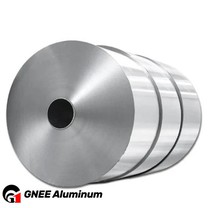
Hydrophilic aluminum foil is the main raw material for heat exchangers in household air conditioners and has a great impact on the efficiency of air conditioners. If the raw material of the heat exchanger is hydrophilic aluminum foil, the refrigeration efficiency can be increased by 5%. It is also anti-corrosion and anti-mold, has no odor, and will not cause the accumulation of water droplets to block the heat exchange. Hydrophilic aluminum foil is a deep-processed aluminum foil product that is coated with anti-corrosion coating and hydrophilic coating on plain aluminum foil. Aluminum foil made by coating an air-conditioning aluminum foil with a thickness of about 0.1mm with an anti-corrosion coating and a hydrophilic coating and drying it in a drying oven. The surface of hydrophilic coated aluminum foil has strong hydrophilicity. When used in air conditioners, it can optimize the ventilation effect of the heat exchanger, thereby increasing the heat exchange rate by 5%. In addition, hydrophilic coated aluminum foil also has other advantages such as anti-corrosion, anti-mold, and no odor. It is mainly used in mid-to-high-end and export air conditioners.

Hydrophilic foil is the main raw material for heat exchange fins in air conditioners. It is widely used in household air conditioners, refrigerators, automobile air conditioners and other refrigeration equipment. Ten years ago, the thickness of aluminum foil for domestic air conditioner heat exchange fins was about 0.15 to 0.2 mm. Now it has developed to 0.103~0.15mm. Through the introduction of new technologies, the thickness of aluminum foil will be even thinner, and there is a trend of development towards 0.09mm or even 0.08mm. Hydrophilic aluminum foil has the following advantages compared with ordinary light foil:

1. It can increase the anti-corrosion, anti-fungal and odor-free functions;
2. The condensed water on the accumulation surface of the heat exchange fins is evenly distributed on the surface, and the formation of water droplets will not cause accumulation and blockage between the heat exchange fins, affecting the heat exchange conditions, thereby increasing the heat exchange rate by 5%;
3. Since the water has no beads, the noise caused by vibration is also reduced accordingly;
4. It can prevent the oxidized powder from the air conditioner from being blown into the room and have adverse effects on the human body, and meets environmental protection requirements;
5. The hydrophilic aluminum foil used for air conditioner heat sinks should comply with the regulations of YS/T95.2---2001.