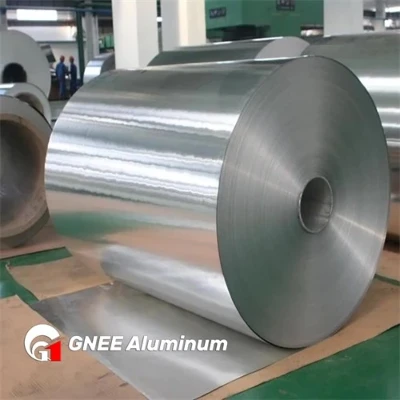
1050 Aluminum Sheet Explained: Properties, Applications, and Key Benefits
Choosing the right aluminum material can significantly impact product performance, durability, and cost efficiency. At GNEE, we supply high-quality aluminum sheets and plates to support a wide range of industries worldwide. In this guide, you'll gain a comprehensive understanding of 1050 aluminum sheet, including its properties, advantages, applications, and limitations-helping you decide whether it's the right solution for your project. Reach out to GNEE today to explore customized 1050 aluminum sheet and plate options.
Introduction to 1050 Aluminum Sheet and Aluminum Plate
Aluminum is one of the most widely used metals globally, valued for its low density, corrosion resistance, and excellent workability. Among aluminum alloys, the 1xxx series aluminum sheets and plates stand out due to their exceptionally high purity.
1050 aluminum sheet is a representative alloy in this series, offering outstanding corrosion resistance, electrical conductivity, and formability. These characteristics make it a preferred material for many non-structural and functional applications across electrical, chemical, and general manufacturing sectors.

What Is a 1050 Aluminum Sheet?
1050 aluminum sheet and aluminum plate belong to the 1xxx series of wrought aluminum alloys, which are defined by their high aluminum content. Specifically, 1050 aluminum contains at least 99.5% pure aluminum, placing it among the purest commercial aluminum grades available.
This high purity gives 1050 aluminum excellent resistance to corrosion and very good electrical and thermal conductivity. While its mechanical strength is relatively low compared with alloyed grades, its workability and surface quality make it ideal for many industrial and commercial uses.
Chemical Composition of 1050 Aluminum Sheet
| Element | Content (%) |
|---|---|
| Aluminum (Al) | ≥ 99.5 |
| Iron (Fe) | ≤ 0.19 |
| Silicon (Si) | ≤ 0.20 |
| Copper (Cu) | ≤ 0.05 |
| Manganese (Mn) | ≤ 0.05 |
| Magnesium (Mg) | ≤ 0.05 |
| Zinc (Zn) | ≤ 0.05 |
| Titanium (Ti) | ≤ 0.03 |
Small amounts of iron and silicon slightly improve mechanical stability while maintaining excellent formability.
Key Properties of 1050 Aluminum Sheet and Plate
-
Corrosion Resistance of 1050 Aluminum Sheet
1050 aluminum sheet offers outstanding resistance to atmospheric and marine corrosion. It performs reliably in humid, outdoor, and chemically aggressive environments, including saltwater exposure.
-
Electrical Conductivity of 1050 Aluminum Plate
With electrical conductivity of approximately 62% IACS, 1050 aluminum plate is widely used for electrical components such as busbars and transformer windings, where efficient current transmission is essential.
-
Formability and Ductility of 1050 Aluminum Sheet
1050 aluminum is extremely malleable and easy to form. It supports rolling, stamping, bending, and deep drawing with minimal risk of cracking. Elongation values can reach up to 25%, demonstrating excellent ductility.
-
Thermal Conductivity of 1050 Aluminum Plate
Thermal conductivity is approximately 229 W/m·K, making 1050 aluminum plate suitable for heat exchangers, radiators, and thermal management components.
-
Density and Weight Advantage
With a density of around 2.71 g/cm³, 1050 aluminum is lightweight, contributing to improved efficiency in weight-sensitive applications.
-
Non-Heat-Treatable Characteristics
1050 aluminum sheet cannot be strengthened through heat treatment. Its mechanical properties are influenced mainly by cold working processes such as rolling and drawing.
Mechanical Properties of 1050 Aluminum Sheet
| Property | Typical Value |
|---|---|
| Tensile Strength | 80–100 MPa |
| Elongation | Up to 25% |
| Brinell Hardness | 20–25 HB |
| Heat Treatable | No |
Common Applications of 1050 Aluminum Sheet and Plate
-
Electrical Applications
Due to its excellent conductivity, 1050 aluminum sheet is widely used in:
Busbars
Transformer windings
Electrical connectors
-
Chemical and Food Industry Uses
1050 aluminum plate is commonly applied in:
Chemical storage vessels
Food containers and packaging
Cooking utensils
Its corrosion resistance and non-toxic nature ensure product safety and cleanliness.
-
Heat Exchangers and Radiators
High thermal conductivity makes 1050 aluminum ideal for heat transfer equipment, helping maintain stable operating temperatures.
-
Decorative and Architectural Applications
1050 aluminum sheet is frequently used for:
Signage and nameplates
Reflective panels
Architectural trim
It can be polished, anodized, or coated for visual appeal.
-
General Sheet Metal Fabrication
Thanks to excellent formability, 1050 aluminum sheet is suitable for bending, stamping, and forming complex shapes in general fabrication work.
Advantages of 1050 Aluminum Sheet and Plate
- Excellent corrosion resistance in harsh environments
- Superior formability for complex shapes
- Cost-effective due to minimal alloying elements
- High thermal and electrical conductivity
- Non-toxic and safe for food and medical applications
- Fully recyclable and environmentally friendly
Limitations of 1050 Aluminum Sheet
Despite its benefits, 1050 aluminum has some constraints:
- Low mechanical strength compared with alloyed grades
- Not suitable for high-stress structural applications
- Cannot be strengthened by heat treatment
- Welding requires careful process control
- Strength decreases at temperatures above 200°C
1050 Aluminum Sheet vs Other Aluminum Alloys
Comparison Overview
| Alloy Comparison | Key Difference |
|---|---|
| 1050 vs 1060 | 1060 slightly stronger; 1050 more ductile |
| 1050 vs 1100 | 1100 more formable; 1050 slightly stronger |
| 1050 vs 5052 | 5052 much stronger; 1050 easier to form |
| 1050 vs 6061 | 6061 heat-treatable and far stronger |
Processing and Fabrication of 1050 Aluminum Sheet
-
Machining
Use sharp HSS or carbide tools and appropriate cutting speeds to avoid deformation.
-
Forming and Bending
Lubrication and proper support ensure smooth forming without cracking.
-
Welding
MIG and TIG welding are possible using 4043 or 5356 filler wire, with thorough pre- and post-weld treatment.
-
Surface Finishing
1050 aluminum sheet supports anodizing, painting, and powder coating to improve durability and appearance.
Quality Control and Testing of 1050 Aluminum Plate
Standards Compliance
1050 aluminum sheet should comply with ASTM B209 and ISO 9001 standards.
Common Tests
| Test Type | Purpose |
|---|---|
| Tensile Test | Measures strength and elongation |
| Corrosion Test | Evaluates resistance to harsh environments |
| Hardness Test | Assesses wear resistance |
Consistent batch control ensures reliable quality across production runs.
How to Choose 1050 Aluminum Sheet for Your Project
1050 aluminum sheet is ideal when high purity, corrosion resistance, conductivity, and excellent formability are required. It is especially suitable for electrical, chemical, decorative, and food-related applications.
Cost efficiency and recyclability further enhance its appeal for large-scale manufacturing.
Conclusion: Source Reliable 1050 Aluminum Sheet from GNEE
1050 aluminum sheet and aluminum plate offer a unique balance of purity, corrosion resistance, formability, and conductivity. While not designed for high-load structures, they excel in a wide range of industrial and commercial applications.
At GNEE, we provide premium 1050 aluminum sheets and plates in multiple sizes, tempers, and surface finishes. Contact GNEE today to discuss your requirements and secure a dependable aluminum solution that delivers performance and value.