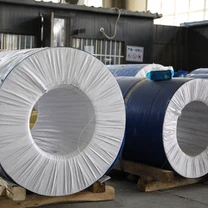
Why Foil Breaks in High-Speed Coating
Aluminum foil used in coating lines is typically very thin, often between 8 and 15 microns, so the process window for stable running is narrow. At high line speeds, small variations in tension, thickness, or substrate quality are amplified and can quickly lead to a web break. A single break stops the line, creates scrap, and may damage rollers and coating heads. Understanding the causes is the first step toward a more stable process and higher usable yield.
Primary Mechanical Causes of Breakage
Excessive tension from misaligned rollers creates localized stress concentrations that exceed the foil's tensile capacity. Inconsistent foil thickness, for example a variation of about two microns across the web, weakens structural integrity at high speeds. Substrate defects such as micro-cracks propagate under coating shear forces, while poor edge trimming leaves burrs that initiate tearing. Dynamic vibration of the coating head can also exacerbate fatigue failure over time. Controlling these factors requires regular roller alignment, consistent incoming coil quality, and clean trimmed edges.
How Coating Viscosity Affects Breakage
High-viscosity slurries, for example above 5000 centipoise, increase drag forces and strain thin foil beyond its limits. Non-Newtonian fluids with shear-thinning properties tend to reduce breakage rates noticeably because the drag drops as shear rate rises. Solvent evaporation during coating changes viscosity mid-process, so formulation stability matters. Aggregated nanoparticles in the coating can create abrasive hotspots that scratch or weaken the foil surface. The optimal viscosity range is normally determined empirically for each foil alloy and coating formulation.
Temperature and Process Windows
Cold foil below about 25 degrees Celsius becomes brittle and raises fracture risk significantly. Preheat zones in the 60 to 80 degree Celsius range improve ductility but may soften polymer coatings, so the window must be tuned carefully. Rapid cooling after coating induces thermal stress cracks, and infrared sensors help monitor real-time temperature gradients across the web. Because different alloys have different thermal expansion coefficients, the process window must be defined for the specific foil grade being coated.
Using Sensors to Predict Breaks
Modern coating lines use several sensing technologies to anticipate failures. Laser micrometers detect thickness deviations above about 0.5 micron before a break occurs. Acoustic emission sensors pinpoint micro-fractures at high frequencies, and AI-driven tension algorithms can adjust rollers within milliseconds of anomaly detection. Spectral cameras identify precursors of coating delamination. False alarms remain a challenge, typically in the range of five to eight percent, so thresholds must be tuned against historical line data.
Maintenance Practices That Reduce Downtime
Daily roller alignment checks with laser theodolites prevent misalignment-related breaks. Coating head nozzles require ultrasonic cleaning on a regular cycle to avoid clogging and streaking. Scheduled bearing replacements prevent sudden jams, and predictive maintenance using vibration analysis can cut downtime by roughly a quarter. Operator training on emergency stop protocols reduces scrap losses when a break does occur. Together, these practices keep coating lines running longer between unplanned stops.
FAQ
Q: What is the most common cause of foil breakage in coating lines?
A: Excessive or uneven tension, often caused by misaligned rollers, is the most common mechanical cause. Incoming coil thickness variation and edge defects are close behind.
Q: Does foil thickness variation really matter?
A: Yes. Variations of around two microns can significantly weaken the web at high speed, so consistent gauge from the foil mill is essential for stable coating.
Q: How does coating viscosity affect breakage?
A: High-viscosity coatings increase drag on the thin web. Shear-thinning fluids are generally easier to run, and viscosity must be kept stable as solvent evaporates.
Q: Can sensors really predict a foil break?
A: Laser micrometers, acoustic sensors, and AI tension control can detect precursors of failure and react within milliseconds, reducing but not eliminating breaks.
Q: What maintenance prevents foil breaks?
A: Regular roller alignment checks, ultrasonic nozzle cleaning, scheduled bearing replacement, and vibration-based predictive maintenance are the most effective measures.