Aluminium Alloys Overview: The Role of 1050
Aluminium alloys are among the most influential material families in modern engineering, valued for a high strength-to-weight ratio, corrosion resistance and processing flexibility. The lightweight nature of aluminium, roughly one third the density of steel, makes alloys such as 1050 particularly attractive in weight-sensitive applications. Aluminium also forms a thin, self-healing oxide layer that provides inherent corrosion resistance in marine and industrial environments.
While 1050 is a commercially pure grade rather than a high-strength alloy, its excellent ductility, formability and conductivity make it indispensable wherever workability and reliability matter more than ultimate strength.
Production of Aluminium Alloy 1050 Plate
Aluminium alloys are produced by adding controlled amounts of elements such as copper, magnesium, silicon, zinc or manganese to pure aluminium, tailoring the mechanical and physical characteristics of the final product. Alloys are broadly divided into two groups. Wrought alloys are shaped by mechanical processes such as rolling, extrusion and forging; 1050 plate belongs to this category and is commonly supplied as sheets, plates and strips. Cast alloys are formed by pouring molten aluminium into molds, which suits complex geometries and integrated components.
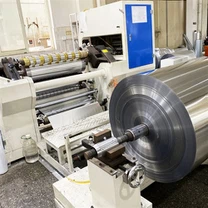
For 1050 plate, ingots are hot rolled, then cold rolled to the required gauge, annealed to the desired temper, and finally cut and leveled to size. The purity of the melt is controlled carefully because impurities directly affect electrical conductivity.
Key Applications of 1050 Aluminum Plate
In aerospace, 1050 plate appears in non-structural and conductive components, while high-strength grades such as 2024 and 7075 dominate structural airframe use. In the automotive industry, 1050 is used where formability and corrosion resistance are required, alongside stronger grades such as 6061 and 5083 for body panels and frames.
Construction and architecture use 1050 for roofing, cladding, reflective panels and decorative elements, combining durability with ease of fabrication. The marine industry benefits from its natural corrosion resistance where strength demands are moderate. Electronics and consumer goods rely on 1050 for housings, heat-dissipation parts, kitchenware and packaging because of its thermal conductivity and non-toxic nature. Energy and renewable systems use it in solar panel frames, wind turbine components and power transmission equipment, and sports and recreation products take advantage of its balance of durability and weight efficiency.
Electrical Properties of Aluminium Alloy 1050 Plate
1050 aluminum is an excellent electrical conductor for a structural metal, with an electrical resistivity of about 4.00 x 10^-8 ohm-meters. It is non-magnetic, which suits electrical and electronic enclosures, and its temperature coefficient of resistance is approximately 0.0039 per degree Celsius, a typical value for aluminum conductors.
Because conductivity drops when impurities are present, 1050 is the preferred grade for busbars, bus duct and other current-carrying applications where aluminum conductors are specified.
Mechanical Properties of 1050 Aluminum Plate
As a commercially pure alloy, 1050 offers moderate strength and high ductility. Typical values for plate and sheet include an ultimate tensile strength of 90 to 100 MPa, a yield strength of 35 to 50 MPa, and elongation of 30 to 45 percent. The modulus of elasticity is about 70 GPa, shear modulus 26 to 27 GPa, and Brinell hardness roughly 35 to 45 HB.
These figures describe a material that deforms and forms readily, making it ideal for deep drawing, spinning and other severe forming operations where higher-strength alloys would crack or spring back.
Physical and Thermal Properties
1050 plate has a density of about 2710 kg per cubic meter (specific gravity 2.71) and a melting range of roughly 643 to 657 degrees Celsius. Its chemical composition is aluminum 99.5 percent minimum, with silicon up to 0.25 percent, iron up to 0.40 percent, copper up to 0.05 percent, manganese up to 0.05 percent, zinc up to 0.07 percent and titanium up to 0.05 percent.
Thermally, 1050 conducts heat at about 230 W per meter-kelvin, with a coefficient of thermal expansion of approximately 23.6 micrometers per meter-kelvin and a specific heat capacity near 904 J per kilogram-kelvin. The combination of high thermal conductivity and low emissivity makes it effective for reflectors and heat-dissipation components.
FAQ
Q: Is 1050 aluminum strong enough for structural use?
A: 1050 is a commercially pure grade with moderate strength, so it is selected for conductive, decorative and formability-driven uses rather than load-bearing structures.
Q: Why is 1050 used for electrical conductors?
A: Its purity keeps electrical resistivity low, around 4.00 x 10^-8 ohm-meters, making it one of the most conductive wrought aluminum grades available.
Q: What is the minimum aluminum content of alloy 1050?
A: Alloy 1050 contains at least 99.5 percent aluminum, with controlled limits on iron, silicon, copper, manganese, zinc and titanium.
Q: Can 1050 aluminum plate be anodized?
A: Yes, its high purity produces clear, bright anodized finishes, which is why it is common for decorative and reflective architectural parts.
Q: What tempers is 1050 plate commonly supplied in?
A: Common tempers include O (annealed) for deep forming and H14 or H24 for parts that need moderate strength and stiffness after forming.