The Environmental Trend in Aluminum Foil
Environmental protection has become an important development trend in the aluminum foil industry. Aluminum foil itself is highly recyclable, and its light weight reduces transport energy and packaging weight across the supply chain. Alloys such as 8011 and 3003 add further value because they combine greater strength with lighter weight, better processing properties and longer service life, which means fewer material failures, less waste and more efficient use of resources over the product lifecycle.
Why 8011 Aluminum Foil Is Environmentally Favorable
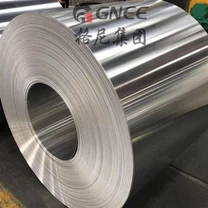
8011 large roll aluminum foil is an ideal packaging material that effectively protects products from the external environment, extending shelf life and reducing food waste. Its good strength and processing performance allow thinner gauges to be used without sacrificing protection, which reduces material consumption per package. Beyond packaging, 8011 foil is also used in construction and electronics, such as the decoration of building exterior walls and casings of electronic products, where its corrosion resistance and durability support long service life.
Why 3003 Aluminum Foil Is Environmentally Favorable
3003 large roll aluminum foil is a material with high strength, excellent processing properties and good corrosion resistance. It is also an ideal packaging material that effectively protects products from the external environment. In addition, 3003 large roll foil can be used in construction and automotive fields, such as building exterior wall decoration and the manufacturing of automotive parts, where its strength allows lightweight designs that improve energy efficiency over the product's lifetime.
Recyclability and Resource Efficiency
Aluminum can be recycled repeatedly without loss of quality, and recycled aluminum requires only a fraction of the energy of primary production. Foil scrap generated during converting and use is collected and returned to the production loop, reducing the carbon footprint of foil products. Buyers can support this by specifying alloys and gauges that match the application, minimizing over-packaging and working with suppliers that operate closed-loop scrap recovery.
Selecting Between 8011 and 3003 Foil
The choice between 8011 and 3003 foil depends on the application. 8011, an 8xxx-series alloy, is widely used for food packaging, household foil and lidding where a balance of strength, formability and sealing performance is required. 3003, a 3xxx-series alloy, provides higher strength and is used for heat-exchanger fin stock, containers and applications that need more rigidity. Specifying the correct alloy and gauge for each application is itself an environmental measure, because it avoids over-specification and premature product failure.
FAQ
Q: Why are 8011 and 3003 foil considered environmentally friendly?
A: They combine strength with light weight, offer long service life, and aluminum is infinitely recyclable with much lower energy demand than primary production.
Q: What is 8011 aluminum foil used for?
A: Packaging materials, building exterior wall decoration, electronic product casings, food packaging and household foil.
Q: What is 3003 aluminum foil used for?
A: High-strength packaging, heat-exchanger fin stock, containers, building decoration and automotive parts.
Q: Which alloy is stronger, 8011 or 3003?
A: 3003 generally provides higher strength than 8011, which is why it is chosen for structural and rigid applications.
Q: How does light weight help the environment?
A: Lighter packaging reduces transport fuel consumption and carbon emissions across the supply chain.