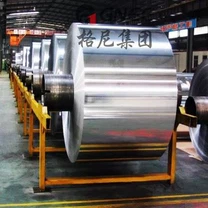
6061-T6 aluminum offers notably higher strength, while 6061-T4 aluminum provides superior formability and machinability. The primary distinction lies in the heat-treatment process: T6 undergoes artificial aging to achieve maximum strength, whereas T4 relies on natural aging, creating a balance between reduced strength and enhanced workability. As a result, 6061-T6 is selected for demanding, high-stress environments, and 6061-T4 is preferred for applications requiring bending, shaping, or joining.
What is Aluminum 6061-T6?
Aluminum 6061-T6 represents a specific temper of the 6061 aluminum alloy series. The "T6" designation indicates that the alloy has undergone solution heat treatment followed by artificial aging. During artificial aging, the material is exposed to controlled temperatures, which enhances its mechanical properties, particularly hardness and strength, making it suitable for high-performance applications.
6061-T6 Aluminum
Strength: Higher tensile and yield strength.
Process: Solution heat-treated and then artificially aged.
Properties: Harder and stronger with lower plasticity; more challenging to machine, form, or weld.
Applications: Ideal for heavy-duty components such as aircraft structures, pressure vessels, and automotive parts.
What is Aluminum 6061-T4?
Aluminum 6061-T4 is another temper of the 6061 aluminum alloy series. The "T4" designation refers to the heat treatment applied to the material, which involves solution heat treatment and water quenching. This process improves the alloy's strength and formability. Unlike the T6 temper, T4 does not include artificial aging, which results in a softer alloy with better workability while still maintaining good mechanical performance.
With an understanding of the characteristics of GNEE's 6061-T6 and 6061-T4 aluminum, we can now explore the key differences between 6061-T4 and 6061-T6.
6061-T4 Aluminum
Strength: Lower tensile and yield strength.
Process: Solution heat-treated followed by natural aging.
Properties: Softer, more ductile, and easier to machine, form, and weld.
Applications: Best suited for uses where high formability and weldability are required, including signs, piping, and various types of industrial equipment.

Advantages of Aluminum 6061-T4 vs T6
The selection between aluminum 6061-T4 and T6 depends on the specific needs of an application, as each temper offers distinct benefits.
Advantages of Aluminum 6061-T4
Enhanced Formability
6061-T4 undergoes solution heat treatment without artificial aging, which preserves superior formability compared to T6. This makes it ideal for applications where shaping and bending are important.
Cost-Effective Production
Since T4 skips the artificial aging step, it can be more economical for applications where slightly lower strength is acceptable, and the focus is on workability rather than maximum mechanical performance.
Ease of Complex Part Fabrication
T4 is often preferred for producing intricate or complex components, as it allows for easier shaping while maintaining essential mechanical properties.
Advantages of Aluminum 6061-T6
Higher Strength
T6 undergoes both solution heat treatment and artificial aging, resulting in significantly higher tensile strength and hardness. It is ideal for applications that demand maximum strength and long-term durability.
Superior Corrosion Resistance
The T6 temper offers excellent resistance to corrosion, making it suitable for harsh environments. This is especially important in structural, marine, and aerospace applications.
Wide-Ranging Applications
6061-T6 is versatile and widely used across various industries. When a combination of strength, corrosion resistance, and lightweight properties is required, T6 is the preferred choice.
Summary
6061-T4 offers advantages in formability and cost-efficiency, making it suitable for applications where shaping and fabrication are priorities. In contrast, 6061-T6 excels in strength, durability, and corrosion resistance, making it the optimal choice for high-performance applications. The specific project requirements will determine which temper, T4 or T6, is most appropriate.