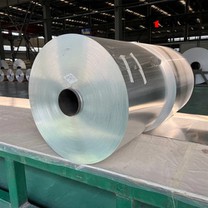
Because of its outstanding strength and workability, 3003 is the most popular aluminum alloy utilized for a variety of general-purpose applications.
With manganese as the principal alloying element, 3003 has superior formability and corrosion resistance when compared to other aluminum metals and tempers.
However, when it comes to strength, 6061, another commonly used aluminum alloy, outperforms 3003 with higher yield strength, which is important for structural design.
It's critical to understand which variation is optimal for cutting aluminum. Below, we analyze the mechanical qualities of 3003 and 6061 aluminum, as well as the areas where each alloy excels.
Understanding the 3003 Aluminum Alloy
3003 is an aluminum-manganese-copper alloy that is significantly strengthened after cold hardening. Manganese is the primary alloying ingredient in the 3003 aluminum alloys, with a proportion ranging from 1% to 1.5% depending on how the alloy is manufactured.
The combination of copper and magnesium provides 20% more strength than 1100-grade aluminum, but due to its low tensile and yield strengths, it is classified as a moderately strong material.
The table below compares the usual strength of several 3003 tempers.
| 3003 tempers | Maximum Ultimate Strength (KSI) | Maximum Yield Strength (KSI) |
| 3003-O | 19 | 6 |
| 3003-H12 | 23 | 18 |
| 3003-H14 | 26 | 21 |
| 3003-H16 | 30 | 25 |
| 3003-H18 | 27 | 27 |
Aside from moderate strength, 3003 aluminum alloys are corrosion-resistant, workable, and weldable. As a result, it is a perfect light structure material, widely recognized as the most common aluminum alloy or general-purpose alloy. 3003's most typical applications are in aerospace, food, and chemical sectors.
Popular applications include the following:
Gutters
Folded sheets
Storage containers
Truck roofs
Radiators
Pressure vessels
Acoustic ceilings
Downspouts
Despite all of these advantages, machining 3003 can be difficult. Despite their fair machinability, 3003 tempers are less machinable than other tougher aluminum alloys.
They are also non-heat-treatable alloys, which implies that, unlike heat-treated metals, they cannot undergo the secondary phase of precipitation hardening required for increased strength.
As a cold-treated metal, 3003 aluminum alloys are susceptible to hydrogen-induced porosity during welding. The easiest method to avoid this issue is to reduce hydrogen pickup to a minimum while welding. This is another significant reason why 3003 cannot be used in extreme environment applications.
Understanding the 6061 Aluminum Alloy
6061 aluminum alloys are extremely adaptable, with silicon and magnesium as primary alloying ingredients. These various aluminum alloys have great corrosion resistance and a high strength-to-weight ratio, which are highly desirable mechanical features when creating maritime and aerospace constructions.
With strong electrical and thermal conductivity, 6061 plates are widely used in electrical fittings, connections, and magneto parts.
6061 aluminum alloys are heat-treated and consequently available in many tempers, including F, O, W, and T. In this way, the 6061-Tx version offers numerous applications. The letter "T" in 6061-Tx symbolizes temper, while "x," usually expressed as a digit, indicates whether the alloy has received any additional treatment.
For example, 6061-T6 aluminum alloys are solution heat-treated and artificially aged to ensure optimum machinability and weldability.
However, it has a low formability. If you require good formability from a 6061 alloy, 6061-T4 is a fantastic choice since it is naturally aged to provide outstanding formability and excellent weldability. Compared to 3003 tempers, different 6061 tempers may suit a wide range of application requirements.
6061 aluminum alloys are widely used in the following applications:
Bicycle frames
Cans
Truck frames
Towers and pylons
Aircraft applications
Rail coaches
Top-Grade Aluminum for Every Purpose and Industry
New Aluminum Plate 6061
Measure thickness in inches. You can find a variety of alternatives for all industrial applications.
Can be carved into specific shapes and sizes. Excellent weldability allows for customization to meet specific project requirements.
Corrosion resistance: Grades such as 6061-T651 are ideal for marine hardware applications requiring high rust resistance.

New Aluminum Rectangular Bar
Environmental resilience: Because 6061 aluminum is heat treatable, it performs well under harsh environments.
A wide range of sizes and dimensions: Select your size depending on tensile strength, width, and weight.
Machinability is good since it is lightweight and strong, making it suitable for a variety of applications.

All Aluminum Shapes
Reliable supply: You can rely on consistent, certified aluminum supplies.
High-quality material: superior-grade aluminum for precise applications.
Custom cuts are accurate down to thousandths of an inch.

The Most Common Aluminum Alloy for Machining: 6061 or 3003 PLATE?
For a quick comparison, the table below lists the essential elements of 6061 and 3003.
| Property | Aluminum 6061 | Aluminum 3003 |
| Ultimate Tensile Strength | 310 MPa | 200 MPa |
| Yield Strength | 276 MPa | 186 MPa |
| Shear Strength | 207 MPa | 110 MPa |
| Brinell Hardness | 95 HB | 28 HB |
| Machinability | Good | Acceptable |
| Formability | Poor | Good |
| Weldability | Good | Good |
| Workability | Heat: Good | Cold: Very Good |
In terms of formability, 3003 is a better option than 6061, particularly if the application demands strong formability to match design specifications.
For example, 3003 is a fantastic choice for outdoor decorative architecture that demands formability and moderate strength to achieve a pleasing look. However, as a cold-treated alloy, it is unsuited for structural applications that need extensive machining.
Not all aluminum alloys are equal. The majority of aluminum manufacturing is for structural uses in the automotive and aerospace industries, such as body frames and parts, to enhance strength-to-weight ratio.
In this regard, 6061 is one of the most often used aluminum alloys, meeting a wide range of application requirements and ranking among the best aluminum for machining.
Machining Tips and Techniques
Tool Selection and Geometry
Choose carbide cutting tools with a helix angle of 35-45° to minimize heat generation and improve surface finish.
Opt for tools with a maximum of 3 flutes to support good chip clearance.
Speeds and Feeds
Use high spindle speeds (up to 20,000 RPM) and moderate feed rates to avoid excessive heat buildup.
Consult speed and feed calculators or manufacturer recommendations to determine the optimal cutting parameters.
Cooling and Lubrication
Apply a suitable coolant or cutting fluid to the tool and workpiece to dissipate heat and improve chip evacuation.
Consider using flood cooling or intermittent mist cooling techniques
Chip Control
Monitor the size and color of the chips to ensure proper chip formation and removal.
Use air blasting systems or other chip removal methods to keep the cutting zone clear.
Advanced Machining Techniques
Employ adaptive clearing strategies to reduce cycle times and improve surface finish.
Utilize trochoidal milling to minimize tool engagement and prevent chatter