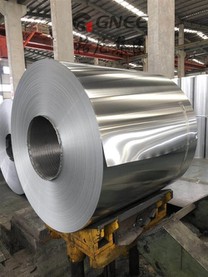
Q1: Why is aluminum considered lightweight?
Aluminum has a very low density of about 2.7 g/cm³, roughly one-third that of steel or copper. This physical property stems from its atomic structure and lightweight atomic mass. Its low weight combined with reasonable strength makes it ideal for vehicles and aircraft. Modern alloys enhance strength without adding significant mass. This property is fundamental to its widespread industrial use.
Q2: How does aluminum resist corrosion naturally?
When exposed to air, aluminum instantly forms a nanometer-thin oxide layer (Al₂O₃). This passive layer acts as a protective barrier against moisture and chemicals. Unlike iron rust, this layer self-repairs if scratched or damaged. Alloying elements like magnesium or chromium can further improve corrosion resistance. This natural protection eliminates the need for coatings in many applications.
Q3: Is aluminum a good conductor of electricity?
Aluminum conducts electricity at about 61% the efficiency of copper by volume. However, due to its low density, it surpasses copper in conductivity per unit weight. This makes aluminum cost-effective for long-distance power transmission lines. Proper installation techniques are critical to prevent joint failures. Its thermal conductivity also makes it valuable for heat sinks and cooling systems.
Q4: Why does aluminum appear silvery and shiny?
Aluminum reflects approximately 92% of visible light across all wavelengths, creating its characteristic silvery-white appearance. Polishing can enhance its reflectivity for decorative or functional uses. Anodizing processes alter the oxide layer thickness, enabling colored or matte finishes. Alloying elements may slightly shift its base hue. Surface treatments expand its aesthetic versatility.
Q5: Why is aluminum non-magnetic?
Aluminum lacks unpaired electrons in its atomic structure, preventing ferromagnetic behavior. This property allows its use in electronics where magnetic interference must be minimized (e.g., antenna components). Strong external magnetic fields induce only weak, temporary magnetization. Recyclers exploit this trait to separate aluminum from magnetic metals. Certain aerospace alloys exhibit negligible paramagnetism.