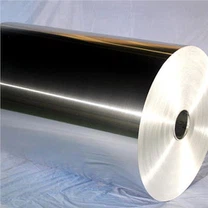
What Is 6061 Aluminum Alloy?
Before discussing the meaning of "T6," it's important to understand 6061 aluminum itself.
6061 is a precipitation-hardened aluminum alloy that uses magnesium and silicon as its primary alloying elements. Even without heat treatment (such as in the T4 or O-temper state), it already offers good formability and moderate strength. However, what truly maximizes its performance is the subsequent T6 heat-treatment process.
What Is T6 Temper?
"T6" is not a different alloy-it is a specific heat-treatment condition that dramatically enhances the mechanical properties of 6061 aluminum.
The T6 process involves two essential steps:
1. Solution Heat Treatment + Quenching
The alloy is heated to around 530°C to dissolve alloying elements completely into the aluminum matrix.
It is then rapidly cooled in water (quenched), locking these elements in a supersaturated, unstable state.
2. Artificial Aging
After quenching, the material is heated again at 160–175°C for several hours.
During this stage, the dissolved alloying elements precipitate out as uniformly distributed fine particles.
These precipitates effectively hinder the movement of dislocations in the metal structure, greatly increasing strength and hardness.
Through this process, the yield strength of 6061-T6 can reach multiple times that of the untreated alloy.
Understanding T6 treatment is essential because it directly determines whether the final material meets required performance standards. At GNEE, we strictly follow international heat-treatment protocols for 6061-T6 aluminum and provide full material certification to ensure every batch meets the expected mechanical properties.

What Is Aluminum Alloy 6061-T6?
6061-T6 is the heat-treated, high-performance version of the 6061 alloy.
During the T6 process, the alloy is heated to approximately 500°C, rapidly quenched, and then artificially aged at lower temperatures.
This controlled precipitation strengthening process results in significantly higher hardness, tensile strength, and overall mechanical performance compared to the as-cast or extruded state.
6061-T6 is valued for its:
High strength-to-weight ratio
Excellent machinability
Good corrosion resistance
These advantages make it a widely used material across industries such as aerospace, automotive, construction, marine, and consumer electronics. It is commonly found in aircraft components, automotive parts, bicycle frames, and even smartphone and laptop housings.
Applications of 6061-T6 Aluminum Alloy
Aerospace Industry
6061-T6 is widely used in the aerospace sector due to its excellent strength-to-weight ratio, corrosion resistance, and temperature stability.
Typical applications include aircraft wings, fuselage components, and landing gear parts.
Automotive Industry
Its lightweight and high strength make it ideal for suspension systems, engine components, wheels, and other structural automotive parts.
Using 6061-T6 helps reduce vehicle weight, improve fuel efficiency, and lower emissions.
Construction Industry
6061-T6 is commonly used in building structures and bridge components because of its combination of strength and corrosion resistance.
Its light weight and ease of fabrication also make it suitable for scaffolding, ladders, and handrails.
Marine Industry
Thanks to its strong resistance to corrosion-especially seawater-6061-T6 is widely used in marine vessels, ship fittings, and offshore equipment.
Consumer Goods
The alloy's durability, light weight, and aesthetic appeal make it ideal for consumer products such as bicycles, smartphones, laptops, and other electronic housings.
Summary
6061-T6 aluminum alloy is a highly versatile, high-performance material whose excellent strength, corrosion resistance, formability, and machinability make it suitable for a vast range of industries.
Its superior characteristics explain why it remains one of the most widely used aluminum alloys in modern manufacturing.