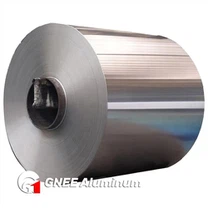
Why Aluminum Suits Nuclear Reactor Components
Aluminum earns its place in nuclear engineering because it barely interferes with the neutron economy. Its thermal neutron absorption cross-section is about 0.23 barns, an order of magnitude below stainless steel, so thin aluminum structures can sit close to a core without imposing a large reactivity penalty. The metal is also an excellent heat conductor at roughly 237 W/m.K, which helps move heat from fuel to coolant without steep temperature gradients.
Neutronics: low parasitic absorption keeps research and test reactors critical with less fissile inventory.
Thermal performance: high conductivity limits fuel centreline and cladding surface temperatures.
Handling: density of 2.70 g/cm3 makes in-pile rigs, holders and shielding easy to move and position.
Fabrication: aluminum can be extruded, rolled and machined into thin-walled channels and complex target holders.
Cost: aluminium components cost far less than zirconium or titanium equivalents.
These advantages are bounded by temperature. Aluminium alloys begin to lose strength above about 150 °C and the metal melts at 660 °C, so aluminium is a material for research reactors, test loops, shielding and experimental facilities rather than for commercial power reactor cores.
Fuel Cladding in Research and Test Reactors
Aluminium cladding remains the standard for plate-type and dispersion fuel elements. Uranium-aluminium or uranium silicide fuel meat is roll-bonded between aluminium alloy cover plates, and the finished element is assembled into a box or channel depending on the reactor design. The cladding isolates the fuel from the coolant, retains fission products and provides the structural surface that the coolant flows across.
| Alloy | Typical form | Function in the core |
|---|---|---|
| 1100 | Rolled plate and sheet | Low-temperature cladding, low activation hardware |
| 6061-T6 | Extrusions and plate | Structural components, fuel element frames, pipes |
| 5052 | Sheet and tube | Coolant piping, tanks, general fabrication |
| Al-Ni-Fe grades | Rolled tube and plate | Cladding for higher-temperature test conditions |
| Sintered aluminium powder | Pressed bar and tube | High-temperature dispersion-strength components |
Cladding integrity depends on water chemistry as much as on alloy choice. Coolant pH, conductivity and dissolved oxygen are held inside narrow bands to keep the protective oxide film stable and to prevent pitting attack on the aluminium surface.
Limits and Failure Modes in Irradiation Service
Under fast neutron flux aluminium suffers irradiation growth, void swelling and hardening. Swelling becomes measurable at high fluence, and transmutation produces silicon and helium inside the metal, both of which alter mechanical behaviour. Aluminium also activates strongly in the short term: neutron capture forms sodium-24 with a 15-hour half-life, which sets the decay period that must elapse before any handling or maintenance work.
Strength loss above about 150 °C excludes aluminium from power reactor cores.
Elevated-temperature water corrosion accelerates above roughly 200 °C unless water chemistry is tightly controlled.
Stress corrosion cracking is possible in wet environments where residual stresses are high.
Zirconium alloys displace aluminium wherever higher operating temperature and long fuel cycle life are required.
Waste Storage, Shielding and Research Facilities
In waste management, aluminium is a useful interim material but a demanding long-term one. Wet storage environments promote corrosion and the associated hydrogen generation, which must be managed in sealed containers. Alloying, anodizing or coating is normally used to raise durability, and stainless steel remains the reference material for long-term geological disposal packages.
For shielding, aluminium is combined with boron-bearing compounds such as boron carbide to absorb neutrons while keeping weight low, and it is layered with lead or concrete where gamma attenuation is required. Machinability allows shielding geometry to be matched to detector layouts and beam ports, and low magnetic permeability avoids disturbing magnet systems in accelerator and beamline installations. High-purity aluminium is also used for neutron scattering instrument frames and detector support where contamination would distort measurement.
Decommissioning and Metal Recovery
When a research reactor or test loop is retired, aluminium components are held for decay of short-lived activation products, then characterised by radiological survey before release. Low-activity material can be melted and recast for restricted reuse such as shielding blocks, while contaminated fractions go to licensed radioactive waste routes. Smelting recovery rates above 95% are achievable for clean scrap, and the same alloy segregation discipline used in conventional recycling applies here.
Frequently Asked Questions
Q: Why is aluminium used in nuclear reactor components?
Its low neutron absorption cross-section minimises interference with the chain reaction, its high thermal conductivity improves heat transfer, and its light weight simplifies handling of in-pile rigs and internals.
Q: Is aluminium used as nuclear fuel cladding?
Yes, but mainly in research and test reactors. Roll-bonded aluminium-clad plate fuel dominates those facilities because it is cost-effective and performs well below about 200 °C.
Q: What are the challenges of aluminium in nuclear waste storage?
Moisture drives corrosion and hydrogen generation inside sealed containers, and long-term durability is less well proven than stainless steel, so coatings or alloy selection are required for interim storage.
Q: How does aluminium work in nuclear shielding?
Moderate density combined with boron additions makes it effective for neutron shielding, while it is layered with lead or concrete for gamma attenuation and machined into custom geometries around detectors.
Q: Why is high-purity aluminium used in research facilities?
Low activation and negligible magnetic interference keep beamline components, instrument frames and target holders from disturbing neutron scattering experiments or magnet systems.
Q: Which aluminium alloys are common in nuclear work?
1100 for low-temperature cladding, 6061-T6 for structural components, 5052 for piping and tanks, Al-Ni-Fe grades for hotter test conditions, and sintered aluminium powder where dispersion strength is needed.