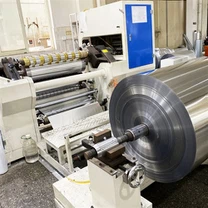
Aluminum Foil as an Insulation Material
Aluminum foil primarily functions as a thermal insulator by reflecting radiant heat, with some types capable of reflecting up to 97% of it. Although aluminum is an excellent conductor of heat, its insulation effectiveness comes from creating a reflective surface that minimizes heat transfer through radiation-a major factor in energy loss. It performs best when used as a radiant barrier, often combined with other insulation materials, and also serves as a vapor barrier to control moisture.
How Aluminum Foil Provides Insulation
Reflects radiant heat: Aluminum foil reflects radiant heat in the same way a mirror reflects light. This helps keep buildings cooler in summer and warmer in winter.
Reduces conduction and convection: While it does not completely block heat transfer through conduction or convection, when paired with an air gap, it significantly reduces radiant heat transfer.
Acts as a vapor barrier: Aluminum foil prevents moisture from passing through walls, floors, or ceilings, helping to avoid mold growth and structural damage.
Key Applications
Construction: Commonly used in roofs, walls, and under floors to enhance energy efficiency.
Ductwork: Integrated into HVAC systems and industrial ducting to reinforce insulation and create a vapor barrier.
Packaging: Used in thermal packaging to maintain consistent temperature conditions.
Important Considerations
Installation: For optimal performance, the foil should be installed on the warm side of the insulation to reflect heat back into the space.
Combination with other materials: Often paired with fiberglass, foam, or other insulating materials for a more complete system.
Moisture management: Incorrect installation may lead to condensation problems, so care should be taken to prevent trapped moisture.
GNEE highlights that proper installation of aluminum foil insulation maximizes energy efficiency while preventing potential moisture-related issues.
What is insulating aluminum foil?
Aluminum foil for thermal insulation is a type of aluminum foil used in various forms of thermal insulation to help reduce heat loss or heat gain. Due to its low thermal emissivity and high reflectivity, it is an efficient thermal insulation material.
Insulating aluminum foil is commonly used in the construction industry to insulate walls, roofs, and floors of buildings. It is also used in the automotive and aerospace industries to insulate vehicles and aircraft. Additionally, it is used for insulation in appliances such as refrigerators and ovens.
The thermal insulation properties of aluminum foil are due to its ability to reflect radiant heat. Radiant heat is the transfer of heat via electromagnetic waves, and aluminum foil reflects these waves very effectively. This helps reduce heat transfer into or out of the insulated space through the material.
Aluminum foil used for insulation is usually available in rolls or sheets of varying thicknesses, depending on the specific application and requirements. It can be used alone or in combination with other materials, such as foam or fiberglass, to provide additional insulation.

Insulation aluminum foil parameters
Alloy: 1100, 1145, 8011, etc.
Status: O (H₂O), H₂₂, etc.
Thickness: 15 microns (0.015mm), 40 microns (0.04mm), etc.
Width: 200mm, 1400mm, etc.