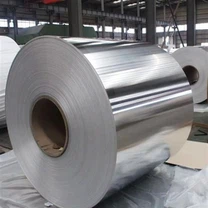
What JIS H4000 A6061P-T6 Means
JIS H4000 is the Japanese Industrial Standard for wrought aluminum and aluminum alloy plates, sheets, and strips. It defines chemical composition, mechanical properties, dimensional tolerances, and surface quality for each registered grade and temper.
The designation A6061P refers to 6061 alloy in plate or sheet form, where the P suffix is the Japanese convention for plate and sheet products. T6 is the solution heat-treated and artificially aged temper. A6061P-T6 is therefore a 6061 plate that has been aged to its high-strength condition and qualified against JIS H4000 requirements.
Mechanical Properties of A6061P-T6
Per JIS H4000, A6061P-T6 plate provides a minimum tensile strength of 310 MPa and a minimum 0.2% proof stress of 245 MPa for common thickness ranges. Per ASTM B209, the equivalent 6061-T6 sheet and plate condition lists a minimum yield strength of 276 MPa (40 ksi) and elongation of 10% for thicknesses up to about 6.3 mm. Both documents are routinely accepted in international procurement, and the values above are the ones to request on the material test certificate.
| Property (typical verification values) | A6061P-T6 |
|---|---|
| 0.2% proof stress Rp0.2 (min, JIS H4000) | 245 MPa |
| Yield strength (min, ASTM B209) | 276 MPa (40 ksi) |
| Tensile strength Rm (min) | 310 MPa |
| Elongation (thickness up to ~6 mm) | 10% |
| Density | 2.70 g/cm3 |
| Surface finish (as supplied) | Ra 1.6 um or better |
Anti-Slip Patterns and Friction Performance
Checkered plate is rolled with raised patterns on one face. The most common patterns are diamond (four-way, one of the original tread designs), 5-bar (five raised bars per pitch, offering drainage channels), and tear-drop. The raised elements reduce slip risk in wet, oily, or dusty conditions and provide a measurable increase in surface friction compared with flat plate, which is why tread plate is specified for stairs, ramps, and work platforms in safety-critical areas.
Applications of A6061P-T6 Checkered Plate
Construction: stair treads, anti-slip landings, ramps, entrance flooring, and facade accents. Marine: ship decks, gangways, docks, and offshore platforms, where saltwater corrosion resistance and light weight are decisive. Transportation: truck beds, trailer floors, step plates, and railway interior walkways. Industrial: machine platforms, walkways, conveyor covers, and plant maintenance areas. Commercial: kitchen areas, loading docks, supermarket shelving, and public walkways.
Surface Treatment and Customization
A6061P-T6 checkered plate can be supplied mill finish or with anodizing (clear or colored), brushed, or painted finishes for enhanced appearance and protection. Common supply dimensions are thickness 1-8 mm, width 1000-2000 mm, and custom-cut lengths, with protective film on both faces available for polished or anodized surfaces. For export, plates are packed with interleaving paper or film, waterproof wrapping, and steel-strapped wooden pallets or crates suitable for container transport.
Frequently Asked Questions
What does the P in A6061P stand for? In the JIS designation system, P identifies plate and sheet products. The same 6061 chemistry appears as A6061BD for extruded bars and A6061TE for extruded tubes, all governed by their respective JIS H4000-series standards.
Which pattern should I choose: diamond or 5-bar? Diamond offers all-direction traction and is the most widely stocked. The 5-bar pattern drains water and debris through its channels, which helps in wet or oily environments. Both satisfy common anti-slip requirements; select by drainage needs and local code preference.
Is A6061P-T6 corrosion resistant in coastal plants? Yes. 6061 forms a protective oxide layer and resists atmospheric and chemical exposure well for a structural aluminum alloy. For aggressive chemical or heavy salt-spray duty, specify anodizing or a protective coating and rinse periodically.
Can checkered plate be welded or machined after delivery? Yes. 6061 welds with TIG or MIG using 4043 or 5356 filler and machines readily. Note that welding locally softens the heat-affected zone, so design load-bearing welds with full penetration and adequate throat thickness.
What certificates should I request with a shipment? Request a mill test certificate (MTC) showing chemical composition and mechanical test results against JIS H4000 or ASTM B209, plus a third-party inspection report such as SGS or BV if required by the contract.
Does JIS H4000 also cover chemical composition? Yes. JIS H4000 references the composition limits of alloy 6061: silicon 0.40-0.80%, iron up to 0.70%, copper 0.15-0.40%, manganese up to 0.15%, magnesium 0.80-1.20%, chromium 0.04-0.35%, zinc up to 0.25%, and titanium up to 0.15%, balance aluminum.