Why Aluminium Alloys Suit Concentrated Solar Power Fields
Utility-scale solar fields in desert regions combine three punishing conditions: intense ultraviolet radiation, abrasive wind-borne dust and daily temperature swings that can exceed 50 °C. Aluminium handles all three better than coated steel, because it forms a stable oxide layer, it does not rust when the coating is scratched, and it can be anodised to a hard, non-reflective surface that is easy to clean.
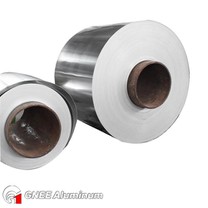
Reflective anodised 1100-H14 sheet reaches solar reflectance values of about 95% when the surface is kept clean, and its low thermal mass means the mirror keeps its optical figure as ambient temperature climbs. Heliostat fields of several hundred thousand mirror facets each rely on this combination of stiffness, flatness and environmental stability.
Reflector Substrates and Anodising
| Function | Typical alloy and temper | Key requirement |
|---|---|---|
| Heliostat mirror substrate | 1100-H14 | Solar reflectance up to about 95%, flatness held at 60 °C ambient |
| Mirror backing and frame | 5052-H32 | Corrosion resistance in blowing sand, fatigue resistance at gust loads |
| Parabolic trough reflector panel | 1100 or 1050, anodised | Uniform surface finish for specular reflection |
Wind-resistant designs are validated for gusts up to about 150 km/h without permanent deformation. A self-cleaning or anti-soiling coating reduces dust accumulation substantially and cuts the washing frequency, which matters where water is the scarcest resource on site.
Torque Tubes and Tracking Structures
Single-axis trackers rotate long rows of panels, and the torque tube is the structural backbone of the row. Extruded 6005-T5 rectangular or octagonal tube offers a high strength-to-weight ratio, good torsional stiffness and a consistent profile that clamps directly to the bearing housings. Tracking accuracy of around 0.1° is achievable with a stiff tube and a properly matched drive.
Extrusion rather than welded fabrication, so there is no heat-affected zone in the highest-stress region
Modular bolted connectors allow field assembly without welding, which is a major advantage on remote sites
Actuators and bearings are specified for sand abrasion and continuous UV exposure
Fail-safe brakes hold the array in a stowed position during sandstorms, protecting both the drive and the panels
Several tracker programmes now use extrusions containing a high proportion of recycled aluminium, which lowers the embodied carbon of the field without changing mechanical performance.
Photovoltaic Mounting Rails and Clamps
Anodised 6063-T6 rails are the standard mounting profile for ground-mount photovoltaic arrays. The anodic layer is electrically insulating and prevents galvanic corrosion where aluminium meets the silicon panel frame and stainless fasteners, provided the metals are correctly isolated. Other design points:
Grounding clamps and bonding jumpers create a continuous earthing path so the array tolerates lightning strike risk
Slope-adjustable base plates allow seasonal tilt changes to be made with simple manual adjustment
Lightweight rail sections reduce foundation and pile cost; ground-mount structures typically save around 30% of foundation cost against steel alternatives
Pre-punched rails shorten installation time, an important factor when field labour is the dominant cost
Thermal Storage, Enclosures and Insulation
Molten-salt and phase-change storage systems place aluminium in a demanding thermal role. Heat is stored in aluminium-silicon encapsulated media inside insulated tanks, while vacuum-insulated transfer piping limits thermal loss between the receiver and the storage block. Expansion joints are mandatory because an aluminium structure moves roughly twice as much as steel for the same temperature change, and desert sites commonly see a 50 °C swing between night and mid-afternoon.
Reflective aluminium enclosures around power conversion equipment reduce cooling loads dramatically by rejecting direct solar gain, and air-cooled inverter housings cut internal operating temperature by around 20 °C compared with sealed enclosures.
Foundations, Soiling and Maintenance in Desert Soils
Saline desert soils are aggressive to buried steel piling. Hybrid aluminium-concrete foundations, or aluminium components isolated from the soil by a protective sleeve, avoid the corrosion-driven failure that shortens service life on many installations. Anti-soiling coatings repel dust through electrostatic action, keeping reflectance high between washing cycles.
Inspection is increasingly carried out by drone, and aluminium structures are well suited to it: a clean, uniform surface and predictable geometry make thermal and visual imaging easier to interpret. Service life for an outdoor aluminium structure in this environment is normally designed around the anodising quality, the isolation of dissimilar metals and the frequency of cleaning.
Frequently Asked Questions
Q: Why is aluminium used for concentrated solar power mirrors?
Anodised 1100-H14 sheet can reach about 95% solar reflectance, it holds its optical figure at high ambient temperature, and it resists sand abrasion and UV degradation without a painted coating that could blister.
Q: Which alloy is used for solar tracker torque tubes?
Extruded 6005-T5 is the common choice because the extrusion process delivers the torsional stiffness needed for tracking accuracy without introducing a weld in the critical section.
Q: How do aluminium rails avoid galvanic corrosion with panels and fasteners?
The anodised surface acts as an insulating barrier, and stainless fasteners are isolated with washers or sleeves. Bonding jumpers provide the earthing path that the isolation removes.
Q: What wind speed must desert solar structures withstand?
Designs are commonly validated for gusts around 150 km/h without permanent deformation, with fail-safe brakes stowing the array when a sandstorm approaches.
Q: How is daily thermal movement managed?
Expansion joints and slotted connections absorb the movement created by a temperature swing that can reach 50 °C, and the higher expansion coefficient of aluminium compared with steel is accounted for at the design stage.
Q: Is recycled aluminium acceptable for solar structures?
Yes. Recycled extrusion stock meets the same mechanical specifications as primary metal, and using it lowers the embodied carbon of the installation without affecting field performance.