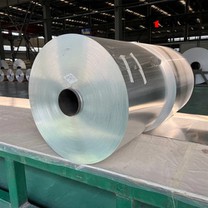
7075 is one of the highest-strength aluminum alloys commonly used in engineering applications. Originally developed for aerospace applications, it is now used wherever a high strength-to-weight ratio is required. 7075 aluminum round tube is available through different manufacturing routes, with each route offering its own dimensional range, surface condition, mechanical properties, and application advantages. This guide covers the chemical composition, typical properties, available forms, size ranges, and key engineering considerations to review before specifying 7075 tubing.
Chemical Composition (7075, Weight %)
| Element | Zn | Mg | Cu | Cr | Fe (max) | Si (max) | Mn (max) | Ti (max) |
|---|---|---|---|---|---|---|---|---|
| 7075 | 5.1–6.1 | 2.1–2.9 | 1.2–2.0 | 0.18–0.28 | 0.50 | 0.40 | 0.30 | 0.20 |
Zinc is the principal alloying element in 7075, while magnesium and copper contribute significantly to its precipitation-hardening response. This composition allows 7075 to achieve much higher strength than common 6xxx-series structural alloys after appropriate heat treatment.
Typical Mechanical Properties (7075-T6)
| Property | Typical Value |
|---|---|
| Tensile strength | ~570 MPa |
| Yield strength (0.2% offset) | ~505 MPa |
| Elongation | ~7–11% |
| Density | 2.81 g/cm³ |
Actual mechanical properties depend on the product form, wall thickness, manufacturing process, heat treatment, and applicable specification. As a general comparison, 6061-T6 has a typical tensile strength of about 310 MPa, while 7075-T6 can reach approximately 570 MPa. On this basis, 7075-T6 provides about 1.8 times the typical tensile strength of 6061-T6 at a similar density.
This strength advantage makes 7075 suitable for high-load components where reducing weight is important and where the higher material cost and more demanding fabrication requirements can be justified.
Product Forms and Size Envelopes
Cold-drawn seamless tube: Commonly available in relatively small and medium outside diameters where close dimensional control and improved surface quality are required. Actual OD and wall-thickness ranges depend on the producer and applicable specification.
Extruded seamless tube: Suitable for longer production lengths and a broader range of cross-sectional dimensions. Extrusion provides an efficient manufacturing route for structural and machined components.
Structural tube: Available in different wall thicknesses and dimensions for lightweight load-bearing structures. The actual size range should be confirmed according to the extrusion capability and relevant standard.
Large-diameter seamless tube: Specialized extrusion or other advanced manufacturing processes can produce large-diameter 7075 tubes for demanding structural applications. Such sizes are generally project-specific rather than standard stock dimensions.
Forged tube: Forged 7075 components can provide favorable grain flow and mechanical performance for critical, highly stressed applications. Forged products are normally manufactured to specific dimensions and customer requirements rather than standard tubing sizes.
Anodized tube: Anodizing can improve surface hardness, wear resistance, and corrosion protection while providing a controlled appearance. Compared with 6061, 7075 may show greater variation in anodized color because of its higher alloying-element content.
Key Engineering Cautions
Stress-corrosion cracking (SCC): 7075-T6 is relatively susceptible to stress-corrosion cracking, particularly when sustained tensile stress is combined with a corrosive environment. For applications exposed to marine, humid, or other aggressive conditions, an overaged temper such as 7075-T73 or T7351 may be preferred. These tempers provide improved SCC resistance at the expense of some strength compared with T6.
Weldability: 7075 has poor fusion-welding characteristics and is generally not recommended for primary structural components joined by conventional fusion welding. Welding can cause cracking and significant loss of strength in the heat-affected zone. Where extensive welding is required, alloys such as 6061 or 6082 are often considered instead.
Corrosion resistance: 7075 generally has lower corrosion resistance than many 5xxx- and 6xxx-series aluminum alloys. For outdoor or corrosive environments, suitable protection such as anodizing, conversion coating, painting, or another compatible surface treatment may be required.
Fatigue and notch sensitivity: Although 7075 provides high strength, component geometry remains important. Sharp internal corners, abrupt section changes, and machining marks can increase local stress concentration. Proper fillet radii and appropriate surface finishing should therefore be considered in fatigue-critical designs.
Applications
Aerospace structural tubes, frames, struts, and aircraft components.
Automotive suspension components, lightweight structural parts, and motorsport equipment.
High-performance bicycles and sporting equipment.
Marine and defense components where the selected temper and corrosion-protection system are suitable.
Tooling, jigs, fixtures, molds, and high-stress mechanical components.
Other lightweight structures requiring high mechanical strength.
Specification Checklist
Confirm alloy and temper: Specify the complete designation, such as 7075-T6, T6511, T73, or T7351. The temper has a direct effect on strength, ductility, and stress-corrosion resistance.
Specify the applicable standard: Select the standard according to the manufacturing route and product form. Common references may include ASTM B210 or ASTM B241 for aluminum tube products, applicable AMS specifications for aerospace products, and relevant GB/T standards. Always confirm that the selected standard covers the required alloy, temper, tube type, and dimensions.
Request mill certificates: For engineering and export orders, request material certificates showing chemical composition, mechanical properties, heat-treatment condition, and applicable standard.
Check dimensional tolerances: For structural or precision applications, specify outside diameter, wall thickness, ovality, straightness, and length tolerances according to the applicable standard or agreed purchase specification.
Confirm surface requirements: If the tube will be anodized or otherwise finished, agree on surface quality, color tolerance, coating requirements, and sealing process with the finisher before production.
Confirm manufacturing route: Extruded, drawn, and forged 7075 tubes can have different dimensional capabilities and mechanical-property requirements. The manufacturing process should therefore be selected according to the final application rather than size alone.
When specifying 7075 aluminum round tube, alloy designation alone is not sufficient. The temper, manufacturing route, dimensions, applicable standard, surface treatment, and service environment should all be confirmed before placing an order. This is particularly important for aerospace, structural, marine, and other high-stress applications where SCC resistance, fatigue performance, and dimensional tolerances can be as important as tensile strength.