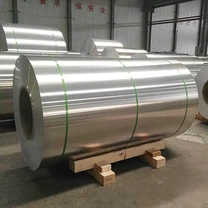
What Is 6061-T6 Aluminum Plate?
6061-T6 aluminum plate is one of the most widely used aluminum alloys because of its excellent balance of strength, formability, machinability, and corrosion resistance. It belongs to the 6xxx series and is heat-treatable, making it suitable for a broad range of load-bearing and structural applications. The T6 temper indicates that the plate has been solution heat treated and artificially aged, a process that significantly improves mechanical strength while maintaining good workability.
Understanding the Grade Designation
The 6061 alloy designation identifies its chemical composition: it is primarily alloyed with magnesium and silicon, with small additions of copper and chromium. This composition provides good strength, corrosion resistance, weldability, and machining performance. The T6 temper involves two steps: solution heat treatment, which heats the plate to dissolve alloying elements into a solid solution followed by rapid quenching, and artificial aging, a controlled heating step that allows fine precipitates to form and significantly increase strength and hardness. The result is predictable, reliable mechanical properties for engineering applications.
Composition and Mechanical Properties of 6061-T6
The nominal composition of 6061-T6 is aluminum as the balance, with magnesium at 0.8 to 1.2 percent, silicon at 0.4 to 0.8 percent, copper at 0.15 to 0.40 percent, chromium at 0.04 to 0.35 percent, and iron, zinc, and manganese each limited to small amounts. Typical mechanical values are a tensile strength of 290 to 310 MPa, yield strength of 270 to 280 MPa, elongation of at least 8 percent, hardness around 95 HB, and a density of 2.70 g/cm3. These properties make 6061-T6 plate ideal for applications requiring strength without excessive weight.
Applications of 6061-T6 Plate
6061-T6 aluminum plate is widely used where strength, corrosion resistance, and machinability all matter. In structural and construction work it appears in platforms, bridges, frames, and supports. In automotive production it is used for chassis parts, panels, and truck bodies; in marine applications for boat hulls, decks, and structures thanks to excellent saltwater resistance; and in general aerospace for drone frames and non-critical aircraft parts. It is also common in recreation products such as bicycle frames and sports equipment, and in general fabrication for brackets, fixtures, and machine parts.
Is 6061-T6 Aircraft Grade?
6061-T6 is commonly used in aerospace, but it is not typically classified as aircraft grade in the same category as high-strength alloys such as 2024 or 7075, which are reserved for critical airframe structures. However, 6061-T6 plate is extensively used for general aviation components, drone and UAV structures, and aircraft interiors, mounts, and brackets. Its corrosion resistance, affordability, and ease of fabrication make it an excellent choice for non-critical aerospace applications.
6061-T6 versus 6063-T6
The key differences come down to intended use. 6061-T6 offers higher strength and is the choice for structural and load-bearing plate, machined parts, and applications where strength is the priority. 6063-T6 offers excellent formability and superior surface finish, and is preferred for architectural and decorative extrusions and profiles. Both alloys provide very good to excellent corrosion resistance, but 6061 is the structural workhorse while 6063 is the appearance-focused grade. Plate is available in thicknesses from 6 to 200 mm, widths from 1000 to 2600 mm, and lengths from 2000 to 12000 mm, with custom sizes and cut-to-size service available.
FAQ
Q: What does the T6 temper mean?
A: T6 means the alloy has been solution heat treated and artificially aged, which significantly raises strength while keeping good workability.
Q: Which is stronger, 6061-T6 or 6063-T6?
A: 6061-T6 is stronger, with typical tensile strength of 290 to 310 MPa, while 6063-T6 trades some strength for better formability and surface finish.
Q: Can 6061-T6 be used in marine environments?
A: Yes. Its excellent saltwater resistance makes it suitable for boat hulls, decks, and marine structures, especially when combined with protective coatings.
Q: Is 6061-T6 considered aircraft grade?
A: It is used in aerospace for non-critical parts such as interiors, mounts, and drone frames, but critical airframe structures typically use higher-strength alloys like 2024 or 7075.
Q: When should I choose 6063-T6 instead of 6061-T6?
A: Choose 6063-T6 for architectural and decorative applications where surface quality and extrusion formability matter more than maximum strength.