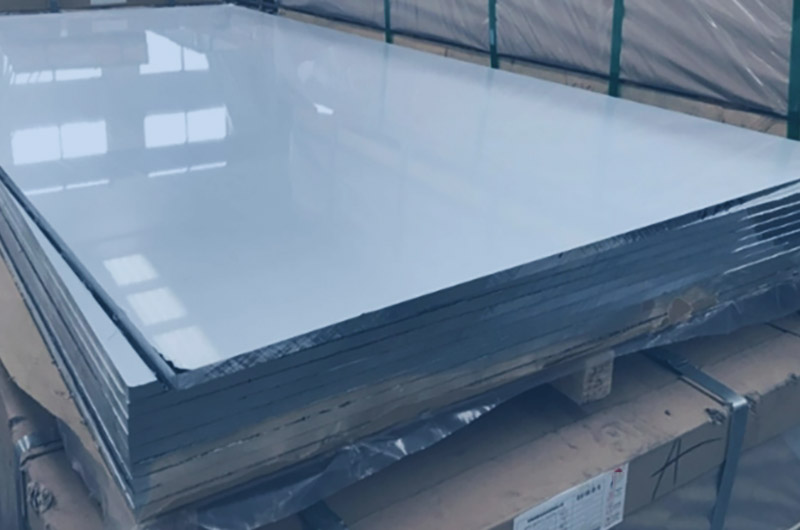
In the shipbuilding industry, GNEE's 5083 aluminum plates in H116, H321, and H112 tempers are commonly used for main decks, diesel engine foundations, and small boat hulls. While 5083 H112 is part of the 5083 alloy family and shares the same chemical composition, it has been successfully applied in yachts, cruise ships, passenger vessels, and cargo ships.
5083 H112 aluminum plate is a high-strength aluminum-magnesium alloy widely used in shipbuilding. Its excellent corrosion resistance and good weldability make it particularly suitable for marine environments.
Specifications of 5083 Aluminum Plate
Tempers: H112, H111, H116, H321
Thickness: 0.5–500 mm
Width: 20–2650 mm
Length: 500–16000 mm
Characteristics of 5083 H112 Marine Aluminum Plate
Corrosion Resistance:
With high magnesium content, 5083 aluminum plate resists seawater corrosion effectively, ensuring long-term durability and safety for hulls and marine structures.
Weldability:
The H112 temper provides excellent weldability, compatible with TIG and MIG welding, while maintaining mechanical strength and corrosion resistance after welding.
Machinability:
The alloy offers good formability and can undergo various machining processes, including cutting, bending, and stamping, making it suitable for complex hull shapes and marine components.
Chemical Composition of 5083 Aluminum Plate
| Alloy | Si | Fe | Cu | Mn | Mg | Cr | Zn | Zr | Ti |
|---|---|---|---|---|---|---|---|---|---|
| 5083 | 0.4 | 0.4 | 0.1 | 0.4–1.0 | 4.0–4.9 | 0.05–0.2 | 0.25 | – | – |
Mechanical Properties of 5083 H112 Aluminum Plate
| Property | Value |
|---|---|
| Tensile Strength | 275–350 MPa |
| Yield Strength | 210 MPa |
| Hardness (500 kg/10 mm ball) | 65 HB |
| Elongation (1.6 mm thickness) | 16% |

Applications of 5083 H112 Aluminum Plate
Hull Construction:
5083 H112 is widely used in ship hulls, offering the necessary strength and corrosion resistance to endure harsh marine conditions. The H112 temper balances strength and formability, making it ideal for curved and complex hull designs.
Decks:
The alloy is a preferred choice for decks that experience heavy loads and continuous exposure to corrosive elements. Its high yield strength supports heavy equipment and resists mechanical stresses, while excellent corrosion resistance protects the deck over long-term use.
Bulkheads:
5083 H112 is essential for bulkheads, providing structural support and corrosion protection. Its mechanical properties ensure rigidity and stability, critical for compartmentalization and overall ship safety.
Other Marine Applications:
Offshore Platforms: Structural components requiring strength and long-term corrosion resistance.
Yacht Manufacturing: Lightweight, high-strength hulls improve speed and fuel efficiency.
Marine Engineering: Used in structural components for offshore wind turbine equipment due to its strength and corrosion resistance.
Difference Between 5083 H111 and H112
| Characteristic | 5083 H111 | 5083 H112 |
|---|---|---|
| Heat Treatment | Simple annealing to relieve processing stress | Rigorous heat treatment and stress relief |
| Mechanical Properties | Lower strength and hardness, good machinability | Higher strength and hardness, superior mechanical performance |
| Applications | Components with lower strength requirements, such as hulls | High-load structural components |
| Performance Stability | Slightly variable | More stable and consistent |
Heat Treatment and Stress Relief:
H111: Simple annealing removes residual stresses with slightly lower mechanical properties but maintains good machinability and adequate strength.
H112: Undergoes rigorous heat treatment and stress relief to achieve higher strength and optimized mechanical performance.
Mechanical Properties:
H111: Suitable for applications with moderate mechanical requirements.
H112: Offers higher tensile and yield strength for demanding structural loads.
Applications:
H111: Ideal for hulls and corrosion-resistant components not exposed to extreme mechanical stresses.
H112: Used in structural components requiring superior strength and durability.
Performance Stability:
H111: Performance may vary slightly due to less stringent control.
H112: Performance is stable and consistent, suitable for critical engineering applications.
GNEE's 5083 H112 aluminum plates provide marine-grade reliability, making them an excellent choice for high-strength shipbuilding and offshore applications.