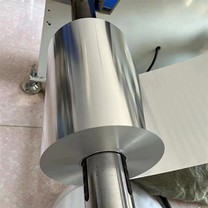
Paraphrased Version (with company name as GNEE where relevant)
5052 H38 aluminum and 5182-H38 aluminum are both aluminum alloys that have undergone strain hardening and stabilization, classified under the H38 temper, which makes them common high-strength grades.
5052-H38 aluminum features excellent formability, ductility, and fatigue resistance, making it suitable for applications requiring strong corrosion resistance and good formability.
5182-H38 aluminum offers higher overall strength, including greater tensile and shear strength, making it ideal for applications that demand enhanced structural strength. Although its ductility is comparatively lower, it performs better in high-strength and high-stress environments.
Mechanical Properties: 5052-H38 vs. 5182-H38 Aluminum
5052-H38 aluminum provides exceptional fracture elongation and strong fatigue resistance, allowing it to withstand long-term cyclic loading. It also maintains superior mechanical properties at elevated temperatures, making it suitable for applications requiring stability under heat.
5182-H38 aluminum delivers higher tensile performance-both ultimate and yield strength-as well as stronger shear resistance, enabling it to bear heavier loads and greater stress. Its thermal shock resistance is slightly better, allowing it to handle sudden temperature variations and thermal cycling more effectively.
| Property | 5052-H38 Aluminum | 5182-H38 Aluminum |
|---|---|---|
| Elastic (Young's) Modulus, GPa | 68 | 68 |
| Elongation at Break, % | 5.2 | 1.1 |
| Fatigue Strength, MPa | 140 | 130 |
| Poisson's Ratio | 0.33 | 0.33 |
| Shear Modulus, GPa | 26 | 25 |
| Shear Strength, MPa | 170 | 220 |
| Tensile Strength (UTS), MPa | 300 | 390 |
| Yield Strength, MPa | 250 | 310 |
Thermal Properties: 5052-H38 vs. 5182-H38 Aluminum
| Property | 5052-H38 Aluminum | 5182-H38 Aluminum |
|---|---|---|
| Latent Heat of Fusion, J/g | 400 | 390 |
| Maximum Mechanical Temperature, °C | 190 | 180 |
| Liquidus, °C | 650 | 640 |
| Solidus, °C | 610 | 590 |
| Specific Heat Capacity, J/kg·K | 900 | 900 |
| Thermal Conductivity, W/m·K | 140 | 130 |
| Thermal Expansion, µm/m·K | 24 | 24 |
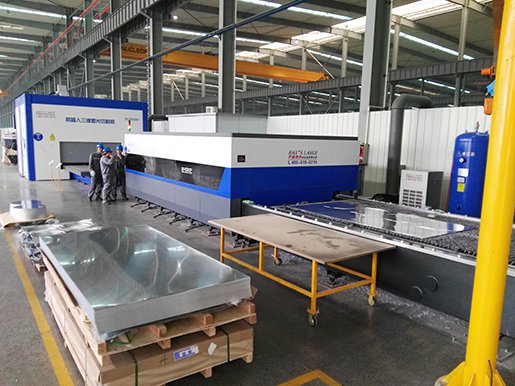
Electrical Properties: 5052-H38 vs. 5182-H38 Aluminum
5052-H38 aluminum provides higher electrical conductivity, making it suitable for applications in the electrical and electronics sectors. Its superior formability also makes it ideal for engineering applications that involve complex shaping.
5182-H38 aluminum has lower formability due to its higher strength, which increases the difficulty of forming. However, its stronger tensile and shear properties result in more reliable performance in heavy-duty mechanical structures.
| Property | 5052-H38 Aluminum | 5182-H38 Aluminum |
|---|---|---|
| Electrical Conductivity (Volume), % IACS | 35 | 28 |
| Electrical Conductivity (Weight), % IACS | 120 | 94 |
Alloy Composition: 5052-H38 vs. 5182-H38
5052-H38 aluminum contains less magnesium than 5182-H38, resulting in slightly lower strength but better ductility and formability.
5182-H38 aluminum, with its higher magnesium content, offers greater strength but slightly reduced ductility.
| Element | 5052-H38 Aluminum | 5182-H38 Aluminum |
|---|---|---|
| Aluminum (Al), % | 95.8–97.7 | 93.2–95.8 |
| Chromium (Cr), % | 0.15–0.35 | 0–0.1 |
| Copper (Cu), % | 0–0.1 | 0–0.15 |
| Iron (Fe), % | 0–0.4 | 0–0.35 |
| Magnesium (Mg), % | 2.2–2.8 | 4.0–5.0 |
| Manganese (Mn), % | 0–0.1 | 0.2–0.5 |
| Silicon (Si), % | 0–0.25 | 0–0.2 |
| Titanium (Ti), % | 0 | 0–0.1 |
| Zinc (Zn), % | 0–0.1 | 0–0.25 |
| Residuals, % | 0 | 0–0.15 |
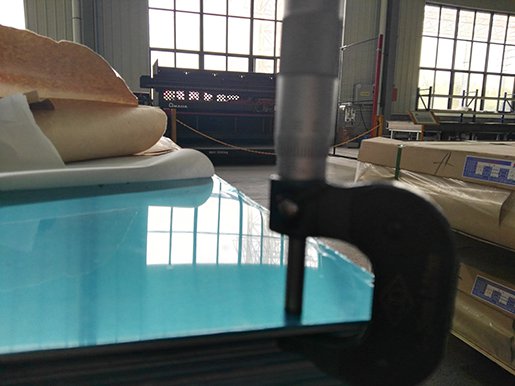
Applications: 5052-H38 vs. 5182-H38 Aluminum
5052-H38 aluminum offers outstanding formability and excellent fatigue resistance, making it well-suited for applications requiring high ductility and corrosion protection. It is widely used in shipbuilding due to its superior resistance to marine corrosion, ensuring long-lasting durability of hull structures. Additionally, 5052-H38 is used extensively in automotive manufacturing, especially in body panels and exterior components, due to its ease of forming and strong corrosion resistance. It is also applied in pressure vessel fabrication for liquid and gas storage, providing reliable strength under pressure. Furthermore, 5052-H38 is used in structural components such as bridges and building frameworks, where its ductility and fatigue resistance offer excellent performance.
5182-H38 aluminum is used primarily in applications that require higher strength, particularly in the production of high-pressure vessels. Its exceptional tensile strength and pressure resistance allow it to withstand high internal loads and external impacts. It also finds extensive use in aerospace engineering, especially in aircraft structural parts such as fuselage and wing components, where stability and reliability under extreme conditions are essential. In the automotive industry,
5182-H38 is commonly used in safety-critical parts and structural components that must endure significant external forces. For high-stress mechanical parts, its superior tensile and shear strength make 5182-H38 an ideal choice for demanding, heavy-duty applications.