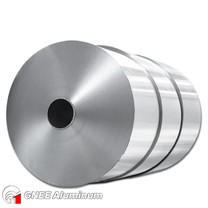
The 3003 O aluminum plate is a non-heat-treatable manganese-alloyed metal specifically engineered for manufacturing chemical processing and storage equipment. Complying with active ASTM B209 and GB/T 3880 standards, this grade contains 1.0% to 1.5% manganese, offering enhanced tensile strength compared to commercially pure unalloyed aluminum. The O temper designates a fully annealed state, providing maximum ductility and a low yield strength of 35 MPa (5 ksi) for complex forming operations.
GNEE supplies this material in thicknesses ranging from 0.2 mm to 250 mm. Due to its non-toxic surface, easy cleaning profile, and natural resistance to chemical degradation, engineers frequently specify this plate for large-capacity storage tanks, fluid piping, and protective reactor linings operating within standard industrial environments.

3003 O Aluminum Plate Specification Data Sheets
Chemical Composition Of 3003
| Element | Aluminum (Al) | Manganese (Mn) | Copper (Cu) | Silicon (Si) | Iron (Fe) | Zinc (Zn) |
| Percentage (wt %) | Remainder | 1.0 - 1.5% | 0.05 - 0.20% | ≤ 0.60% | ≤ 0.70% | ≤ 0.10% |
Mechanical Properties Of 3003 O Aluminum Plate
| Temper Grade | Tensile Strength | Yield Strength | Elongation (%) |
| 3003-O (Annealed) | 95 - 130 MPa (14 - 19 ksi) | ≥ 35 MPa (5 ksi) | ≥ 25% |
| Parameter | Standard Dimension Range | Standard Tolerance |
| Thickness | 0.2 mm - 250 mm | ± 0.02 mm (base gauges) |
| Width | 100 mm - 2650 mm | ± 1.0 mm |
| Length | Customized | + 3.0 mm / - 0.0 mm |
| Material Grade | Market Form | SMM Estimated Price Range per Metric Ton (USD) |
| 3003-O | Plate / Sheet / Coil | $2,450 - $2,800 |
Contact the technical sales team at GNEE today to secure wholesale 3003 O aluminum plates tailored to your chemical equipment specifications.
1. Applications of 3003 O Aluminum Plate
This annealed manganese-aluminum alloy supports diverse industrial chemical processing operations due to its highly formable nature and reliable resistance to mild chemical corrosion.
- Chemical Storage Tanks: Manufacturers roll and weld the fully annealed plates to construct vertical storage tanks for non-reactive industrial fluids. The highly ductile material accommodates cylindrical forming processes without fracturing, securely containing liquid chemicals and purified water at standard ambient temperatures ranging from -20°C to 50°C.
- Industrial Piping Systems: Fabricators bend the 3003 O aluminum into complex piping networks utilized for transferring low-pressure chemical compounds across large processing facilities. The annealed material maintains structural integrity around tight bending radii, ensuring uninterrupted fluid transfer while actively preventing internal scaling or surface degradation over extended operational periods.
- Chemical Reactor Linings: The 0.5 mm to 3.0 mm gauge aluminum sheets serve as protective inner linings for large carbon steel chemical reactors. This non-reactive metallic layer effectively separates processing compounds from the vulnerable outer steel shell, preventing cross-contamination during standard batch chemical reactions at operating temperatures up to 150°C.
- Heat Exchanger Housings: Production facilities press this specific aluminum grade into structural housings for chemical plant condensation units. The 193 W/(m·K) thermal conductivity rating ensures rapid heat dissipation from hot chemical vapors, while the annealed temper allows precise stamping of connection ports without inducing mechanical stress fractures during assembly.

3003 Aluminum Product Specifications
| Category | Item | Specification |
|---|---|---|
| Alloy | Grade | 3003 (UNS A93003 / EN AW-3003) |
| Product Type | Form | Coil, Strip, Sheet, Plate, Circle Disc |
| Temper | Condition | O (Annealed), H12, H14, H16, H18, H22, H24, H26 |
| Dimensions | Thickness | 0.2 mm – 250 mm (Sheet ≤ 6 mm; Plate > 6 mm) |
| Width | 100 mm – 2,650 mm (Customizable) | |
| Surface Treatment | Finish | Mill Finish, Anodizing, Stucco Embossed, Mirror Finish, PVDF Coating, Brushed |
| Standards (General) | International | ASTM B209, EN 573, EN 485 |
| China Standard | GB/T 3880 | |
| Standards (Optional) | Aerospace | AMS 4006 / AMS 4008 (For aerospace applications only) |
2. Advantages of 3003 O Aluminum Plate for Chemical Equipment
Evaluating the mechanical metallurgy of the fully annealed 3003 alloy reveals distinct operational advantages essential for maintaining safety and efficiency in chemical processing plants.
Chemical Degradation Resistance: The precise addition of 1.0% to 1.5% manganese strengthens the natural oxide surface layer, actively protecting the underlying aluminum from mild acidic and alkaline solutions. This continuous passivation prevents structural degradation during constant daily exposure to industrial cleaning agents and various processing chemicals.
Maximum Material Formability: The fully annealed O temper provides a low yield strength of 35 MPa (5 ksi) and an elongation rate exceeding 25%. This mechanical profile allows manufacturing engineers to execute severe deep drawing and flanging operations at room temperature without requiring expensive intermediate thermal annealing stages.
Non-Toxic Surface Properties: Containing a high percentage of unalloyed aluminum, the material releases no toxic heavy metals when directly exposed to stored liquid fluids. This chemical neutrality makes the plates highly suitable for manufacturing equipment utilized in food-grade chemical production and sensitive pharmaceutical precursor storage applications.
Simplified Maintenance Procedures: The standard aluminum mill finish provides a smooth, non-porous metallic surface that naturally resists the accumulation of sticky chemical residues. Maintenance operators can rapidly sanitize the storage equipment using standard industrial pressure washing protocols, minimizing required facility downtime between different chemical batch processing cycles.

Submit your mechanical blueprints to GNEE to receive custom-cut 3003 aluminum materials optimized for high-volume chemical tank production.
3. Delivery, Inspection Standards, and Packaging
Executing standardized logistical protocols, precise dimension auditing, and protective packaging guidelines ensures the aluminum plates reach chemical equipment manufacturers without physical or environmental damage.
- Standardized Lead Times: Continuous production cycles at the GNEE rolling mill operate on a strict 15 to 20-day delivery lead time for standard industrial orders. This predictable logistical timeline allows chemical equipment fabricators to synchronize material procurement with automated assembly schedules, completely preventing costly manufacturing facility downtime.
- Visual Acceptance Criteria: Quality assurance teams inspect 100% of the flat aluminum plates under 1000-lux specialized artificial lighting. This systematic visual audit verifies the complete absence of deep scratches, residual rolling oils, or atmospheric oxidation marks, ensuring absolute compliance with strict ASTM B209 surface finish requirements.
- Moisture-Barrier Packaging: Logistics operators carefully envelop the finished plates in heavy-duty polyethylene film paired with active silica desiccant packets. This protective environmental barrier actively prevents water vapor condensation during maritime transit, eliminating the risk of galvanic surface corrosion before the metal reaches the fabrication plant.
- Structural Wooden Palletization: Warehouse personnel secure the wrapped aluminum sheets onto fumigated heavy-duty wooden pallets utilizing high-tensile PET strapping and protective cardboard edge guards. The rigid pallet base distributes the concentrated metallic weight evenly, facilitating safe forklift manipulation and enabling stable multi-level warehouse stacking operations.

4. Product Quality Testing
Comprehensive laboratory assessments validate the chemical composition and mechanical tolerances of every batch, guaranteeing structural reliability for critical chemical processing equipment deployment.
- Mechanical Property Verification: Technicians operate calibrated universal testing machines to pull standard metal coupons until permanent physical fracture occurs. This procedure confirms the material maintains a yield strength of at least 35 MPa (5 ksi), ensuring the annealed metal provides the exact ductility required for industrial equipment forming.
- Dimensional Tolerance Mapping: Inspectors utilize automated laser micrometers to accurately map the thickness of the aluminum plates across multiple grid coordinates. Maintaining a strict thickness tolerance of ±0.02 mm guarantees uniform material behavior during automated robotic welding processes frequently utilized in chemical tank construction.
- Elemental Spectrometry Analysis: Laboratory personnel deploy advanced optical emission spectrometers to evaluate a vaporized surface sample of the rolled aluminum. This quantitative analysis strictly verifies the manganese content remains precisely between 1.0% and 1.5%, guaranteeing uniform chemical degradation resistance against corrosive industrial fluids.
- Surface Defect Scanning: Production processing lines incorporate specialized eddy current testing sensors to scan the metal continuously. This non-destructive evaluation detects microscopic sub-surface cracks or physical voids, directly preventing the shipment of compromised material that could potentially fail under the operational pressure of chemical storage tanks.

Upgrade your equipment supply chain reliability by partnering with GNEE for fully certified 3003-O aluminum plate procurement.
5. Future Development Prospects
Continuous advancements in metallurgical engineering and fabrication technologies are systematically expanding the application scope of this annealed manganese-aluminum alloy within the chemical sector.
- Advanced Surface Passivation: Chemical engineers are actively developing novel anodizing protocols specifically tailored for the fully annealed 3003 temper. These engineered microscopic surface treatments will exponentially increase resistance against highly concentrated alkaline solutions, directly extending the safe operational lifespan of internal chemical reactor linings.
- Recycled Aluminum Integration: Aluminum processing mills are actively refining secondary smelting parameters to incorporate higher volumes of industrial aluminum scrap. Producing the 3003 alloy with elevated recycled content while strictly maintaining the required chemical tolerances significantly reduces the overall energy expenditure and total carbon emissions.
- Automated Welding Optimization: Fabrication researchers are calibrating friction stir welding equipment parameters specifically for low-yield-strength annealed materials. This advanced solid-state joining process completely eliminates standard porosity defects found in traditional welding, producing structurally seamless joints critically required for high-capacity industrial chemical fluid storage tanks.
- Precision Cold Rolling Tolerances: Rolling facilities are consistently upgrading continuous mill sensors to produce ultra-precise gauge variations. Achieving tighter dimensional tolerances on 0.5 mm aluminum sheets will streamline the automated manufacturing of intricate chemical condenser housings, effectively reducing material waste and increasing factory fabrication speed.
Conclusion
The 3003 O aluminum plate provides a critical combination of reliable chemical resistance and maximum mechanical ductility for the industrial chemical equipment sector. Complying with active ASTM B209 specifications, this manganese-alloyed metal features a highly formable yield strength of 35 MPa (5 ksi), enabling the seamless fabrication of large storage tanks, reactor linings, and complex piping networks. Its non-toxic surface ensures zero cross-contamination, supporting strict food-grade and pharmaceutical processing requirements.
Supported by exact dimensional tolerances, comprehensive laboratory testing, and secure moisture-barrier packaging, GNEE delivers consistent material reliability to manufacturing plants. As industrial fabrication processes advance, this annealed aluminum alloy remains an essential material for safe and efficient chemical handling operations.

Ensure your chemical manufacturing lines operate without interruption by ordering premium 3003 O aluminum directly from GNEE.