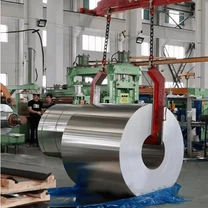
Why Aluminum for Satellite Antennas?
When manufacturing satellite television antennas, the material choice directly affects the signal reception quality, product lifespan, and installation safety. In the past, steel was often used, but it faced severe rusting issues in outdoor environments and was too heavy for easy roof installation.
Today, the industry standard has shifted to aluminum, specifically 3003-HO aluminum discs (also known as aluminum circles or blanks). This material offers the perfect balance of lightweight structure, high formability for parabolic shapes, and excellent resistance to outdoor weathering.
Are you designing or manufacturing satellite dish antennas and need reliable aluminum blanks? Tell us your required diameter and thickness. GNEE provides high-quality 3003-HO aluminum discs tailored for spinning and stamping.
Contact Us for a Quick Quote Today!
Why 3003-HO Aluminum is Ideal for Satellite Antennas
Not all aluminum is suitable for forming a satellite dish. The 3003 alloy in the "HO" temper is specifically chosen for metallurgical and mechanical reasons.
1. Excellent Formability (No Cracking)
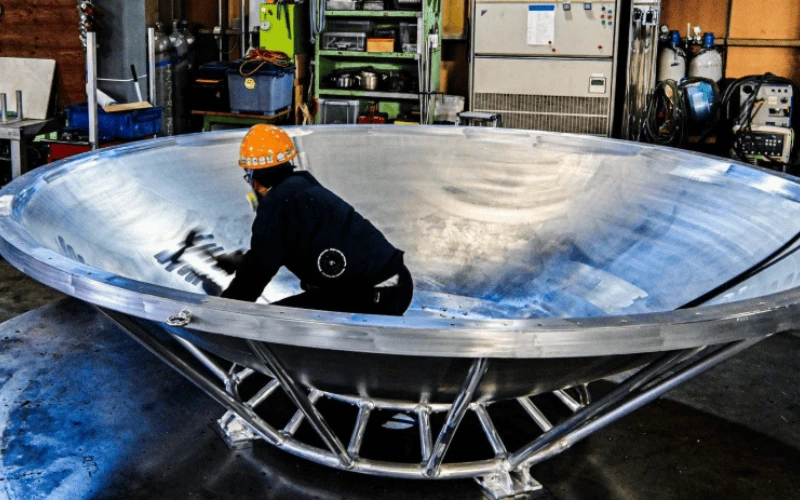
Satellite dishes are usually manufactured using metal spinning or hydraulic deep drawing. Because the 3003-HO aluminum circle is fully annealed, it is highly malleable. It stretches smoothly over the mold without tearing, cracking, or showing "orange peel" defects on the edges. This keeps the manufacturer's scrap rate incredibly low.
2. High Surface Accuracy for Signal Reflection
A satellite dish works by reflecting and focusing microwave signals into a central receiver. If the metal surface has dents, scratches, or uneven thickness, the signal will scatter, leading to poor TV reception. Our 3003 aluminum discs are manufactured with strict thickness tolerances and a clean, flat surface, ensuring perfect parabolic geometry after spinning.
3. Long-Term Outdoor Weather Resistance
Antennas are installed on roofs and exposed to severe weather-heavy rain, salt fog (in coastal areas), freezing snow, and intense sun. The 3003 alloy naturally forms a protective oxide layer that stops corrosion. Unlike steel dishes that rust and lose their signal reflection ability within a few years, a 3003 aluminum dish maintains its structural integrity and performance for decades.

3003 Aluminum Disc Circle Chemical Composition Limits
| Alloy | Si | Fe | Cu | Mn | Mg | Cr | Zn | Ti | Others-Each | Others Total | Al Min |
| 3003 | 0.6 | 0.7 | 0.05-0.20 | 1.0-1.5 | – | – | – | – | 0.05 | 0.15 | Remainder |
Typical Mechanical Properties Data Of Aluminum 3003
| Alloy-Temper | Tensile Strength | Yield Strength | Elongation |
| (ksi) | (ksi) | (%) | |
| 3003-O | 16 | 6 | 30 |
| 3003-H14 | 22 | 21 | 3 |
| 3003-H18 | 29 | 27 | 3 |
3003 Aluminium Circle Diameter Tolerance
| Nominal Diameter | Tolerance |
| Multiple of 5mm | +/- 0.5mm |
| Not multiple of 5mm | +/- 3.0mm |
3003 Aluminum Disc Circle Specifications
| Property | Standard Range |
| Alloy | 3003 |
| Temper | O (Annealed), H12, H14, H16, H18, H24 |
| Thickness | 0.3mm – 10.0mm |
| Diameter | 100mm – 1200mm |
| Surface Finish | Bright, Mill Finish, Anodized, or Coated |
| Special Customization | Oversized dimensions or special shapes can be produced according to requirements |
Typical Sizes for Satellite Antenna Manufacturing
Different applications require specific dimensions to ensure proper signal focusing and structural stability. Below is a quick sizing guide based on industry standards:
| Application | Recommended Diameter | Recommended Thickness |
| Small Dish (Ku-band, City use) | 800 mm – 1000 mm | 1.2 mm – 1.5 mm |
| Standard Home TV Receiver | 1000 mm – 1350 mm | 1.5 mm – 1.9 mm |
| Large Signal Receiver (C-band) | 1350 mm – 1500 mm | 1.8 mm – 2.0 mm |


GNEE's core advantage is accepting multi-size and multi-specification custom orders. We can cut exact diameters to reduce your material waste.
Send Us Your Size List for Factory Direct Pricing
GNEE Supply Capability
At GNEE, we support antenna manufacturers worldwide with the following advantages:
- Flexible Customization and Mixed Orders
We know that a single factory might produce various sizes of satellite dishes. GNEE accepts multi-size orders in a single shipment. Whether you need standard 1200mm discs or non-standard 950mm blanks, we can arrange production with flexible Minimum Order Quantities (MOQ).
- Strict Quality Control & Certifications
Every batch of aluminum discs comes with a complete Mill Test Certificate (MTC). We strictly test the chemical composition (ensuring correct Manganese levels) and mechanical properties (elongation and tensile strength) so you know the material will spin perfectly.
- Professional Export Packaging
Moisture is the enemy of aluminum during sea freight. If packed poorly, aluminum discs can develop "white rust" (water stains). We interleave the discs with protective materials, wrap them in waterproof plastic and kraft paper, insert desiccants, and secure them tightly on heavy-duty wooden pallets. Your materials will arrive clean, flat, and ready for production.