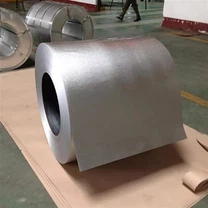
GNEE 3003 aluminum alloy is a widely used aluminum-manganese alloy that performs well in many environments, particularly where good corrosion resistance, excellent formability, and moderate strength are required. The two most common tempers of this alloy are 3003-H14 and 3003-H24. While they share the same chemical composition, differences in processing result in notable variations in mechanical performance.
Overview of 3003-H14 and 3003-H24
3003-H14 offers higher ductility and superior formability, making it ideal for applications involving significant deformation, where high elongation and lower hardness are preferred.
3003-H24 features higher hardness, fatigue resistance, and tensile yield strength, making it more suitable for applications requiring improved wear resistance or resistance to cyclic loading.
Mechanical Characteristics Comparison
| Property | 3003-H14 | 3003-H24 |
|---|---|---|
| Hardness | Lower; ideal for forming and stretching | Higher; suitable for applications requiring greater hardness |
| Elongation at Break | Higher ductility; suitable for deep drawing and forming | Lower elongation; better for limited deformation |
| Fatigue Strength | Lower; not recommended for cyclic loading | Higher; suitable for repetitive or cyclic loads |
| Shear Strength | Higher; suitable for shearing and cutting resistance | Slightly lower; suitable for high-strength applications without shearing demands |
| Tensile Yield Strength | Higher; withstands greater tensile force before deformation | Slightly lower than H14 |
| Strength-to-Weight Ratio (Bending) | Lower; suitable for low bending stress | Higher; better for applications with bending stress |
| Typical Applications | Deep drawing, stretching, automotive exterior panels, appliance housings | Industrial equipment, cyclic-load structures, decorative exterior components |
Key Property Comparisons in Detail
Hardness
3003-H14 has moderate hardness, which supports excellent formability and ease of processing.
3003-H24 achieves higher hardness through additional stabilization, making it suitable for wear-resistant or surface-critical applications.
Elongation at Break
H14 temper provides higher elongation, allowing greater deformation without cracking-ideal for deep drawing and complex forming.
H24 temper has slightly reduced elongation due to increased hardness, making it better for applications requiring less stretching.
Fatigue Strength
3003-H14 is better suited to static or low-stress environments.
3003-H24 performs better under vibration, shock, and repetitive loading conditions.
Shear Strength
H14 offers stronger shear resistance, beneficial for machining and cutting operations.
H24, while slightly lower in shear strength, still meets the requirements of many high-strength applications.
Tensile Yield Strength
3003-H14 exhibits higher yield strength, resisting permanent deformation under tensile loads.
3003-H24 maintains good yield strength but is marginally lower than H14.
Strength-to-Weight Ratio (Bending)
H14 is suitable for applications with minimal bending stress.
H24 provides enhanced bending performance and durability.
Application Recommendations
GNEE 3003-H14 aluminum is ideal for applications requiring high formability and ductility, such as automotive body panels, appliance enclosures, HVAC components, and large-scale stamped or drawn parts.
GNEE 3003-H24 aluminum is better suited for applications that demand higher hardness and fatigue resistance, including industrial equipment, structural parts exposed to cyclic loads, and exterior decorative components.