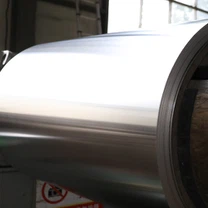
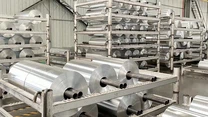
Among the wide range of 3000 series aluminum plates, the 3003 aluminum plate stands out as a commonly used and versatile alloy. In particular, 3003-H24 aluminum plate and 3003-H14 aluminum plate are widely applied in curtain wall systems and other architectural fields. Although these products are very common in the market, many customers are not fully familiar with the differences in their processing methods. Today, GNEE provides a detailed explanation of the distinctions between these two tempers.
Overview of 3003 Aluminum Plate
3003 aluminum plate, often referred to as rust-resistant aluminum, is widely used for general-purpose sheets and strips. It contains approximately 98% aluminum, with manganese content ranging from about 1.0% to 1.6%. Thanks to its excellent alloy performance and stable quality, it is highly favored across many industries.
Compared with 1060 aluminum plate, 3003 aluminum plate offers higher strength. In addition, its toughness and resistance to cold deformation are superior to those of the 1000 series aluminum, making it more suitable for applications involving temperature variation and forming processes.
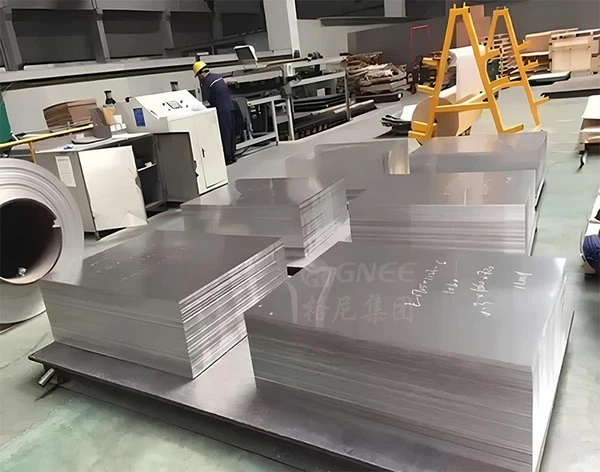
Differences in Processing: 3003-H14 vs. 3003-H24
The most common tempers for 3003 aluminum plate are H14 and H24. These two tempers share many similarities:
Both can be bent at 90 degrees without cracking
Both use the same 3003 aluminum alloy
Their tensile strength, elongation, and corrosion resistance are largely comparable
Surface treatment methods and surface appearance are generally the same
So where do the differences come from? The key lies in the annealing process and rolling sequence used during production.
Production Process of 3003-H24 Aluminum Plate
Casting and rolling → Annealing furnace treatment → Finished product packaging
This is the typical production route for 3003-H24 aluminum plate. It is a single annealing forming process, which is widely used in the industry. The surface usually contains minimal rolling oil, and the overall quality remains stable. Due to its mature and standardized processing method, this temper is commonly selected for general applications.
Production Process of 3003-H14 Aluminum Plate
Casting and rolling → Annealing furnace treatment → Cold rolling → Finished product packaging
The 3003-H14 aluminum plate is often referred to as a mid-annealed aluminum plate. After the initial annealing, the material undergoes additional cold rolling, followed by final finishing. This process is also known as a semi-annealed process and is typically used for applications with higher performance requirements. As a result, 3003-H14 is widely applied in demanding forming and structural uses.
Summary
Although the different annealing and rolling processes of 3003-H24 and 3003-H14 aluminum plates may appear confusing, the essential differences between them are relatively small. In most applications, both materials perform reliably and consistently.
At GNEE, we frequently receive questions from customers regarding these two tempers. From a practical standpoint, both meet standard usage requirements well, and the choice mainly depends on specific processing preferences and application demands. We hope this explanation helps you better understand the differences and select the most suitable 3003 aluminum plate for your project.