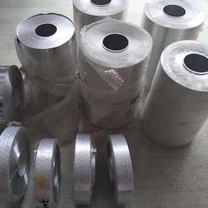
What is 2011 Aluminum?
Aluminum alloy 2011 has outstanding machining properties and is free-machining. It belongs to the aluminum alloys from the 2000 class. The term "free-cutting alloy" is frequently used to describe this alloy due to its exceptional machinability.
Alloy 2011 Aluminum Properties
1. Aluminum is a good processable material in 2011.
2011 Aluminum has a reputation for being very workable, which makes it simple to process, drill, and cut. During processing, tiny, fractured chips are created, which helps remove chips and lessens tool wear.
2. The strength of 2011 T3 aluminum is good.
2011 aluminum is stronger than many other aluminum alloys and has good mechanical qualities, particularly when it is in T3 condition. Heat treatment considerably increases the strength of 2011 aluminum.
3. Aluminum can be anodized in 2011.
Aluminum 2011 can be anodized; however, because of its copper concentration, it might not have an anodized coating like some other alloys.
2011 is not as corrosion-resistant as some other aluminum alloys, although it has a respectable level of corrosion resistance. Under some circumstances, its copper concentration renders it more prone to corrosion.
2011 Aluminum Typical Temper
2011 t3 Aluminum
2011 t6 Aluminum
2011 t8 Aluminum
2011 t78 Aluminum
Aluminum t3 (2011)
T3 is the cold working condition and solid solution heat treatment. 2011 T3 Aluminum is moderately strong and machinable. Parts that need to be both strong and formable are typically in this state.
Aluminum T6 (2011)
T6 is an artificial aging condition and solution heat treatment. The strongest aluminum available in its most widely used form is 2011 T6 aluminum. T6 is usually chosen for situations where strength is the most important factor.
Aluminum T8 (2011)
T8 is a cold working, solution heat treatment, and artificial aging condition. 2011 T8 Aluminum offers enhanced strength along with exceptional machinability.
Aluminum T-78, 2011
T78 is a combined condition that is commonly linked to aluminum from 2011. There are two aging phases for 2011 T78 aluminum.
Although T6 has the greatest strength, it may be less machinable than T3.
T8 combines greater strength with superior machinability.
To further enhance performance, T78 adds a certain amount of natural age.
The decision is based on how well the mechanical qualities and machinability needed for the particular application are balanced.
2011 Aluminum Yield Strength
The particular temper condition can affect the yield strength of aluminum alloy 2011.
Aluminum 2011-T3:
Yield Strength: Usually between 55 and 70 MPa.
Aluminum 2011-T6:
Yield Strength: Usually between 105 and 125 MPa.
Although the T6 temper may be marginally less machinable than the T3, it often has a higher yield strength, making it appropriate for applications requiring greater strength.
Elasticity Modulus for Aluminum in 2011
Depending on the particular temper state, aluminum alloy 2011's modulus of elasticity might change.
Aluminum 2011-T3:
Young's modulus, or modulus of elasticity, is roughly 68.9 GPa.
Aluminum 2011-T6:
Young's modulus, or modulus of elasticity, is roughly 68.9 GPa.
2011 Aluminum Product Forms
2011 Aluminum Wire
2011 Aluminum Frame
2011 Aluminum Bar
2011 Aluminum Rod
2011 Aluminum Profile
Aluminum Bar 2011
2011 Aluminum Bar is commonly utilized in machining applications where the exceptional machinability of the alloy is essential. They can be processed in many ways, such as turning, drilling, and milling, to produce precise parts for a variety of industries.
Aluminum Rod 2011
2011 Precision components for a range of applications are manufactured using aluminum rod. They are widely used in the automotive and mechanical industries, as well as in the manufacturing of fasteners, couplings, and connectors.

2011 Aluminum Composition
| Element | Typical Percentage |
|---|---|
| Aluminum (Al) | 91.5% - 95.0% |
| Copper (Cu) | 5.0% - 6.0% |
| Bismuth (Bi) | 0.20% - 0.60% |
| Lead (Pb) | 0.20% - 0.60% |
| Iron (Fe) | ≤ 0.70% |
| Silicon (Si) | ≤ 0.40% |
| Other Elements | Trace amounts |
2011 Aluminum Equivalent
2011 The copper, bismuth, and lead makeup of aluminum alloy makes it a special alloy with certain qualities, most notably outstanding machinability. There isn't a single alloy with the same ingredients and characteristics, particularly when it comes to machinability.
But if you're searching for an aluminum alloy with comparable qualities, you might want to look at the following:
Aluminum Alloy 6262: This alloy has good machinability and high copper and manganese content. It is utilized for components like fittings and connectors that need to be machined.
Aluminum Alloy 2024: Used in structural and aerospace applications, 2024 is renowned for its strength while having less machinability than 2011.
Aluminum Alloy 7075: This alloy is well-known for its excellent machinability and high strength, which makes it appropriate for use in the industrial, automotive, and aerospace sectors.
It is crucial to remember that every alloy has distinct qualities of its own and is chosen according to the particular needs of the application. Depending on the precise qualities and workability requirements you are seeking in your project, the closest "equivalent" will vary.
Aluminum AA 2011
"2011 aluminum" is not much different from "AA 2011 aluminum." Although "AA 2011 aluminum" is a more precise and standardized approach to identify the alloy, both terms relate to the same aluminum alloy.
AA 2011 Aluminum: The prefix "AA" denotes that the aluminum alloy adheres to the widely accepted North American alloy classification system established by the Aluminum Association.
To ensure uniformity and clarity in the material's designation, "AA 2011 aluminum" is the official and regulated method of specifying the alloy.
Anodizing 2011 Aluminum
Aluminum and its alloys are frequently subjected to anodizing, a surface treatment procedure that improves appearance, increases corrosion resistance, and offers numerous other advantages.
Anodizing 2011 aluminum can be more difficult than anodizing other aluminum alloys because of the inclusion of copper and other elements. Pure aluminum alloys may yield better results than anodizing.