What Is 1200 Aluminum Sheet?
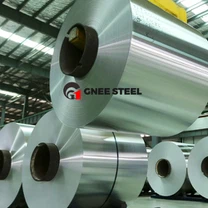
1200 aluminum is a commercially pure aluminum alloy with a minimum aluminum content of 99.00%. With only small additions of other elements, it offers good electrical and thermal conductivity, corrosion resistance, weldability and formability, and it is a cost-effective choice for general-purpose sheet applications where moderate strength is sufficient. Because it is not hardened by alloying elements, 1200 is selected mainly for forming, conductivity and surface-quality-driven applications.
Key Properties
Typical and specified values for 1200 aluminum sheet include: minimum aluminum content 99.00%, density approximately 2.71 g/cm3, electrical conductivity approximately 61% IACS depending on condition and measurement basis, thermal conductivity approximately 230 W/(m-K), tensile strength in the H14 condition typically about 115-145 MPa, and elongation in H14 typically 5% or more depending on thickness. These values should be confirmed against the applicable purchasing standard such as GB/T 3880, ASTM B209 or EN 485, because mechanical properties vary with temper and product thickness and the alloy designation alone does not establish guaranteed mechanical performance.
1200 offers good resistance to atmospheric corrosion and good formability, but its strength is lower than that of most 3xxx, 5xxx and heat-treatable 6xxx series alloys.
Applications
Chemical equipment and instrument housings: good corrosion resistance and formability suit selected non-pressure chemical equipment and housings. Conductive materials: relatively high electrical conductivity supports selected electrical components and conductor applications where moderate strength is adequate. Road signs and license plates: formability, corrosion resistance and surface appearance support formed and coated sheet products. Cookware, hardware and utensils: formability and thermal conductivity are useful for household and general fabrication. Building and decorative materials: curtain-wall components, roofing or profiled sheet, decorative panels and color-coated products where high structural strength is not required. Machine parts and general fabrication: covers, panels, housings and other lightly loaded components requiring easy forming and corrosion resistance. For electrical applications, verify the required conductivity, cross-section, temper and applicable electrical standard before specifying 1200.
Comparison with Other Pure Aluminum Grades
1200, 1100, 1050 and 1060 all belong to the 1xxx series but are not interchangeable in every application. Minimum aluminum content is 99.00% for 1200 and 1100, 99.50% for 1050 and 99.60% for 1060. 1050 and 1060 are typically preferred where very high electrical conductivity or a particularly clean anodized appearance is required, while 1200 is an economical general-purpose option where cost and balanced performance matter most. Differences in impurity and alloying-element limits affect conductivity, mechanical properties, forming behavior and anodizing appearance.
Temper Selection Notes
Choose the temper according to the fabrication process. The O temper is the softest condition, suitable for demanding forming and deep-drawing operations. H14 is a half-hard condition providing a practical balance of strength and formability for general sheet-metal fabrication. H18 is harder, with higher strength and stiffness but lower ductility, suited to parts with limited forming requirements. For applications where anodized appearance is critical, 1050 or 1060 may give more consistent and clearer anodic finishes because of higher aluminum purity; for higher-strength structural applications, consider 3003, 5052 or a suitable 6xxx-series alloy instead of 1200.
Purchasing Notes
When buying 1200 aluminum sheet, specify the alloy, temper, thickness, width, length, surface finish, applicable standard and required dimensional tolerances. For export orders, the supplier should confirm the relevant chemical composition and mechanical-property requirements against the standard named in the purchase contract, and provide the corresponding material documentation.
FAQ
Q: What is the minimum aluminum content of 1200 alloy?
A: 99.00% minimum, which classifies it as a commercially pure aluminum alloy.
Q: What is the difference between 1200 and 1050 aluminum?
A: Both are 1xxx-series pure aluminum grades. 1050 has a higher minimum aluminum content of 99.50%, which can improve anodizing clarity and conductivity; 1200 is often the more economical general-purpose choice.
Q: Is 1200 aluminum sheet suitable for electrical applications?
A: It has relatively high electrical conductivity of about 61% IACS, but the required conductivity, cross-section, temper and applicable electrical standard must be verified for each specific application.
Q: What temper should I choose for deep drawing?
A: The O temper is the softest and best suited to demanding forming and deep-drawing operations; H14 can be considered for moderate forming with a balance of strength.
Q: Can 1200 aluminum sheet be anodized?
A: Yes, but because of its slightly lower purity than 1050 or 1060, the anodic finish may be less consistent. For critical decorative finishes, a higher-purity grade is usually recommended.
Q: Which standard applies to 1200 aluminum sheet?
A: Common references are GB/T 3880, ASTM B209 and EN 485. Confirm the alloy, temper, dimensions and tolerances against the standard specified in the purchase contract.