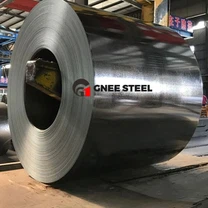
Aluminium foil produced from alloy 1200 is a commercially pure material with a minimum aluminium content of 99.00%. Its combination of very high reflectivity, good corrosion resistance and low weight has made it a default choice for roofing insulation, radiant barriers and vapour-retarding laminates used on industrial sheds, cold-storage buildings, warehouses and residential roofs.
Why Alloy 1200 Works as a Roofing Foil
Roof assemblies gain most of their heat by radiation. A shiny metal surface that faces an air space reflects that radiation instead of absorbing it, so the roof deck stays closer to ambient temperature and the cooling load drops. Alloy 1200 is soft, dimensionally stable and easy to laminate, which is why it is supplied both as a bare bright foil and as a colour-coated or low-emissivity facing.
High radiant-heat reflection - up to 97% of the radiant energy reaching the surface is reflected rather than absorbed.
Low emissivity - colour-coated and low-e finishes are specified with a target emissivity below 0.05, which suppresses downward re-radiation into the building.
Corrosion resistance - the natural aluminium oxide film, supported by a purity of 99.00% or higher, resists moisture, mild alkali attack and normal atmospheric exposure.
Low weight - roughly one third the density of steel, so additional roof load and handling effort stay small.
Formability - in the O temper the foil bends, embosses, slits and laminates without cracking, which suits long continuous roof runs.
Recyclability - aluminium scrap keeps its value and is re-melted with a small fraction of the energy needed for primary metal, supporting green building targets.
Technical Specifications
| Parameter | Typical value |
|---|---|
| Alloy | 1200 (1xxx series, commercially pure aluminium) |
| Aluminium content | 99.00% minimum |
| Common thickness | 0.05, 0.06, 0.07, 0.08, 0.10, 0.11, 0.12, 0.15 mm |
| Common width | 914 mm and 912 mm; other widths produced to order |
| Inner diameter | 152 mm or 76.2 mm |
| Colour coating thickness | 7–10 µm, applied double sided in a single pass |
| Surface wetting tension | ≥32 dynes/cm, verified with a dyne pen |
| Target emissivity | Below 0.05 for low-e and colour-coated surfaces |
| Standard colours | Earth red, white, black, blue, green, grey, copper, RAL or custom shades |
| Thickness tolerance | Within ±3% |
| Width tolerance | Within ±1 mm |
| Reference test methods | ASTM D828, ASTM D774, ASTM F1249, ASTM E408 |
| Quality certification | ISO 9001 quality management, CE and TUV conformity documentation |
Chemical Composition of Alloy 1200
| Element | Limit (% by mass) |
|---|---|
| Aluminium (Al) | 99.00 minimum |
| Silicon plus iron (Si + Fe) | 1.00 maximum |
| Copper (Cu) | 0.05 maximum |
| Manganese (Mn) | 0.05 maximum |
| Zinc (Zn) | 0.10 maximum |
| Titanium (Ti) | 0.05 maximum |
| Other elements, each | 0.05 maximum |
| Other elements, total | 0.15 maximum |
The absence of deliberate alloying additions is what keeps conductivity and reflectivity high while leaving the metal soft enough for deep forming and folding around roof details.
Physical and Thermal Properties
| Property | Value |
|---|---|
| Density | 2.70 g/cm³ |
| Melting point | 660 °C |
| Thermal expansion coefficient | 23 × 10⁻⁶ per K |
| Specific heat capacity | 900 J/kg·K |
| Thermal conductivity | 230 W/m·K |
| Modulus of elasticity | 69 GPa |
| Shear modulus | 26 GPa |
| Electrical conductivity | 58% IACS |
Coating Systems for Roofing Service
Two coating families cover most roofing projects. Polyester (PE) coating applied at 18 µm or more gives a service life beyond 10 years and remains the economical choice for general roofing and wall cladding. Fluorocarbon (PVDF) coating at 25 µm or more retains colour and gloss for over 20 years under strong ultraviolet exposure, which suits coastal sites, high-altitude installations and visible facades. Nano-modified fluorocarbon finishes are produced for high-gloss architectural work where a smoother, more dirt-resistant surface is wanted.
Quality Control on Every Coil
Dimensional checks, surface inspection and coating tests are performed through the coil rather than on the coil ends alone.
Dimensional accuracy - thickness held within ±3%, width within ±1 mm, and cut length produced to the customer's schedule for precise jointing.
Surface quality - smooth and free from oil stains, oxide scale, corrosion spots, scratches, fractures, pinholes and bubbles.
Coating quality - uniform film with no blistering, cracking or peeling, adhesion verified to the reference standard, low colour difference and good fade resistance.
Flatness - precision levelling gives a flat surface for clean laminating and printing results.
Applications in Building Envelopes
Roof cooling - reflective facing lowers deck temperature and reduces the sensible cooling load of the space below.
Warehouse and logistics halls - thermal insulation and moisture protection that keeps stored goods in a stable environment.
Residential roofing - reflective underlays keep rooms appreciably cooler than uninsulated concrete roofs and improve comfort.
Building sealing and detailing - rolls and tapes for roof insulation, chimney wrapping, and ridge and eaves details.
Laminated insulation products - bonded to kraft paper, bubble film or woven fabric for duct wrap, cold-storage panels and sarking.
Packaging and Handling
Coils are supplied in wooden boxes measuring 1.4 m × 1.3 m × 0.8 m, with adjustable sizes for non-standard foil dimensions. Gross weight is typically 500–700 kg and net weight 450–650 kg, which suits standard container logistics. Durable, recyclable timber and a reinforced frame protect the coil from vibration and impact, so the reflective surface reaches the site flat and undamaged.
Frequently Asked Questions
Q: What thickness of 1200 aluminium foil is normally used on roofs?
Roofing foil is most often supplied between 0.05 mm and 0.15 mm. The thin end is used for laminates bonded to paper or bubble film, while thicker gauges are chosen where the foil must span or be handled repeatedly during installation.
Q: How much heat does 1200 foil actually reflect?
A clean bright surface reflects up to 97% of incident radiant heat. Performance is maintained by keeping the reflective face clean and dust-free and by leaving an air space between the foil and the hot roof surface.
Q: Can the foil be supplied in colours?
Yes. A colour coating of 7–10 µm is applied to both faces in one pass, and standard shades include earth red, white, black, blue, green, grey and copper, with RAL matches produced to order.
Q: Is 1200 foil suitable for coastal buildings?
Alloy 1200 has good resistance to atmospheric and moisture attack, and the fluorocarbon coating system is normally selected for coastal sites because it also resists salt-laden air and ultraviolet degradation for over 20 years.
Q: How is the foil joined on site?
Laminated foil rolls are usually overlapped and fixed mechanically, while sealing tapes are used for chimney, ridge and eaves details. All overlaps should be arranged to shed water away from the joint.
Q: Is aluminium roofing foil recyclable?
Yes. Aluminium is recycled without loss of its essential properties, and the recyclability of the material supports credits under green building assessment schemes.