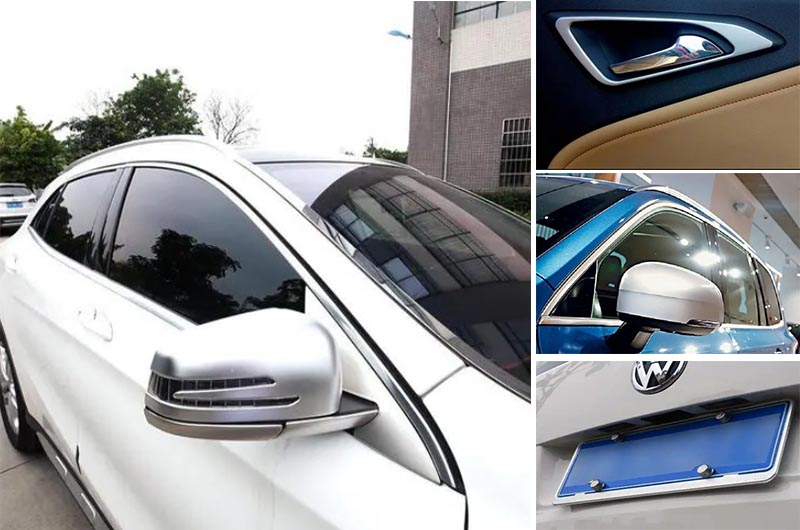
In response to global climate change and rising energy concerns, governments worldwide have mandated that the automotive manufacturing industry enhance fuel efficiency, reduce energy consumption, and minimize pollution.
Q: What is the focus of improving vehicle performance in response to these requirements?
A: The primary focus is on reducing the weight of the vehicle itself.
Q: What are the main methods to achieve lightweight vehicles?
A: The primary approach involves developing smaller-displacement vehicles and optimizing the structure and parts of the vehicle.
Currently, steel remains the dominant material in automobiles, but as energy-saving and consumption-reduction goals intensify, the proportion of rigid materials used has gradually decreased. Meanwhile, the application of lightweight alloys, including aluminum, magnesium, and composite materials, has seen significant growth.
Q: How does aluminum alloy compare to steel as an automotive material?
A: Aluminum alloys offer several advantages over steel, including:
Low density
Good strength and elasticity
Good impact resistance
High recyclability rates
Automotive Applications of Aluminum Alloys
Here are some key trends in aluminum use in automobiles:
| Automotive Application | Examples of Components | Benefits |
|---|---|---|
| Body and Structural | Body panels, hoods, doors, roofs, trunk lids | Reduced weight, improved fuel efficiency, reduced emissions |
| Chassis and Suspension | Control arms, knuckles, subframes, suspension links | Weight reduction, improved handling, ride quality, reduced unsprung weight |
| Powertrain Components | Engine blocks, cylinder heads, transmission cases, oil pans | Weight reduction, increased fuel efficiency, improved performance |
| Wheels | Aluminum alloy wheels | Weight reduction, improved aesthetics, better heat dissipation, increased brake clearance |
| Battery Enclosures | Battery enclosures in electric vehicles | Lightweight, effective heat dissipation, improved efficiency and range |
| Crash Management Systems | Bumper beams, impact bars | Enhanced crash safety, minimized weight gain |
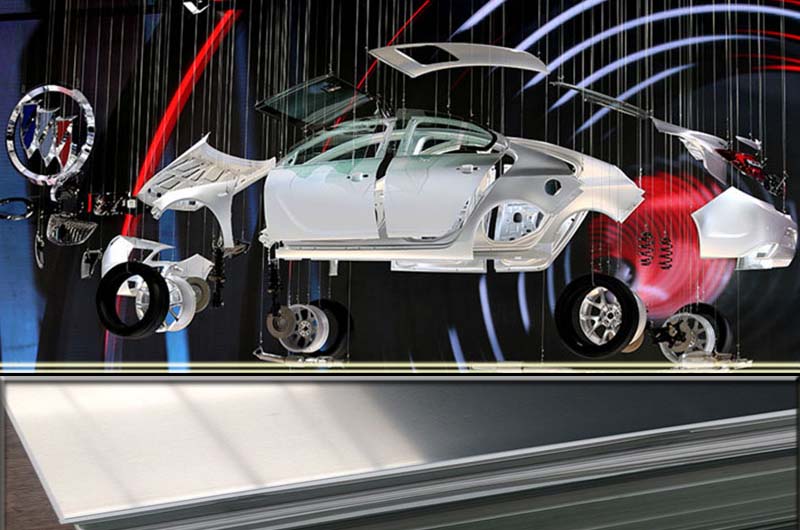
Applications of 1050 Aluminum in Automobiles
1050 Aluminum for Automobile Engine Heat Shield
The automobile engine heat shield functions as an insulator and offers high-temperature resistance, enhancing exhaust gas temperature and power.
Thickness: 0.12-1.5mm
Performance: Excellent heat insulation, resistance to high and low temperatures (up to 1200°C and -70°C), high corrosion resistance, self-cleaning, fire-resistant, and recyclable.
1050 Aluminum for License Plates
Due to its durability and corrosion resistance, 1050 H12 aluminum is commonly used for license plates. This alloy provides excellent mechanical properties and is suitable for outdoor exposure.
Tensile Strength: 55-75 MPa
Yield Strength: 35 MPa (minimum)
Elongation: 30% (minimum)
Density: 2.7 g/cm³
Melting Range: 640-660°C
1050 Aluminum for Automotive Decorative Applications
Though less common than alloys like the 3xxx or 5xxx series, 1050 aluminum is used in automotive decoration due to its lightweight and aesthetic appeal.
Applications: Interior and exterior trim, emblems, badges, wheel covers, and interior components like dashboard and speaker grilles.
1050 Aluminum for Heat Exchangers
With excellent thermal conductivity, 1050 aluminum is used in heat exchangers for automotive air conditioning and cooling systems, contributing to efficient heat transfer.
1050 Aluminum for Automotive Radiators
1050 aluminum is commonly used in radiators due to its light weight and good heat dissipation properties, though stronger alloys might be more prevalent for some components.
Conclusion
Although 1050 aluminum might not be as widely used as other alloys like 6061 or 5052, its excellent corrosion resistance, high electrical conductivity, and good formability make it a valuable material in various automotive components, from heat shields and license plates to decorative trims and heat exchangers.