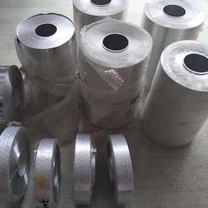
One of an automobile's essential parts, the engine's performance has a direct impact on the vehicle's level of performance and competitiveness. An essential component of the engine system is the exhaust pipe heat shield.
Heat insulation and resistance to high temperatures are the primary purposes of the car engine heat shield. It can efficiently raise the exhaust temperature and decrease the heat released by the exhaust pipe, increasing the engine's power output. Vehicle performance and fuel efficiency are directly impacted by the caliber and efficacy of this heat shield, which is essential to engine performance.

Aluminum alloy specifications for automobile engine heat shields
◆ Alloy: 1050|1060|1100|3003|3004|5052|5754|5182
◆ Status: O
◆ Thickness: 0.12-1.5mm
To make sure that the performance requirements of the automotive engine heat shield are fulfilled, the precise selection of aluminum alloy specifications must take into account elements like the heat shield's use environment, necessary strength, and corrosion resistance.
Performance characteristics of automobile engine exhaust pipe heat shield
1. Outstanding thermal insulation effect and temperature resistance: It has a great thermal insulation effect and can remain stable at extremely high temperatures (1200°C) and low temperatures (-70°C).
2. Chemical stability: Able to withstand corrosion from a variety of chemical liquids, including salts, acids, alkalis, and chemical additives.
3. Self-cleaning: has strong hydrophobic qualities and is not readily contaminated by motor oil.
4. Flame-retardant and fire-proof: It meets German and national standards, achieving level A fire resistance and non-flammability.
5. Age and weather resistance: It has outstanding weather and vibration resistance and is resistant to sunlight, rain, and snow.
6. Convenient maintenance: convenient for daily maintenance, easy to disassemble, install, and clean.
7. High strength and flexibility: It fits the exhaust pipe closely, is soft, and has a high strength.
8. Extremely adaptable: it can be adjusted to suit the requirements of various models based on where the exhaust pipe is located.
9. Sustainable use: It can be used repeatedly and has a long service life. It is also highly valuable, low-carbon, recyclable, eco-friendly, and energy-efficient.

Chemical composition of 1050 aluminum sheet for automobile engine heat shield
| Element | Composition (%) |
| Aluminum, Al | ≥99.5 |
| Silicon, Si | ≤0.25 |
| Zinc, Zn | ≤0.070 |
| Magnesium, Mg | ≤0.050 |
| Copper, Cu | ≤0.050 |
| Titanium, Ti | ≤0.050 |
| Manganese, Mn | ≤0.050 |
| Iron, Fe | ≤0.40 |
| Other (each) | ≤0.030 |
Physical properties of 1050 aluminum sheet for automobile engine heat shield
| Properties | Density | Melting point |
| Metric | 2.705 g/cm3 | 640°C |
| Imperial | 0.09772 lb/in3 | 1184°F |
Mechanical behavior of 1050 aluminum sheet for automobile engine heat shield
| Properties | Metric |
| Tensile strength (@diameter 12.7 mm/0.500 in) | 75 MPa |
| Elongation at break | 32% |
| Elastic modulus | 73 GPa |
| Shear strength | 50 MPa |
| Hardness, Brinell | 20 |
| Hardness, Vickers | 22 |
Thermal properties of 1050 aluminum sheet for automobile engine heat shield
| Properties | Thermal conductivity |
| Metric | 121-193 W/mK |
| Imperial | 838-1338 BTU in/hr.ft2.°F |