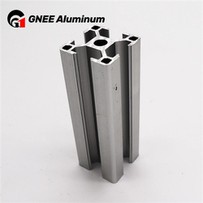
![[[FullTitleProduct]]](/uploads/39746/aluminium-profile-low-windows7d6cf.jpg)
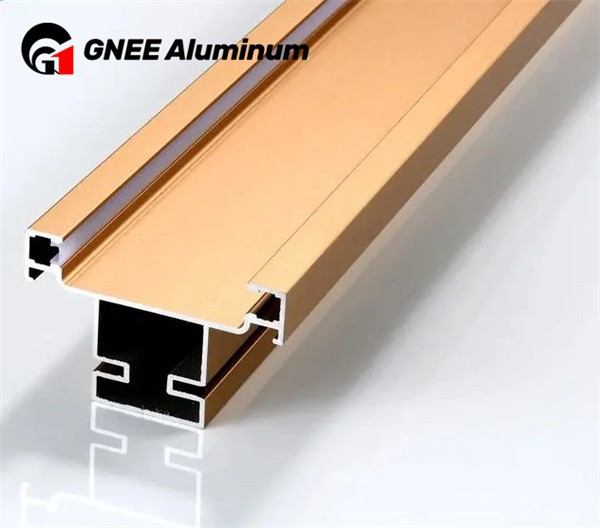


Aluminium Profile Low Windows
The specifications of aluminium profile low windows are primarily marked by the height dimension of the profile section (referred to as the frame thickness dimension for aluminium alloy doors and windows). This forms a series of sizes. Aluminium door and window profiles mainly include size series such as 40, 45, 50, 55, 60, 65, 70, 80, 90, and 100mm. Among them, the size series used for aluminium alloy windows is relatively smaller, while the size series for aluminium alloy doors is larger. It should be noted that even if the aluminium doors and windows are labeled with the same size series, it does not necessarily mean that their profile section shapes and dimensions are identical. Aluminium alloy doors and windows of the same size series can have extremely diverse section shapes and dimensions, which require specific analysis and treatment based on drawings.
| 1 | business type | Manufacturer |
| 2 | Standard: | GB 5237-2008; EN755,etc |
| 3 | Product series: | Aluminium profile for building material and industrial materail |
| 4 | Price: | Based on Nanhai Aluminium Ingot price+ processing Fee |
| 5 | Payment term: | T/T, L/C at sight |
| 6 | Surface treatment: | mill finish, Anodizing, Powder coating, electrophoresis, wooden finish, heat insulting |
Section Shapes and Wall Thickness of Aluminium Profiles
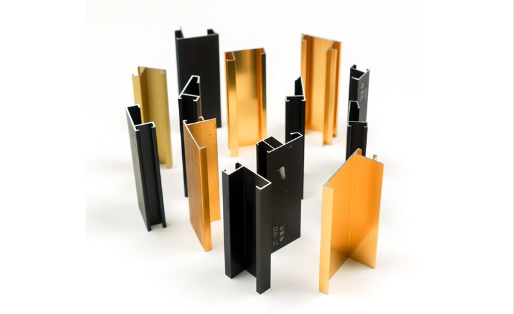
Aluminium door and window profiles are divided into solid profiles and hollow profiles based on their section shapes, with hollow profiles being more commonly used. The wall thickness of aluminium profiles for aluminium alloy windows should be no less than 1.4mm, and for aluminium alloy doors, it should be no less than 2mm. The length dimensions of aluminium profiles can be classified into fixed length, multiple length, and variable length. Fixed lengths generally do not exceed 6m, while variable lengths are not less than 1m.
Chemical Composition and Mechanical Properties of Aluminium Profiles
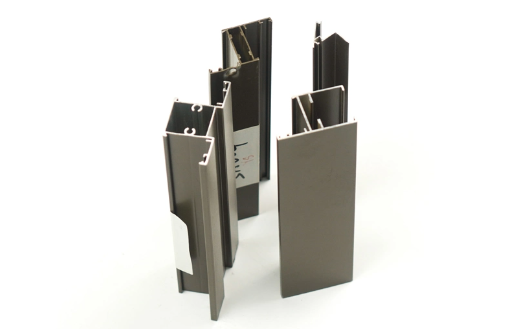
Aluminium doors and windows adopt aluminium-magnesium-silicon alloy profiles, which, apart from aluminium, contain alloying elements such as silicon, iron, copper, magnesium, manganese, chromium, titanium, and zinc. The magnesium content ranges from 0.45-0.90%, and the silicon content is between 0.2-0.6%. The mechanical properties of aluminium alloy profiles for doors and windows include a tensile strength of not less than 157N/mm2, a specified non-proportional elongation stress of not less than 108N/mm2, an elongation rate of not less than 8%, and a hardness of HV not less than 58.
GNEE Aluminium Alloy Doors and Windows
GNEE aluminium alloy doors and windows refer to doors and windows made using aluminium alloy extruded profiles as the frame, stile, and sash materials. These are simply known as aluminium doors and windows. Aluminium alloy doors and windows include those that use aluminium alloy as the load-bearing member (the member that bears and transfers its own weight and loads) as the base material, as well as those that are composites of aluminium with wood or plastic, commonly referred to as aluminium-wood composite doors and windows and aluminium-plastic composite doors and windows.
The quality of GNEE aluminium alloy doors and windows can be roughly judged based on several factors such as the selection of raw materials (aluminium profiles), the surface treatment and internal processing quality of the aluminium material, and the pricing of the aluminium alloy doors and windows.
Hot Tags: aluminium profile low windows, China aluminium profile low windows manufacturers, suppliers, factory, Aluminum Cigarette Packing Foil, Aluminum Foil for Roof, 3003 Aluminium Foil, Household Aluminium Foil, Container Aluminium Foil, Aluminum Foil for Industrial