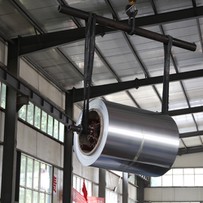
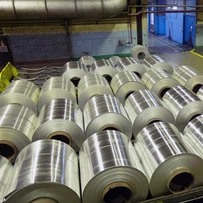
The continuous casting and rolling process is a common method used in the production of aluminum foil, including 13-micron aluminum foil. Here is a detailed description of the process:
Casting: The process starts with the melting of high-purity aluminum in a furnace. The molten aluminum is then transferred to a continuous casting machine. In this machine, the molten aluminum is solidified into a continuous strip or slab through a series of water-cooled molds. The continuous casting process ensures a uniform and continuous supply of aluminum for subsequent rolling.
Hot Rolling: The solidified aluminum strip is fed into a hot rolling mill. The hot rolling mill consists of a series of rolling stands through which the strip passes. The rolls exert high pressure and compressive forces on the strip, reducing its thickness and increasing its length. The strip is heated during this process to facilitate plastic deformation. The hot rolling process also refines the grain structure of the aluminum, improving its mechanical properties.

Cold Rolling: After hot rolling, the strip is annealed to relieve internal stresses and improve its formability. The annealed strip is then passed through a series of cold rolling mills. Cold rolling further reduces the thickness of the strip while maintaining its strength and surface quality. The strip is typically passed through multiple cold rolling mills, each reducing the thickness gradually.
Intermediate Annealing: To maintain the desired material properties and ensure proper formability, the strip may undergo intermediate annealing during the cold rolling process. Intermediate annealing involves heating the strip to a specific temperature and then cooling it slowly. This process helps to soften the material and eliminate any work hardening effects caused by cold rolling.
Final Annealing: After achieving the desired thickness, the aluminum strip is subjected to a final annealing process. This process involves heating the strip to a controlled temperature and holding it for a specific time. Final annealing helps to further improve the material's ductility, eliminate any remaining stresses, and enhance its surface finish.
Slitting: The final step in the process is slitting, where the wide aluminum strip is cut into narrower rolls or sheets of the desired width. The slitting process may be performed on the continuous production line or in a separate slitting machine.
Throughout the continuous casting and rolling process, various quality control measures are implemented to ensure that the aluminum foil meets the required specifications in terms of thickness, surface quality, and mechanical properties. The process is carefully monitored, and any deviations are addressed to maintain consistent product quality.
Hot Tags: alu foil 13 micron, China alu foil 13 micron manufacturers, suppliers, factory, Household Kitchen Aluminum Foil, Aluminum Household Foil, 8011 Aluminium Foil Jumbo Roll, Household Aluminium Foil